 Official Site of The State of New Jersey
Refugee and The Holocaust Survivors of South Jersey Project
This station-based lesson is a great tool to use for this novel because it transforms students from passive readers into active historians and empathetic thinkers. By connecting Refugee by Alan Gratz to real survivor experiences like Hans Fischer, students move beyond simply understanding plot to grappling with the human impact of historical events. Teachers should use this approach because it differentiates instruction, encourages collaboration, and integrates multiple literacy skills such as reading, writing, speaking, and analysis while also fostering critical thinking about primary sources and moral decision-making. Most importantly, it builds empathy in a meaningful, age-appropriate way, helping students see history not as distant facts, but as lived experiences that still matter today.
Overview
This station-based lesson accompanies Refugee by Alan Gratz and integrates historical thinking, empathy, and creative expression. Students rotate through stations that connect Josef’s journey to real Holocaust survivor experiences, particularly Hans Fischer.
Objectives
Students will:
- Analyze the historical context surrounding the Holocaust and refugee experiences
- Connect fiction (Refugee) to real primary and secondary sources
- Develop empathy through perspective-taking and creative writing
- Evaluate sources and construct evidence-based responses
- Collaborate and present ideas visually and verbally
- Copies of Refugee (Josef sections)
- Station instruction sheets (one per station)
- Laptops or tablets (for digital station)
- Primary source folder (printed or digital)
- Articles for Jigsaw (Evian Conference + Righteous Among Nations)
- Headphones (optional for podcast station)
- Chart paper / notebooks
- Rubrics (optional but recommended)
Center 1: Josef’s Journal Entry
Focus: Perspective & historical empathy
- Students write a journal entry as Josef
- Must include:
- Emotional response
- Reference to historical events (Nazism, Kristallnacht, St. Louis)
- Encourage use of sensory details and first-person voice
Center 2: Two-Voice Poem
Focus: Comparing experiences
- One voice: Josef
- One voice: Hans Fischer
- Students should:
- Show similarities/differences
- Use alternating or overlapping lines
- Encourage performance if time allows
Center 3: “Things They Carried” Digital Project
Focus: Symbolism & interpretation
- Part 1: Slides Creation
- Students create a slideshow with 5 symbolic images
- Each image represents something Hans Fischer “carried” (emotion, memory,
dream)
- Part 2: Reflection
- For EACH image, students explain:
- Why it matters
- How it represents his experience
- Why a symbol works better than a literal object
- For EACH image, students explain:
Center 4: Primary & Secondary Source Analysis
Focus: Historical thinking skills
- Students analyze the provided primary sources
- Then locate or use the provided secondary sources
- Must:
- Identify context
- Support claims using evidence
- Can use a graphic organizer if needed
Center 5: Survivor Analytical Summary (or Podcast)
Focus: Synthesis & communication
- Students summarize a South Jersey Holocaust survivor
- Must include:
- Key life events
- What stands out
- Why it matters
- Podcast option:
- 2–3 minutes
- Clear structure (intro, body, conclusion)
Center 6: Jigsaw – Evian Conference & Righteous Among Nations
Focus: Global response & moral choices
- Students read 1 of 5 articles
- Then share with the group
- Guiding questions:
- What did countries do (or fail to do)?
- What does it mean to be “Righteous”?
- Connect back to Josef’s experience
Center 7 (Alternative): Diamante Poem
Focus: Creative synthesis
- Students write a 7-line diamante poem about a survivor:
- Structure:
- Noun (person)
- Two adjectives
- Three verbs
- Phrase about experience
- Three verbs (shift)
- Two adjectives
- Final noun
Timing Options
- Option 1: Single Day (Shortened)
- 4–5 centers total
- 10–12 minutes per center
- Option 2: Two-Day Rotation (Recommended)
- Day 1: Centers 1–3
- Day 2: Centers 4–6 (+ optional 7)
- 15–20 minutes per Center
- Option 3: Choice Board
- Students complete 4 out of 7 centers
- Can be extended over a week
Grouping
- Groups of 3–4 students
- Assign roles:
- Reader
- Writer
- Timekeeper
- Tech manager
Assessment Suggestions
- Formative
- Participation at stations
- Group discussions
- Exit ticket (What did you learn about refugee experiences?)
- Summative Options
- Collect:
- Journal entry
- Poem
- Slides + reflections
- Source analysis OR Final reflection connecting all stations
- Collect:
Read the following excerpts from Alan Gratz’s Refugee, a fiction novel that follows the journeys of three children in three different time periods, experiencing similar stories of oppression, immigration and courage. The three excerpts you will be reading follow the story of a 10-year-old boy, Josef, who is fleeing Nazi persecution after the events of Kristallnacht in his hometown of Hamburg, Germany. Josef, his sister and his parents boarded the MS St. Louis bound for Havana, Cuba in 1939. Read the assigned passages and answer the reflection questions for each passage. Then, create a journal entry from Josef’s perspective to represent how he might have felt and relate it to the historical events of the time period.
Click the link below to take you to the digital version of Refugee: https://online.anyflip.com/fouzl/sjxu/mobile/index.html
- Read pages 8-11, chapter titled, “Josef, Berlin, Germany- 1938.”
Answer: Find a quote that reflects the political climate of Germany during this time. What does this passage reveal about the historical setting of Josef’s story? - Read pages 34-35, chapter titled, “Josef, Somewhere on the Atlantic Ocean- 1939, 6 Days From Home”
Answer: How do you think being a refugee affects Josef’s sense of identity? Find a quote from this excerpt to support your understanding. - Read pages 143-149, chapter titled, “Vornay, France- 1940, 1 Year, 1 Month, and 10 Days from Home.”
Answer: Josef says, ‘It was up to him to take care of everything now.’ Reflect on what that would feel like. Have you ever had to step up and take responsibility in a tough situation?
Writing Prompt:
Imagine you are Josef. After everything you've experienced, from your father being taken to the journey across the Atlantic to the uncertainty of life in a new country, your thoughts are heavy, and your responsibilities have grown.
Write a journal entry where you reflect on:
- What you’ve seen and experienced so far
- How you feel about your family’s situation
- What “home” means to you now
- What you hope for in the days ahead
- How you’ve changed since leaving Germany
Try to write in Josef’s voice, as if he’s writing in a private notebook. Be honest, thoughtful, and emotional. Include details that show how the journey has affected him.
In this activity, you will write a poem in two voices. A two-voice poem is a style of poetry in which two people perform together, reading it as a conversation from different perspectives. You have read the story of Josef, a young boy who survived the events of Kristallnacht in his hometown of Hamburg, Germany, traveled aboard the MS St. Louis to Havana, Cuba, was turned away, and sent to France with his mother and sister. You will read a short biography of Dr. Hans Fischer, a Holocaust survivor who also survived the events of Kristallnacht and traveled aboard the St. Louis as a young boy. Your task is to create a two-voice poem; one voice is that of Josef and the other of Hans Fischer. Follow the links below for your reference. First, review the instructions and rubric for this task. Then, read the biographical information about Dr. Fischer. Before you start brainstorming your own poem, listen to and read the sample poems linked below.
- Grading Rubric
- Venn Diagram
- Biographical information about Hans Fischer, a Holocaust Survivor of Southern New Jersey
- Sample poem worksheet
- Corresponding sample video
Conduct a close read of the Holocaust survivor biography that you have been assigned. Highlight and underline important information as you go through the text. As you read, take notes in the margins that you can look back on as you construct your poem.
On your Venn diagram, label one side as Josef, and the other side as Hans Fischer. Starting with the side of the chart labeled for the survivor, list the important information you have underlined from the biography. On Josef’s side of the chart, provide information about him that is the opposite of the survivors, for example, his birth year, birth place, or language(s) spoken. In the center of the chart, list any similarities between the two figures.
When you have finished pulling out information from the biography, begin constructing your poem. The poem should read like a conversation between the two figures. The poem should be rhythmic and fluid. The lines you want spoken independently should be in the respective column, and the lines you want spoken in unison should be in the middle column, on its own line, underlined or bold.
You will be performing your poem to your classmates, so run through it multiple times out loud with a partner to be sure it is smooth. When it is your turn to perform, you and your partner should be loud and performative, clear in your lines and cohesive when in unison.
In this activity, you will be reviewing the Holocaust survivor testimony of Dr. Hans Fischer. Dr. Fischer completed his testimony with the USC Shoah Foundation on October 25, 1995. Watch this short video about the USC Shoah Foundation to learn more about their mission before completing this task.
Read this short biographical summary of Dr. Hans Fischer’s experiences before, during and after the war.
Click here to view a selection of Dr. Fischer’s testimony. Start the video at 30:00 for information related to this center.
- Take notes as you watch for important moments, people, dates, objects and locations that he touches on during his testimony.
- Think about why he might have chosen to sit and record his testimony.
- Reflect on how these experiences might have impacted his sense of identity
What They Carried- A Symbolic Reflection Assignment
In the testimony you watched, the survivor shared pieces of their life, some spoken and some unspoken. Imagine if you could pack a symbolic backpack or memory suitcase that held the most important things this person carried through their experience. These could be physical objects, memories, fears, hopes, dreams, or values. Your task is to create a visual representation of “what they carried” and write a brief explanation of what each item represents.
Part one: Create a digital representation of the things they carried. For example, if they carried “trauma,” what does that look like? How might it show up for them? If they carried dreams of going to college, what visual representation can you use to show that? Create a slides PowerPoint with your group and together come up with five images that represent what Dr. Hans Fischer might have carried with him during his journey.
Part two: Write a reflection for each item that you chose to symbolize. Why are these items important to this survivor’s story? How do they represent his experience? Why does the picture or symbol represent the feeling or word rather than a physical object?
Some guiding questions to help start your reflections:
- What did the survivor take with them when they were forced to leave?
- What memories seemed to stay with them?
- Did they talk about any family members, special objects, or ideas they held onto?
- What emotions or values helped them survive?
| Symbol | Meaning |
| A photograph | Memory of family left behind |
| A Star of David | Jewish identity and faith |
| A train ticket | Forced journey into the unknown |
| A flower | Beauty or hope in dark times |
| A crack in glass | Shattered innocence (Kristallnacht) |
| A hand | The touch of a parent or loved one |
| A diary | Voice, truth, or self-expression |
| A locked door | Isolation or being hidden |
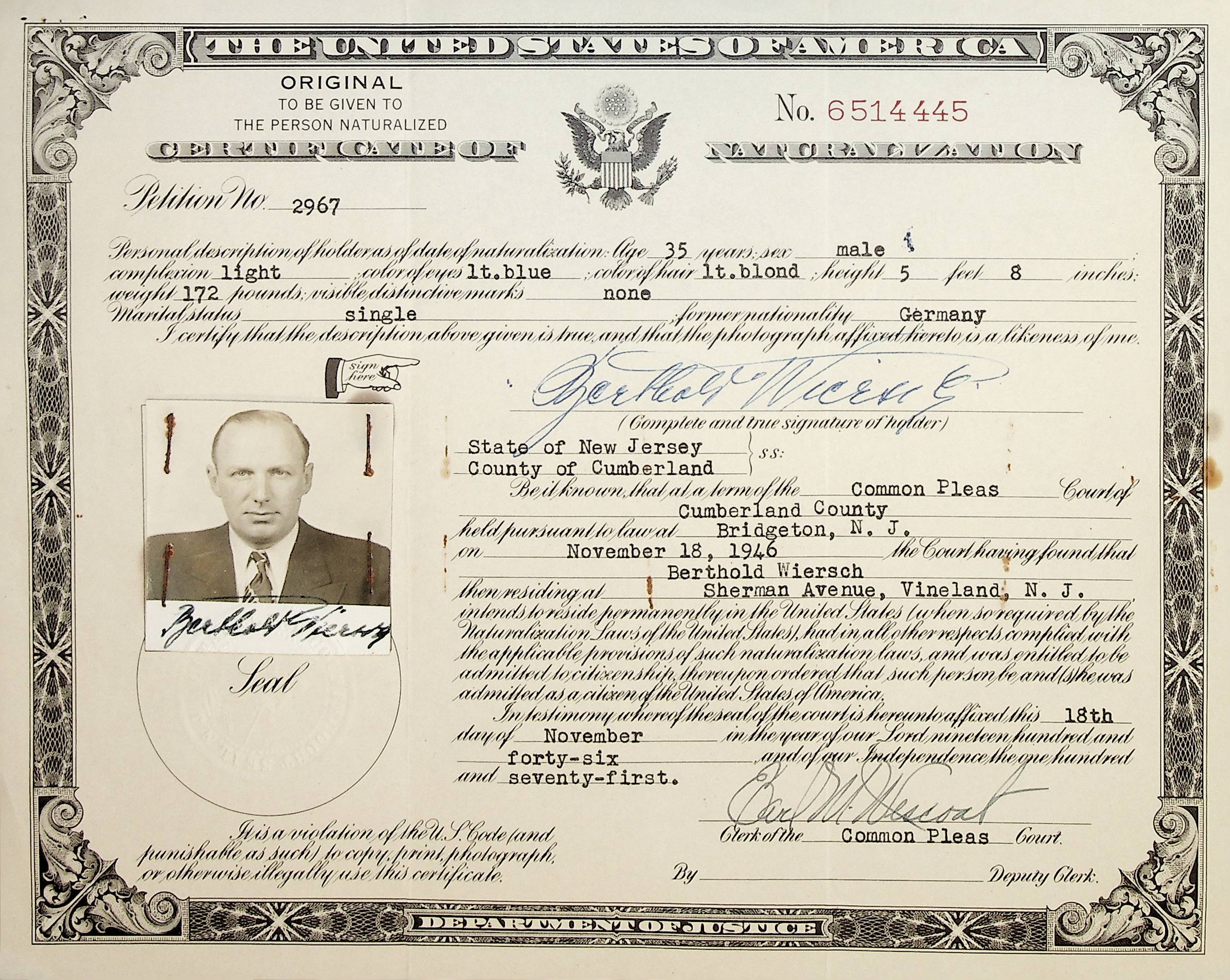
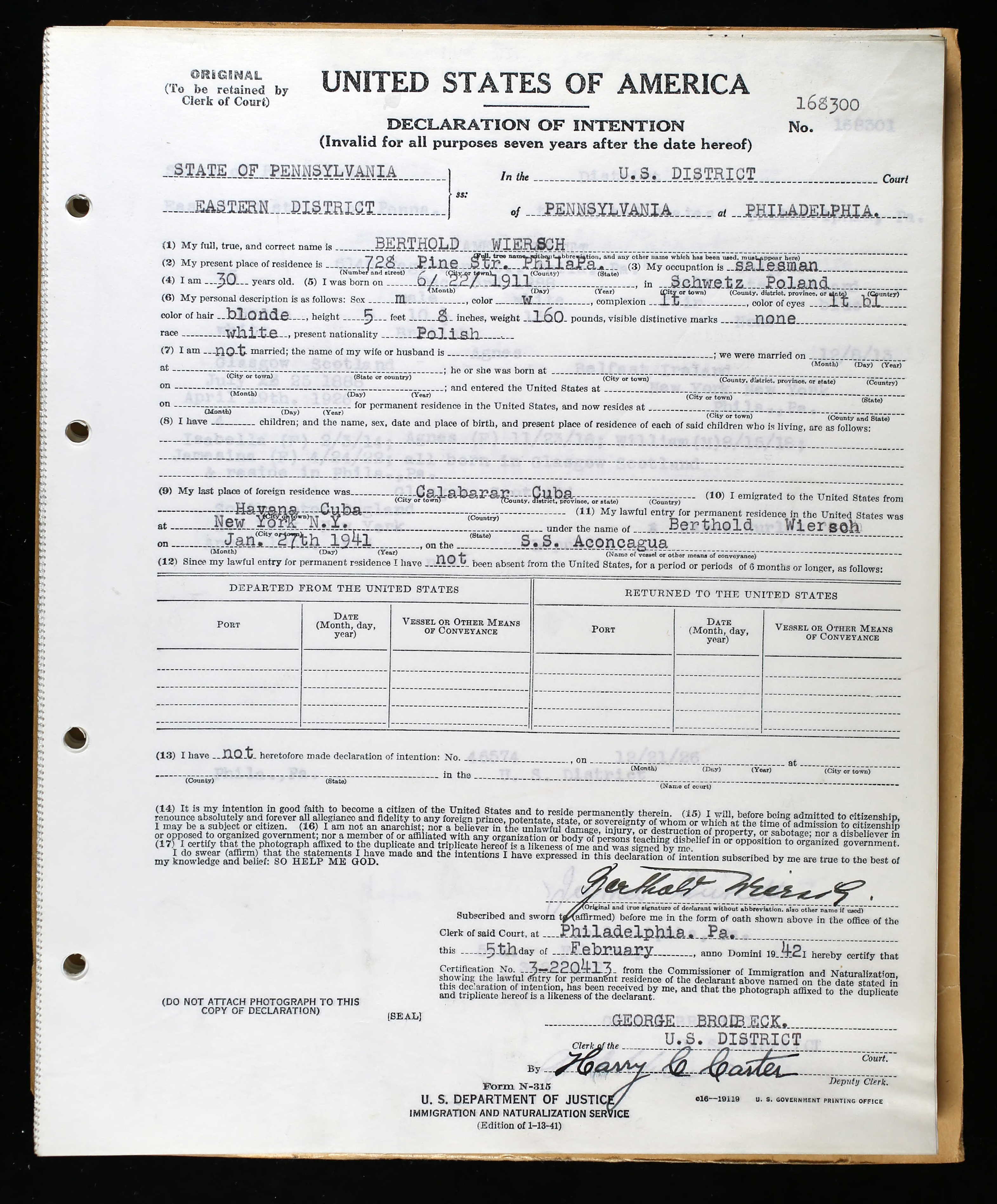
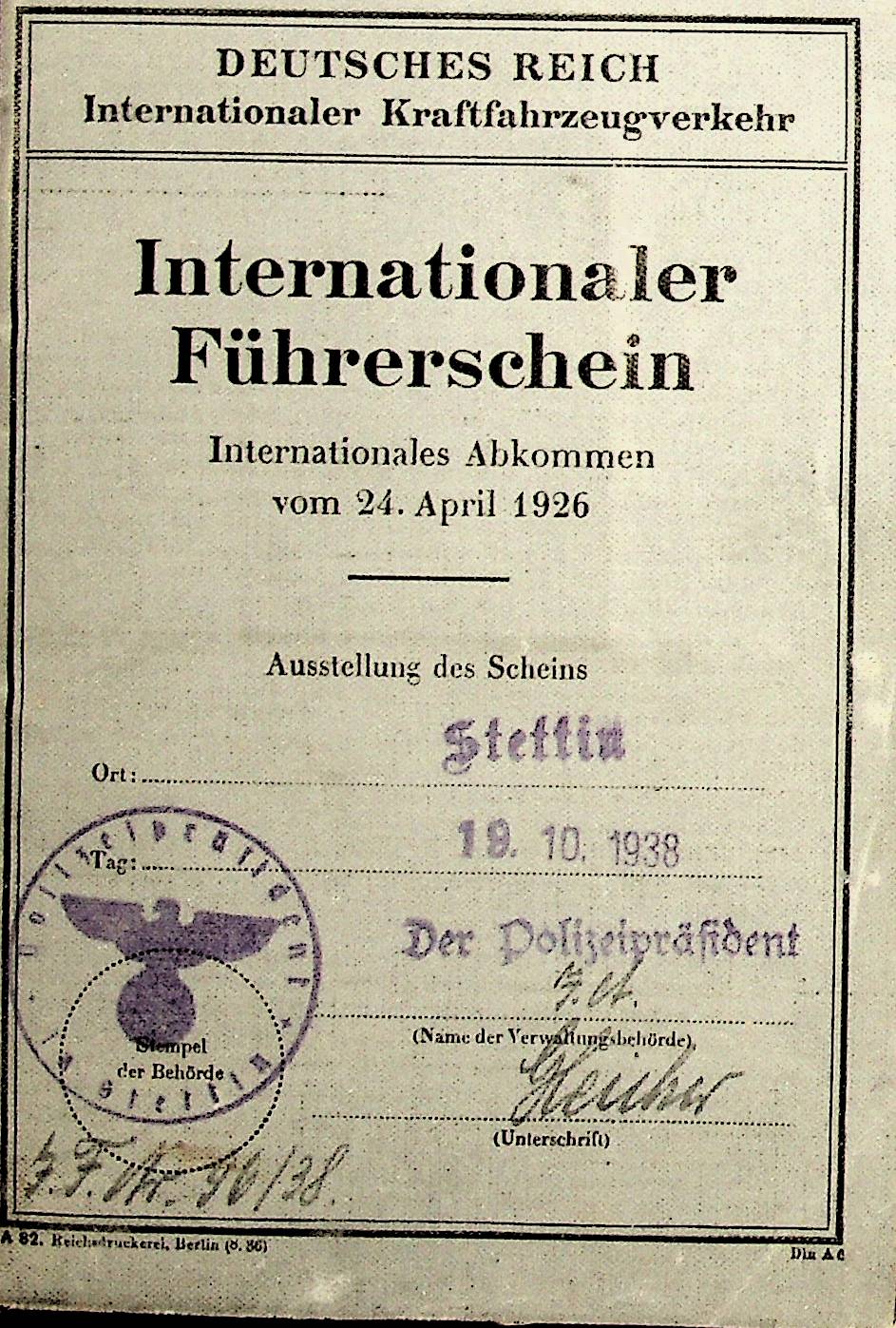
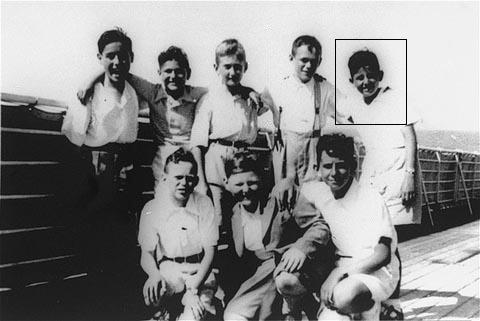
In this activity, you will be examining primary sources provided by Stockton University used for their Holocaust Survivors of Southern New Jersey Project. Click this link to read more about the project and various Holocaust survivors highlighted on their page. Use the chart here to complete this activity.
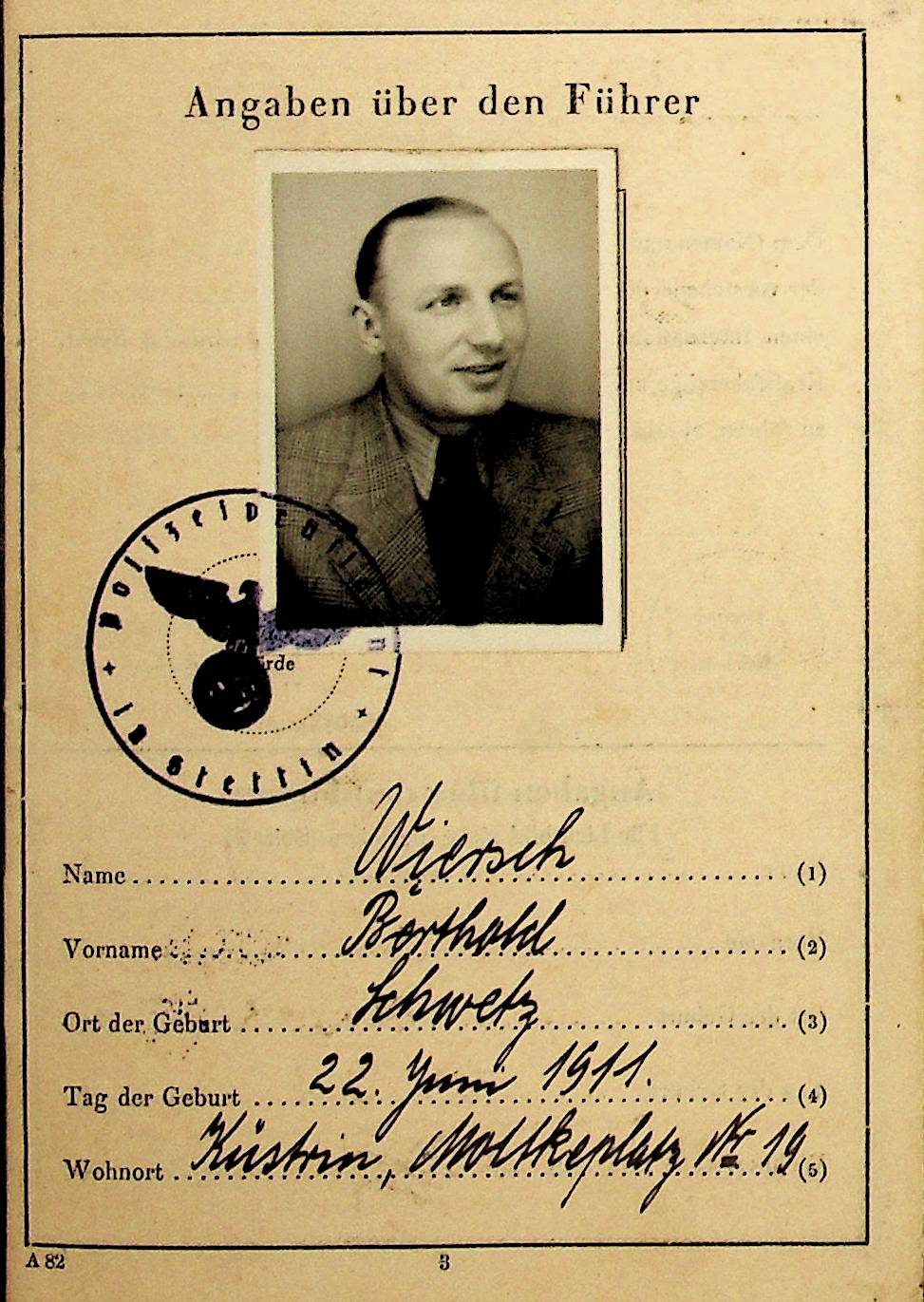
- Linked below are various primary sources, including a German passport, a ship manifest, deportation camp records, naturalization documents, and photographs. Flip through the various documents to get a sense of what type of information is available on them.
- Bertold Wiersch Naturalization Certificate
- Bertold Wiersch Naturalization Declaration of Intention
- Cover of German International Drivers License for Bertold Wiersch
- Hans Fischer and friends aboard the St Louis
- Hans, Joanna, George and Ruth Fischer aboard the SS Monterey sailing from Havana Cuba to New York USA
- Inside of German passport for Bertold Wiersch
- Paula Wiersch (Beer) in UK WWII Alien Internees
- Paula Wiersch Naturalization Certificate
- Photo of Bertold Wiersch in Cuba 1946
- Kaethe and Max Wiersch boarding the St Louis bound for Cuba
- This United States Holocaust Memorial Museum article explains the types of documents and requirements that people must have in order to emigrate to the United States. Read the article and note what types of documents were required and which of those are in the primary source folder.
- The University of California, Los Angeles, published a guide for distinguishing between primary and secondary sources. Review the guide before moving on to the task.

 in UK WWII Alien Internees.jpg)
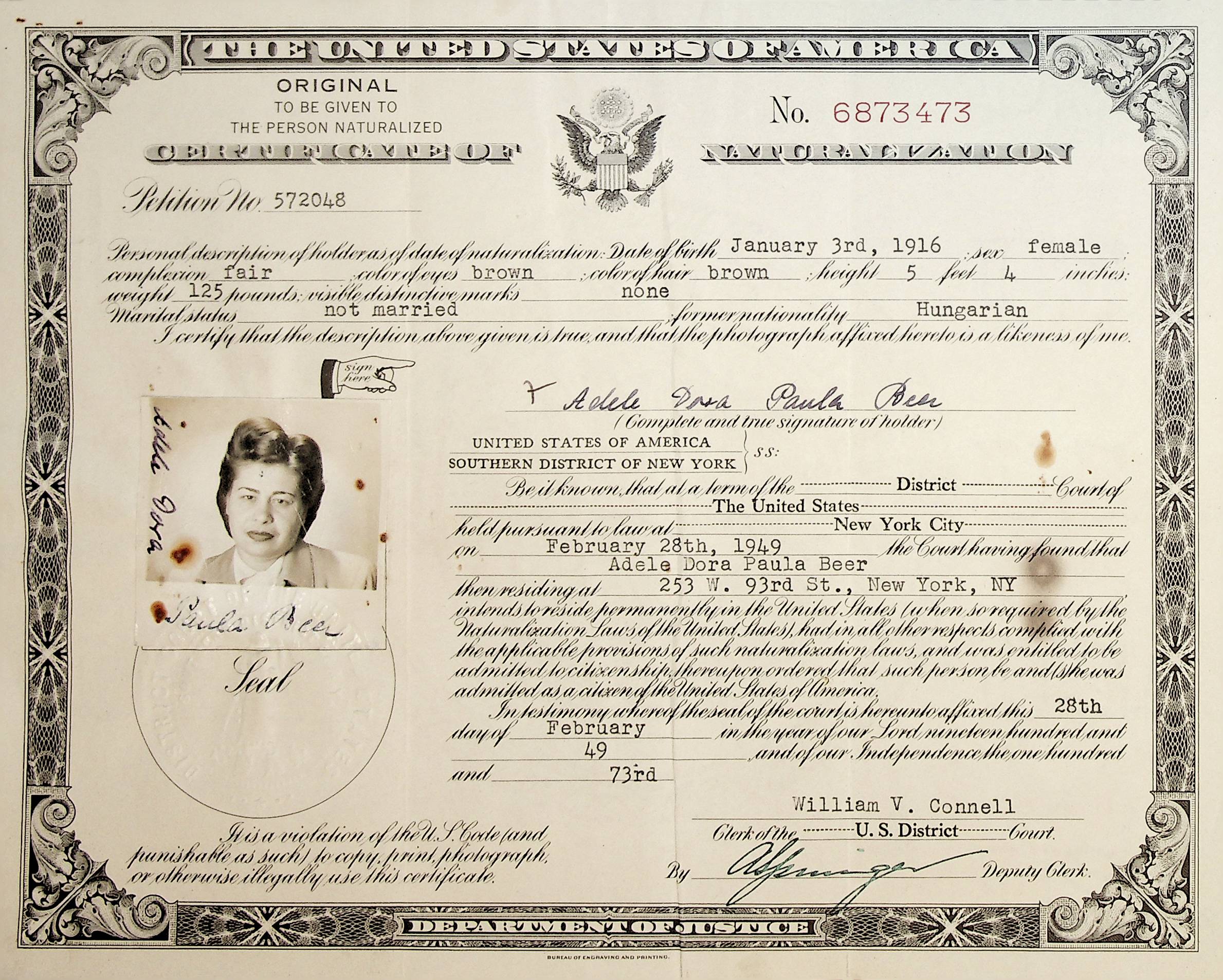
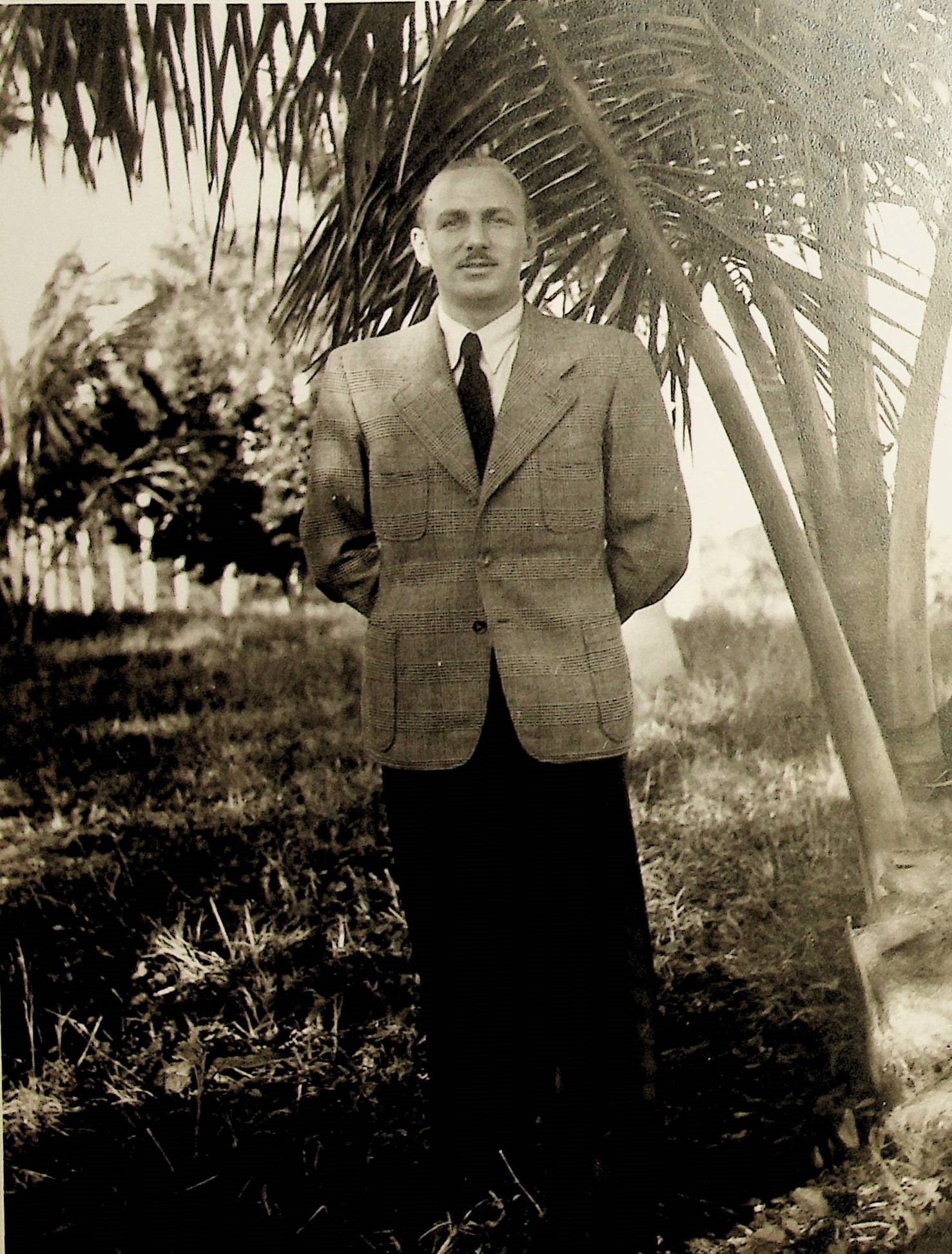
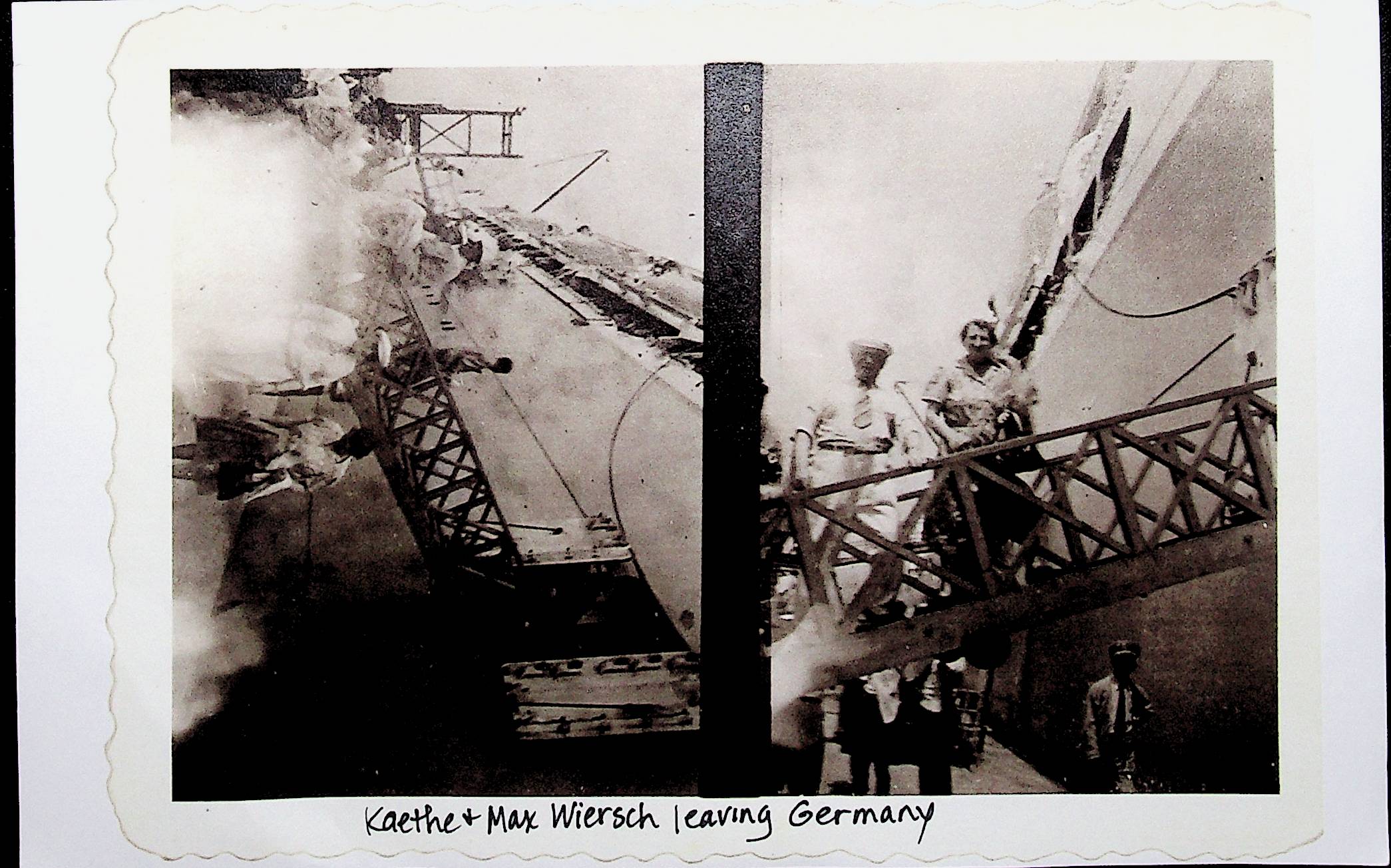
The goal of this assignment is to evaluate the primary sources available and use the historical context of the documents to locate secondary sources to support them. In the PDF, you will find a chart to complete this activity. In the primary source column, there is the title of the image that was provided. Review the documents provided and search for a supplementary secondary source. Place a hyperlink to that source in the second column where it says “Secondary Source.” In the third column under “connection,” write a brief explanation of why the secondary source connects to the primary source. For example, if the document is from a Displaced Persons Camp, you might find an article that describes the conditions of the camps to provide further information on the document.
Here are some credible websites for secondary sources to look through:
- The United States Holocaust Memorial Museum Encyclopedia & List of Passengers of the St. Louis
- Yad Vashem- The World Holocaust Remembrance Center
- Facing History and Ourselves Resource Library
In this activity, you will be using a tool curated by the Holocaust Survivors of South Jersey Project, housed at Stockton University’s Sara and Sam Schoffer Holocaust Resource Center. The tool is an interactive PowerPoint that highlights the stories and experiences of almost 100 Holocaust survivors who settled in Southern New Jersey at some point after the war. The information in the PowerPoint revolves around the experiences of the survivor, what their experiences were, such as Kristallnacht, being imprisoned in a camp or ghetto, immigrating through Latin America, owning a business or chicken farm in South Jersey, etc. The goal of this activity is to utilize the PowerPoint as a research tool, select a Holocaust survivor and create a feature-style article or podcast that honors the experiences of your selected survivor.
When you open the powerpoint presentation, place the slides in presentation mode. (This makes the links easier to use) For the purpose of this activity, navigate the slides using the “Search by Topic” button on the first slide. This will take you to the slide that has the various experiences these survivors might have had. Click through the survivors included on those slides and select one that you feel confident in writing an article about. You may use the photo from the slide for your article if applicable. Create an analytical summary of the survivor in your own words. What information stands out to you, and what would your readers most likely be most interested in learning about?
**This assignment can be done in podcast style if that is the preferred method. Simply write a script of the podcast and record yourself reading it in an editorial style.**
Consider the following questions when reviewing the biographical information:
- Where was this survivor originally from, and what was their life like before the Holocaust? (Consider home, family, religion, education, etc.)
- What major events did they experience during the Holocaust? (Were they in a ghetto, a concentration camp, in hiding, or part of a resistance movement?)
- How and when did they leave Europe after the war? (Did they come directly to the United States or go somewhere else first?)
- What challenges did they face while trying to immigrate to the U.S.? (Think about visas, waiting periods, or limits on Jewish refugees.)
- Why did they come to South Jersey specifically? (Did they have family here? Were they of ered farming land or job opportunities?)
- What kind of job, business, or lifestyle did they build in South Jersey? (Farming, owning a store, starting a synagogue, raising a family, etc.)
- How did they contribute to the South Jersey community? (Did they help others? Employ people? Teach or volunteer?)
- How did they preserve or rebuild their cultural or religious identity here? (Did they join a synagogue, teach Hebrew, celebrate Jewish holidays, or support other survivors?)
- What does their story teach us about courage, resilience, or starting over?
- Why is it important that we remember and share this person’s story today?
In this activity, you will be analyzing the immigration policies established at the Evian conference and learning about the Righteous Among Nations. During the Second World War, many countries faced a high influx of refugees fleeing persecution in Nazi-occupied territories. In 1938, thirty-two countries sent delegates to meet and discuss policies relating to immigration into their countries at the Evian Conference. Split the following articles up within the group and assign one to each person. If there are more people than articles, double up.
- Read the United States Holocaust Memorial Museum’s information on the conference: https://www.ushmm.org/learn/behind-every-name/franz-professors-plea
- Review the information located in the Facing History & Ourselves resource library about the conference: https://www.facinghistory.org/resource-library/evian-conference
- Read the United States Holocaust Memorial Museum’s information on immigration through Latin American countries: https://encyclopedia.ushmm.org/content/en/article/refuge-in-latin-america
- Review information about the Righteous Among Nations, the non-Jewish people who are honored by Yad Vashem for risking their lives to save lives during the Holocaust: https://encyclopedia.ushmm.org/content/en/article/righteous-among-the-nations
After you’ve read the articles, discuss with your group one at a time the content of the articles and emphasize some key details included in it.
The next thing you’ll do is, as a group, watch this animated video about the story of Dr. Franz Goldberger, a professor from Vienna, Austria who was desperate for help, and found someone willing in America: https://www.ushmm.org/learn/behind-every-name/franz-professors-plea
Discuss these questions with your group and write a short response to each:
- How did government policies and international decisions shape the fates of Jewish refugees during the Holocaust?
- What type of restrictions did these countries place on immigration in their respective regions?
- What was the process of immigrating out of Nazi-occupied territory to places of refuge?
- How can one person’s act of compassion or assistance change the course of another’s life during a time of crisis?
In this activity, you will be using the historical context of the Holocaust, a short poem, and biographical information about Holocaust survivors to write a diamante-style poem. A diamante poem is a style of poetry that uses nouns, adjectives, and verbs to describe, in this case, a person who survived the Holocaust in seven lines. The poems follow a specific structure like this:
Noun
Adjective, Adjective
Verb, Verb, Verb
Noun, Noun, Noun, Noun
Verb, Verb, Verb
Adjective, Adjective
Noun
The first thing you will do is read the poem, I Never Saw Another Butterfly, which was published in “I Never Saw Another Butterfly: Children's Drawings and Poems from the Terezin Concentration Camp,
1942-1944.” Read the poem on the second page of this PDF.
Discuss with your group: What do they think it’s about? What might the butterfly represent in this poem?
Review these slides on writing a diamante poem before you write your poem: (click here for spanish version of the slides) Select a survivor from the Holocaust Survivors of South Jersey Project interactive PowerPoint to write your poem about.
- You should write the survivor's name as line A.
- Two adjectives that describe the survivor in line B, like Jewish, young, healthy, athletic, sister, daughter, etc.
- Write three verbs or action words that describe them before the war, like growing, living, studying, dancing, playing, etc. in line C.
- Write one sentence that describes their experience, like “Survived four concentration camps,” in line D. Line E should have three more verbs that describe their experience during the war, like starving, working, crying, etc.
- Line F should have two more adjectives that describe the person after the war, like grateful, heartbroken, hurt, etc.
- The last line should say “survivor” as the final noun.
When you finish writing your poem, neatly copy it onto the cutout of a butterfly and decorate the butterfly using colored pencils.