Official Site of The State of New Jersey
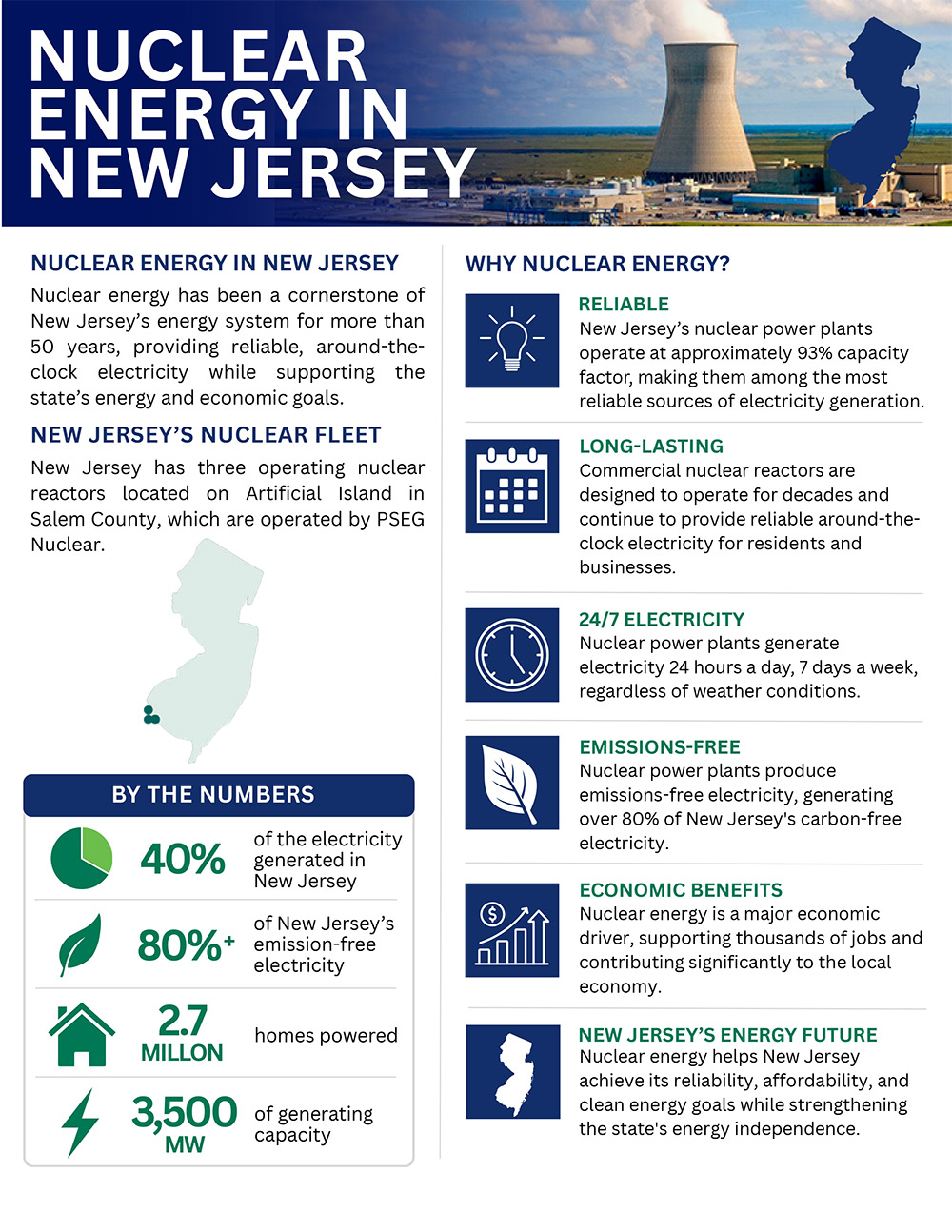
New Jersey already runs on nuclear power. It has for more than 50 years. Three reactors in Salem County – Salem Units 1 and 2 and Hope Creek – quietly produce approximately 40 percent of the electricity generated in the state and more than 80 percent of its emission‑free electricity.
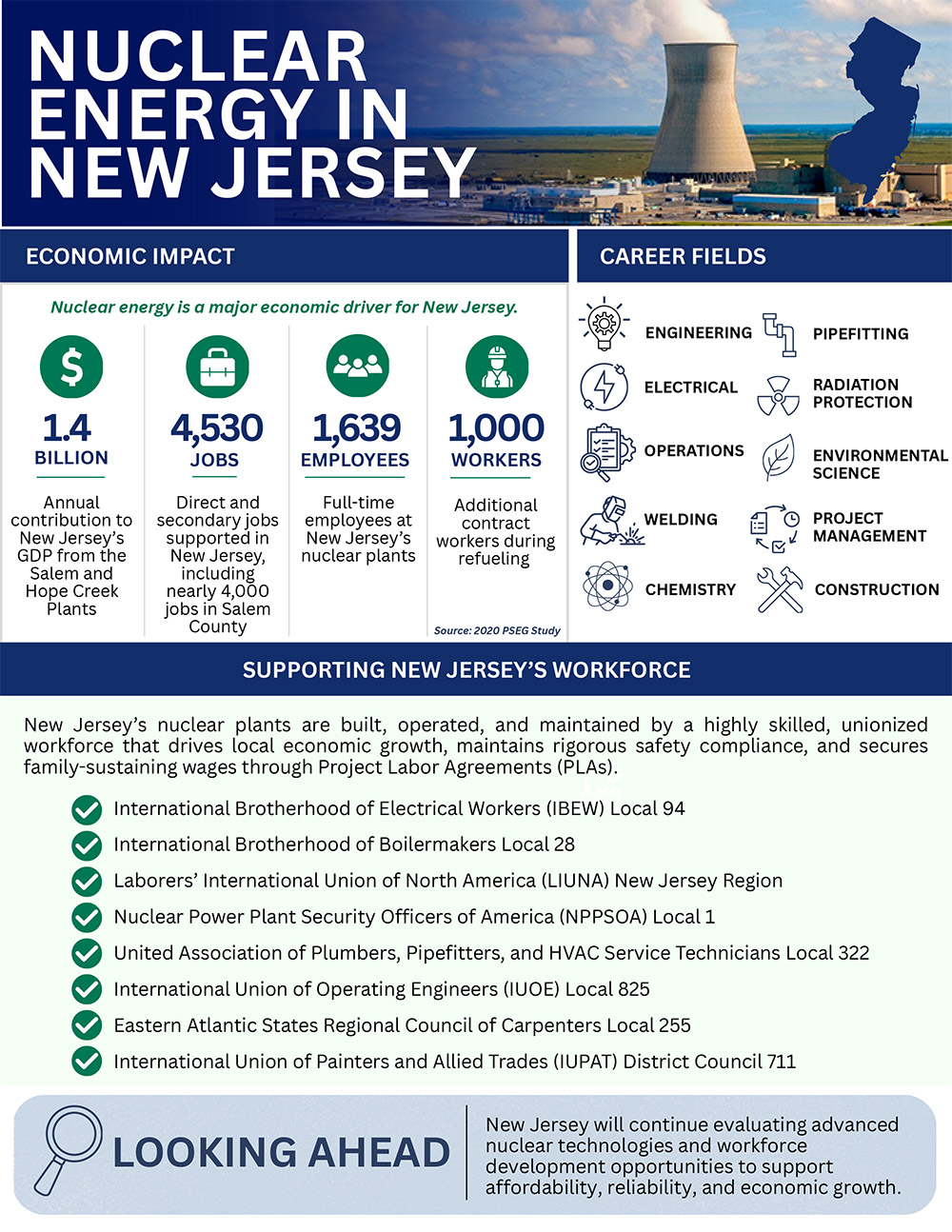
What happens to those plants in the next decade, and whether New Jersey chooses to invest in new nuclear generation, will shape electricity bills, grid reliability, and carbon emissions for a generation. As AI and data centers, advanced manufacturing, life sciences, technology and electrification drive demand up, the state is evaluating how a range of energy options, including new nuclear generation, could help support affordability, reliability, and continued progress toward clean energy goals. The state is asking the right questions now – through a rigorous, independent planning study – and the public deserves to be part of that conversation.
Nuclear is not a theoretical option for New Jersey. It is “clean firm” power – electricity generated around the clock, regardless of weather conditions – that complements renewables such as solar and storage. The future grid will require both clean firm generation alongside renewables and storage. Affordability, reliability, safety, and clean energy must remain connected because residents and businesses demand all of these simultaneously.
Learn more by reading through these fact sheets: