Delaware • New Jersey • Pennsylvania
New York • United States of America

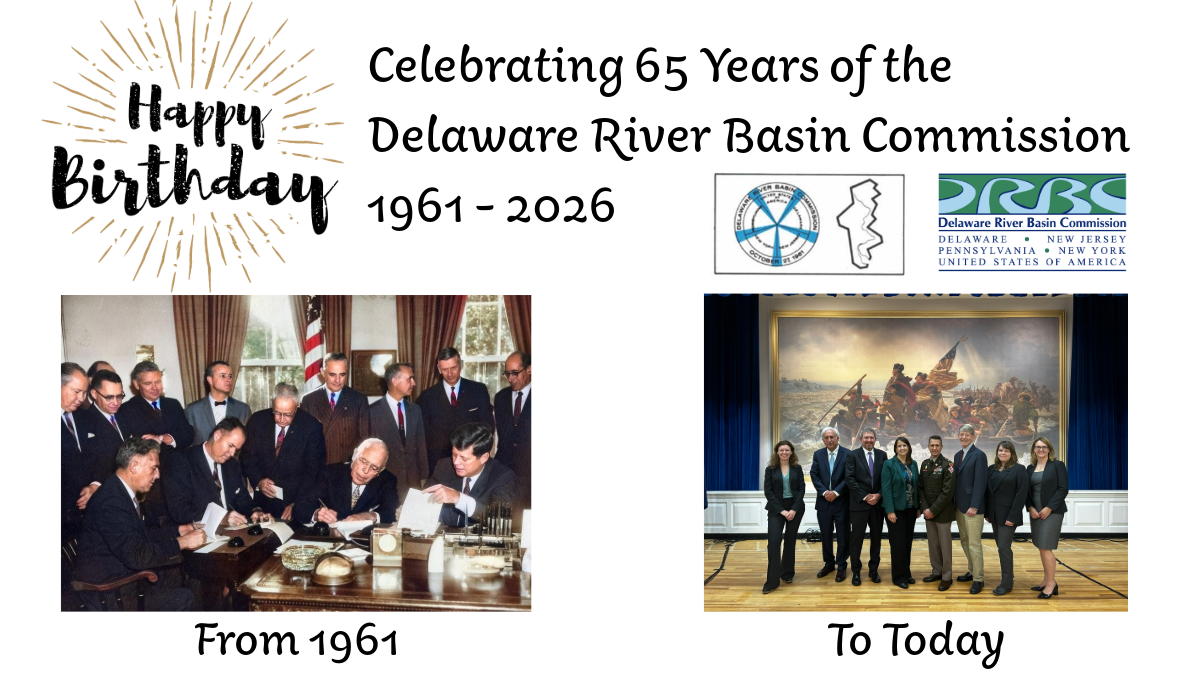
Delaware River Basin Compact became Law: October 27, 1961
When the Delaware River Basin Compact became state and federal law 65 years ago today, a first of its kind partnership was created: the Delaware River Basin Commission (DRBC).
By forming the DRBC, the basin states of Delaware, New Jersey, New York and Pennsylvania and the federal government came together to manage an interstate watershed without regard to political boundaries. Each party recognized that the river was facing serious problems - poor water quality, major flooding and concerns over water rights - and that in order to address these issues effectively, they must work together.
- About DRBC
- DRBC Timeline (created for our 60th Anniversary)
DRBC Mission and Vision
Since 1961, the DRBC has worked collaboratively to manage, protect and improve the water resources of the Delaware River Basin. These efforts help ensure an adequate and sustainable supply of clean water for all users, including over 14 million people and countless wildlife.
The Commission and its staff have been successful in its mission, led by the vision to provide trusted, effective and coordinated management of the basin's shared water resources. DRBC program areas include water supply planning, regulatory review/permitting, water quality improvement and protection, flow and drought management and flood loss reduction. DRBC also has a robust outreach and communications arm.
Today, DRBC's Work is as Important as it was 65 Years Ago
As mentioned above, poor water quality, major flooding and concerns over water rights led to the formation of the DRBC.
Since its formation:
- Water quality in the Delaware River Estuary has experienced significant improvements due to the DRBC's scientific and regulatory initiatives, and water quality in the non-tidal river remains better than the criteria, thanks to DRBC's antidegradation program known as Special Protection Waters. Today, staff expertise in modeling and monitoring ensures the waters of the Basin can be used for drinking, industry and agriculture, as well as for recreation and aquatic life.
The DRBC's scientific and engineering expertise was the foundation EPA used in 2025 to increase Delaware River Estuary dissolved oxygen (DO) criteria, and staff is currently working with its state and federal co-regulators on implementing the new, improved DO criteria.
- The basin's flood of record occurred in 1955. The region still experiences floods, and DRBC staff helps coordinate the sharing of flood information and supports flood loss reduction efforts across the basin.
The basin's drought of record occurred in the 1960s. The region still experiences droughts, and DRBC staff expertise in flow and drought management has helped ensure that during these dry times there is enough water in the river to meet all users' needs. - DRBC's robust regulatory programs ensure the proper review of large water withdrawals and wastewater discharges to basin waters before approval and proper management once approved.
- DRBC continues to be a leader in managing water supplies in the basin. Staff have studied water availability and identified water use trends in the basin to help plan for future water needs. In addition to a comprehensive water conservation program, staff also implement a water audit program, helping water suppliers identify and remediate leaks within their distribution systems.
- Staff is developing DRBC's first Water Resources Resilience Plan, which will help us ensure resilient and sustainable water resources in a changing climate. The plan is looking at how climate change drivers (increased air temperature, changes in precipitation patterns and sea level rise) and other challenges will impact various water resource assets, identifying hazards and vulnerabilities and determining what actions DRBC can take within its jurisdiction.
Looking Back, Looking Ahead
The DRBC's mission to sustainably manage, protect and improve the water resources of the Delaware River Basin, on which over 14 million people and our region’s economy depend, has not changed since 1961. For 65 years, the four basin states and the federal government have partnered through the DRBC to accomplish what none could achieve working alone, developing sound science for shared water resource management in order to meet immediate and long-range needs.
The work is not done, and we look forward to continued collaboration with our members, other federal and state partners, the regulated community, and all stakeholders in the basin, to ensure a clean, sustainable water supply for generations to come.
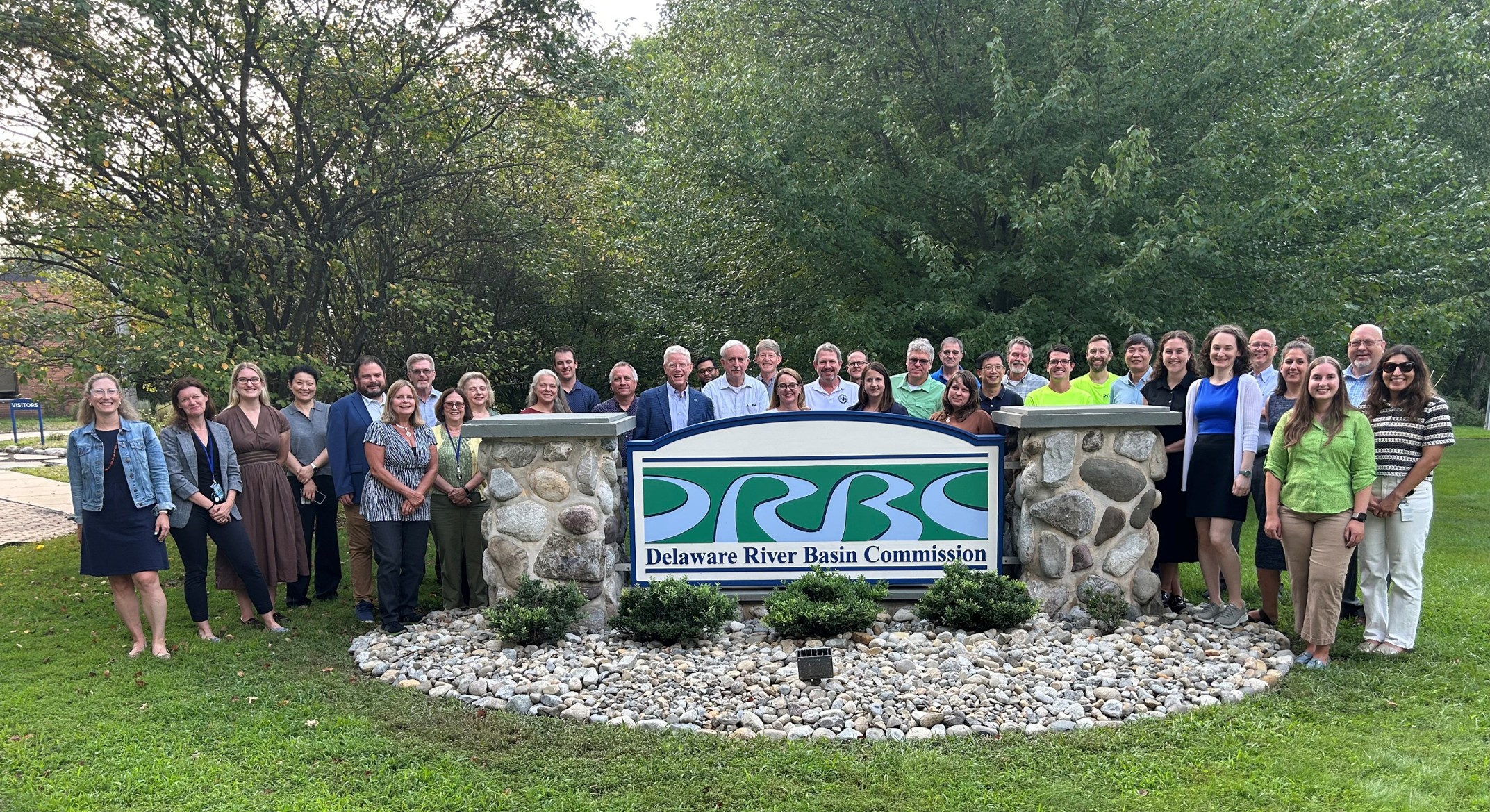
Today, DRBC has 37 staff members, including scientists, engineers, planners and communicators.
