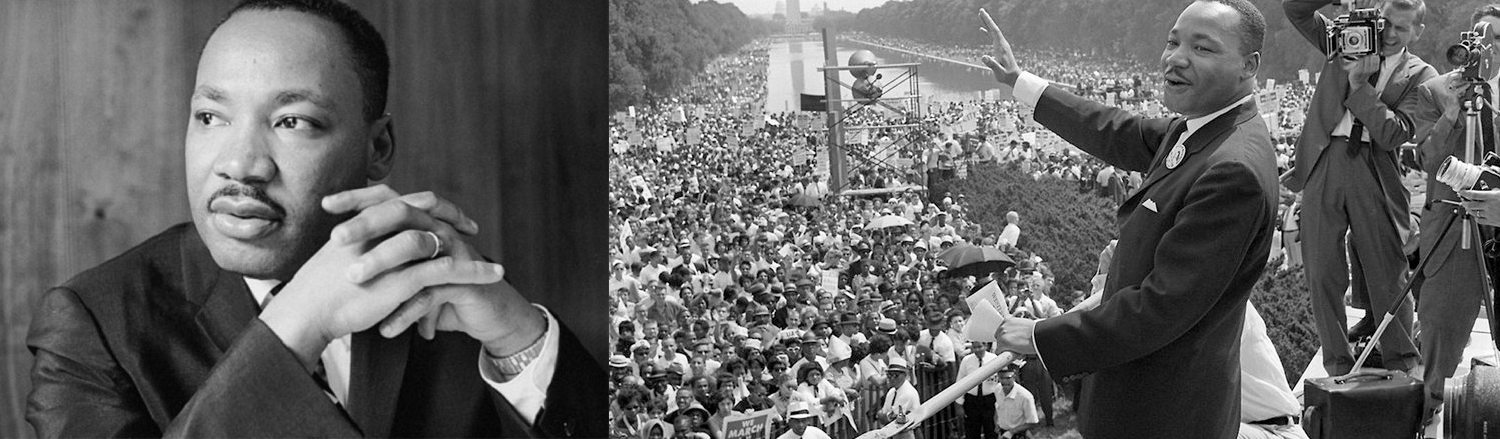
The New Jersey Dr. Martin Luther King, Jr. Commission is offering mini grants to support commemoration of Dr. Martin Luther King, Jr., and his work & legacy, on or around the Martin Luther King, Jr. Day holiday on January 18, 2027.
Grant amount will be based on the reach of the program; grants up to $1000 for local programs; $2500 for regional programs; and up to $5000 for statewide programs.
NOTE: Priority will be given to events that incorporate observation or commemoration of the 70th anniversary of the Little Rock Nine students.
We are seeking applications of up to 3 pages, including a budget, that will propose events or programs that might include: Community Service; Presentation of archival material/film: Arts event; Civil Rights Discussion/Roundtable Interview vets of the Civil Rights Movement, etc.
APPLICATION: The three-page application should address the following
NARRATIVE: (2 page maximum)
WHO IS ELIGIBLE:
Eligible agencies include public or private non-profit organizations incorporated in NJ (https://nj.gov/state/nonprofit.shtml)(501-C3 only), community and faith-based organizations; American or NJ Indian Tribal communities: local education agencies, charter schools and institutions of higher education; local, county or state government; labor organizations; and partnerships or consortia consisting of the aforementioned.
ABOUT APPLYING:
ABOUT THE AWARD:
Questions? Please email the Commission at MLKCommission@sos.nj.gov
DOWNLOADS:
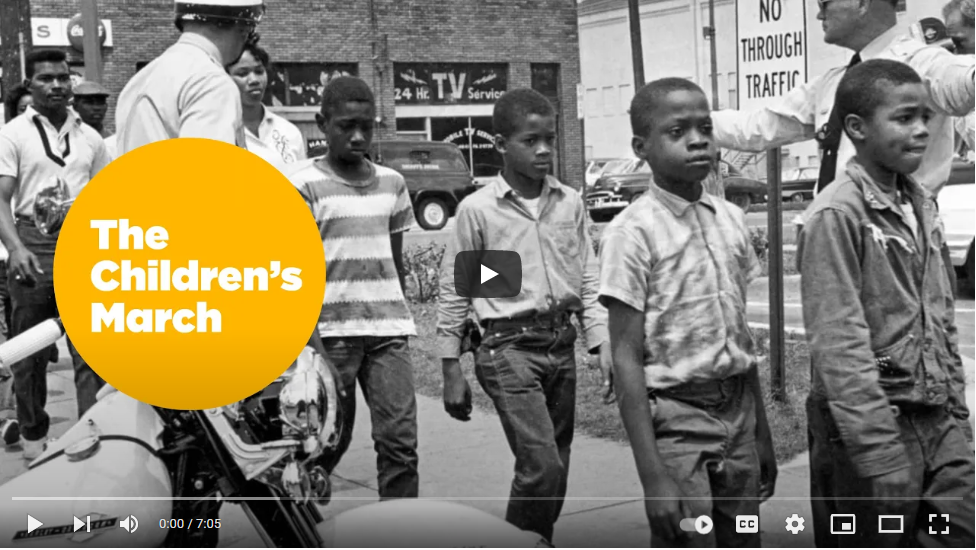
Little Rock School Desegregation | The Martin Luther King, Jr. Research and Education Institute
(The Martin Luther King, Jr. Research and Education Institute at Stanford University)
Three years after the U.S. Supreme Court ruled unanimously in Brown v. Board of Education that separate educational facilities are inherently unequal, nine African American students—Minnijean Brown, Terrance Roberts, Elizabeth Eckford, Ernest Green, Thelma Mothershed, Melba Patillo, Gloria Ray, Jefferson Thomas, and Carlotta Walls—attempted to integrate Central High School in Little Rock, Arkansas. The students, known as the Little Rock Nine, were recruited by Daisy Bates, president of the Arkansas branch of the National Association for the Advancement of Colored People (NAACP). As president of the Montgomery Improvement Association, Martin Luther King wrote President Dwight D. Eisenhower requesting a swift resolution allowing the students to attend school
Eisenhower, Little Rock Crisis, 1957, civil rights history, desegregation, education, school integration (BillofRightsInstitute.org)
The Lasting Impact of the Little Rock Nine (Biography.com)
Nine From Little Rock, 1964 | National Archives (US National Archives)
Short documentary film is about the nine students who integrated Central High School in Little Rock, AR, in 1957. It was produced and directed for the United States Information Agency (USIA) by documentary filmmaker Charles Guggenheim.
DESEGREGATION IN USA
Teaching the 1964 New York City School Boycott (CivilRightsTeaching.org)
The Largest Civil Rights Protest You’ve Never Heard Of: Teaching the 1964 New York City school boycott
ON THE MAP; Remembering a Boarding School for Black Students (The New York Times Oct 1, 2000)
DESEGREGATION IN NEW JERSEY
Hedgepeth and Williams v. Board of Education (Wikipedia)
Hedgepeth and Williams v. Board of Education, Trenton, NJ, 131 N.J.L. 153, 35 A.2d 622 (1944), also known as the Hedgepeth–Williams case, was a landmark New Jersey Supreme Court decision decided in 1944. The Court ruled that since racial segregation was outlawed by the New Jersey State Constitution, it was unlawful for schools to segregate or refuse admission to students on the basis of race. The case led to the formal desegregation of New Jersey public schools and was a precursor to Brown v. Board of Education.
Lessons for Today from a Landmark New Jersey Desegregation Case (Albert Shanker Institute)
New Jersey National Guard pioneered segregation’s end (US Air National Guard)
How One NJ School District Tackled Desegregation - Booker v. Plainfield Board of Education (New Jersey State Library)
A Status Quo of Segregation: Racial and Economic Imbalance in New Jersey Schools, 1989-2010 (The Civil Rights Project UCLA)
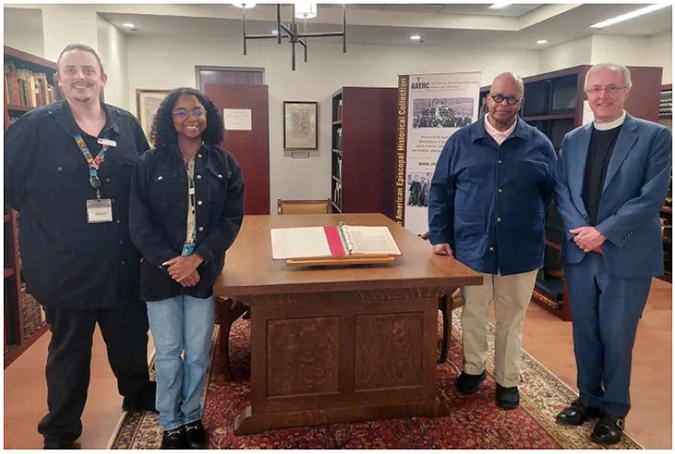
Ten pages that once were considered for the 1963 “Letter from Birmingham Jail” were discovered in March by a graduate student concluding an internship by examining paper donated to the African American Episcopal Historical Collection, a joint venture of the Virginia Theological Seminary and the Historical Society of the Episcopal Church. Read More Here
"What to the Slave is the Fourth of July?" — July 5, 1852
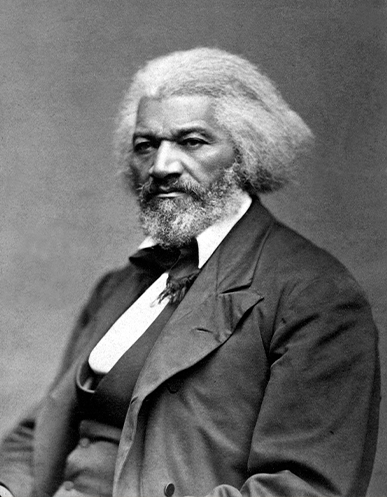
Frederick Douglass, c. 1879 Library of Congress · Public Domain
Born into slavery in Maryland, Frederick Douglass (1818–1895) escaped to freedom in 1838 and became the most influential Black abolitionist of the nineteenth century — an orator, editor, author, and statesman whose voice shaped the moral argument against slavery.
On July 5, 1852, Douglass delivered an Independence Day address to the Rochester Ladies' Anti-Slavery Society. It became one of his most famous speeches — asking his audience to see the Fourth of July from the perspective of the enslaved, while insisting that the Constitution be read not as a pro-slavery document but as a "glorious liberty document."
The New Jersey Dr. Martin Luther King, Jr. Commemorative Commission is proud to offer 10 scholarships in the amount of $5,000 per student to current high school seniors who are New Jersey residents. The scholarships will be awarded based on review of application by the independent reviewers appointed by the Commission. The online application consists of three (3) essays on assigned topics:
NOTE: Applicants selected for the final review will be required to email two (2) school and community service reference letters and an official high school transcript.
The on-line application portal will be open for submissions until 12PM Monday, March 16, 2026. See below for copy of the entry form questions for reference.
Applications must be submitted via online form – see below for link.
Applicants must respond to all 3 of the following questions with a 100 – 300 word essay:
SCROLL DOWN TO APPLY NOW! Each answer must be between 100 – 300 words to be considered.
DOWNLOADS:
The scholarships will be awarded based on review of application by the independent reviewers appointed by the Commission. Applications will only be accepted via online form.
The submission period has ended.
Courtesy of the NJ Dr. Martin Luther King, Jr Commemorative Commission
African-Descended Communities in Relation to the American Revolution within the North-Atlantic Region
-- Dr. Richlyn Faye Goddard, Historian, and MLK Commissioner.
Black Agency, Participation, and Impact on the American Revolution.
Blacks were present at all the major battles in New Jersey, such as Trenton (1776), Princeton (1777), Fort Mercer (1777), Monmouth (1778), and Springfield (1780), as well as those elsewhere such as Saratoga (1777), Savannah (1779), and Yorktown (1781).
Enslaved men such as Oliver Cromwell in Burlington, Primus Still in Deptford, Isaac Murrey of Mannington, and Amos Fisher in Bridgeton were emancipated as a result of service in the Continental Army.
Read more
Black Agency, Participation, and Impact on the American Revolution
Bibliography of Resources
In the spring, the Commission’s annual scholarship contest attracted more than 400 entries from New Jersey high school students. Essays were submitted reflecting the significance of Rosa Parks’ refusal to move to the back of the bus which ignited the 381-day Montgomery AL bus boycott that brought about the desegregation of the state of Alabama’s bus service.
Scholarship recipients were chosen by an independent panel of readers based on their essays, school transcripts, participation in community service, and letters of recommendation. Scholarships in the amount of $5000 were awarded to ten outstanding high school seniors to continue their education at institutions.
MLK25 Scholar: 1
Cheryl Djan
Rutgers University, New Brunswick
Technology High School

MLK25 Scholar: 2
Nathaniel Esubonteng
Stanford University
Science Park High School
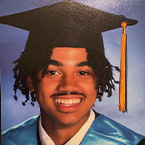
MLK25 Scholar: 3
Aydan Howell
Widener University
Middle Township High School
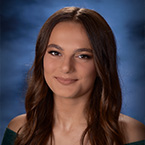
MLK25 Scholar: 4
Braylie LaFisca
Chestnut Hill College
Allentown High School
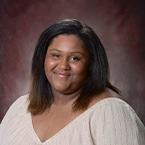
MLK25 Scholar: 5
Emily Laing
Rutgers University, New Brunswick
Neptune High School

MLK25 Scholar: 6
Lisandro Moron
Saint Peter's University
José Martí Steam Academy

MLK25 Scholar: 7
Nysalee Rosa
Kean University
Newark School of Global Studies
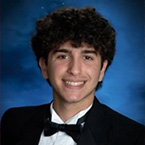
MLK25 Scholar: 8
Jeremy Shore
University of Southern California
Cherry Hill High School East
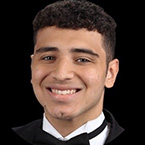
MLK25 Scholar: 9
Marco Vilet
Carnegie Mellon University
Technology High School

MLK25 Scholar: 10
Alexia Zambito
University of North Carolina at Chapel Hill
Holmdel High School
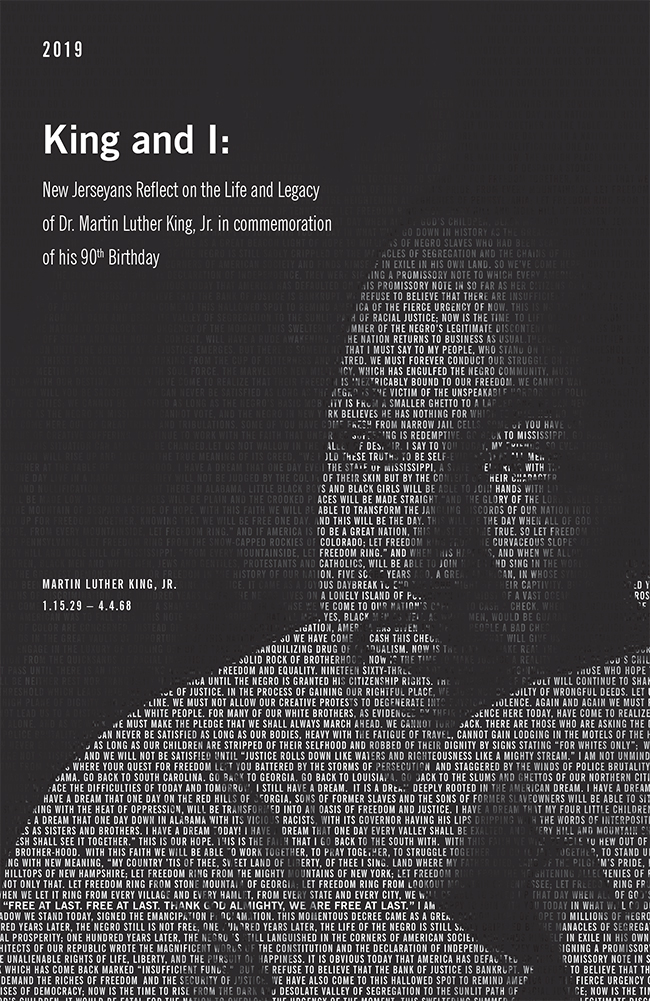
New Jerseyans Reflect on the Life and Legacy of Dr. Martin Luther King, Jr. in commemoration of his 90th Birthday
 Official Site of The State of New Jersey