Official Site of The State of New Jersey
New Jersey is a trauma-informed and healing-centered state, creating opportunities to prevent and empower healing from individual transgenerational, and community trauma.
The mission of The Office of Resilience is to be an incubator and advocate for community-developed solutions, grounded in positive and adverse childhood experiences science, that help to create a healing-centered ecosystem where all NJ residents thrive. Created in June 2020, this Office is located within the NJ Department of Children and Families while being a resource across State agencies.
- Achieve Trauma-Informed and Healing -Centered State Designation
- Conduct a PACEs Public Awareness and Mobilization Campaign.
- Maintain Community-Driven Policy and Funding Priorities.
- Provide Cross Sector PACEs Training.
- Promote Trauma-Informed/ Healing-Centered Services and Supports.
From Trauma to Healing: Healing-Centered Approaches to Trauma in Families and Communities
This 10-week fully online and interactive course offers a comprehensive exploration of healing-centered approaches to addressing trauma. Moving beyond traditional trauma-informed care, the curriculum emphasizes a practice-shift towards recognizing and nurturing the inherent strength and resilience of individuals, families, and communities affected by trauma.
Course Term & Fee
October 12 – December 18, 2026 (10 Weeks)
$550
Course Highlights:
- Gain a deep understanding of Positive and Adverse Childhood Experiences (PACEs) science; examine how early experiences shape brain development, and explore long-term outcomes of trauma across generations
- Learn about pioneering research on neurobiological responses to trauma with practical applications tailored for family and community contexts
- Be guided by a trauma-certified, licensed mental health professional and faculty in the department of Family Science & Human Development
- Develop culturally responsive skills to support healing within family systems and community structures
- Earn CEUs and a micro-credential certificate from the Department of Children and Families’ Office of Resilience and Montclair State University
Registration link opens May 18, 2026
Click HERE to be notified when registration starts!
Contact Information:
Family Science & Human Development
973-655-4171
fshd@montclair.edu
Scholarships are available through OOR and awarded to candidates who demonstrate a financial need.
- Age: Applicants must be at least 18 years old.
- Commitment: Must commit to completing the 10-week program, including all assignments, workshops, and discussions.
- Technology Access: Must have reliable internet access and a device capable of participating in online sessions (e.g., computer, tablet).
- Language Proficiency: Must be proficient in the language of instruction (e.g., English).
- Selected applicants will be required to participate in an interview as part of the scholarship qualification process.
- Must be a New Jersey resident
- Educational Background: No formal degree required; however, candidate must demonstrate an interest in gaining a deeper understanding of Positive and Adverse Childhood Experiences (PACEs), learning cutting-edge research on neurobiological responses to trauma, and developing culturally responsive skills to support healing within family systems and community structures.
- Community Involvement: Evidence of active involvement in community service, advocacy, or related projects addressing trauma or healing.
- Personal Statement: Submit a short essay (no more than 500 words) explaining why you are interested in the program and how you plan to apply the knowledge in your community.
- References: Provide one or more letters or recommendation.
Preference will be given to candidates who demonstrate financial need through a brief statement (no more than 200 words).
Step 1: Review Eligibility Criteria
- Carefully review the eligibility requirements outlined above. Ensure that you meet all qualifications before proceeding with your application.
Step 2: Complete the Application Form
Step 3: Submit Supporting Documents
Please attach the following documents:
- Updated resume or CV.
- One (1) or more letter(s) of recommendation.
Step 5: Submit the Application
- Review your application to ensure all fields are completed and required documents are attached.
- Email application and supporting documents to Sofia.Noncent-Johnson@dcf.nj.gov.
- Submit your application by the deadline: Late submissions will not be considered.
Step 6: Await Confirmation and Next Steps
- Once your application is submitted, you will receive a confirmation email.
- Applications will be reviewed, and selected candidates will be notified via email to schedule an interview.
Being Trauma Informed
Becoming trauma informed as an organization is making a commitment to change culture and policies. As Individuals, becoming trauma informed is understanding the impact trauma has and creating space for change for internal and external challenges. One aspect of trauma informed care is focusing on the strengths first approach so positive childhood experiences can flourish.
The New Jersey Office of Resilience’s Trauma Informed Approach Continuum describes the knowledge, skills, and behaviors that are associated with the process of understanding and integration of trauma
informed principles and practices within an organization. This continuum is a modified version of the Missouri Model (2019), combined with the Healing Centered Engagement Model (Ginwright, S., 2018). It moves from trauma awareness to healing-centered, articulating a profound shift in which policies, environments, and interactions consistently prioritize trauma-informed principles to prevent retraumatization and foster healing. The stages move progressively from foundational behaviors and skills to more complex ones. The behaviors and skills are not mutually exclusive, and organizations may attain competencies across the continuum. As new knowledge becomes available, the stages in the continuum may be repeated.
Organizations interesting in hosting this free 2-day opportunity, contact us via email at DCF.OfficeofResilience@dcf.nj.gov
-
Organizations have become aware of how prevalent trauma is and have begun to consider that it might impact their clientele and their staff.
-
Staff are introduced to the paradigm shift from, “What’s wrong with you?” to “What happened to you?” when considering the root causes of behavior.
-
Staff at all levels understand the word trauma and how it can change the way they view and interact with others.
-
Workplace safety is prioritized and considers physical, psychological, and moral factors
-
Organizations promote and value a trauma-informed lens, through exploring the principles of
trauma-informed care within their environment and daily work.
-
Organizations are building consensus around trauma-informed principles.
-
Organizations consider the implications of embedding trauma-informed principles across
policies and practices. Avenues for change are considered and explored.
-
Trauma training is facilitated for all staff, including when onboarding new employees.
-
Staff feel supported and have space/s for their voices to be heard.
-
Organizations have begun to change their organizational practices to highlight the role of trauma. At all levels of the organization, staff begin rethinking the routines and infrastructure of the organization.
-
Staff utilizes language that supports safety, trust and transparency, voice and choice, collaboration, and empowerment. Staff applies knowledge of trauma and resilience internally and externally.
-
Organizations have policies that support addressing staff’s personal, secondary and vicarious trauma.
-
A “universal precautions” approach is used, presuming that any/all clientele and staff may be trauma impacted.
-
People with lived experience, including staff, are engaged in meaningful roles throughout the agency.
Individuals outside the organization understand that trauma-informed approaches are at the center of the mission.
-
Organizations shift from an individual’s “identity focused on trauma” to “identity focused on possibility”; paradigm shift moves from “What happened to you?” to “What’s right with you?” to counteract the tendency of traumatic experience being seen as, ‘less than’.
-
Behavior is understood as an indicator of stressors, rather than “misbehavior” or as a symptom of individual trauma; organization works to address factors that cause trauma, mitigate its effects and prevent trauma from re/occurring,
-
Trauma interventions shift from individual-focused to community-focused as healing centered: policies and practices that are impartial are integrated into the fabric of the work.
-
Aim is for restoration and healing that is rooted in identity, versus coping with symptoms, utilizing authentic human connection to heal.
-
Healing-centered engagement focuses on the well-being we want.
-
Approaches to providing services are trauma shielding or trauma reducing. Practices are reflective and collaborative, promoting learning, growth and prevention. Past experiences are utilized for making meaning and relational leadership is thriving.
Delaware Developmental Framework for Trauma-Informed Care (2019).
https://governor.delaware.gov/wp-content/uploads/sites/24/2019/02/Delaware-Developmental-Framework-FSCC.pdf
Ginwright, S. (2018, May 31). The future of healing: Shifting from trauma informed care to healing
centered engagement. Medium, retrieved from https://ginwright.medium.com/the-future-of-healing-shifting-from-trauma-informed-care-to-healing-centered-engagement-634f557ce69c
Missouri Model (2019). https://dmh.mo.gov/media/pdf/missouri-model-developmental-framework-trauma-informed-approaches
https://www.samhsa.gov/mental-health/trauma-violence/trauma-informed-approaches-program
Developed by the New Jersey Department of Children and Families’ (DCF) Office of Resilience, this 8-hour training covers trauma-informed principles, concepts of resilience, trauma-informed approaches and healing-centered cultures. The prevalence and effects of trauma on children and adults will be explored.
The training will discuss the impact of Positive and Adverse Childhood Experiences (PACEs) and how Positive Childhood Experiences (PCEs) can help to mitigate the impact and promote healthier outcomes for families. Participants will be introduced to trauma-informed approach principles and implementation domains, a model for creating healing centered cultures as presented by the Substance Abuse Mental Health Services Administration (SAMHSA) and
The objectives of the training are to:
-
Define types of trauma
-
Explain neurobiology of trauma and the impact on development and functioning
-
Describe toxic stress and the disparities on various populations
-
Discuss Positive and Adverse Childhood Experiences (PACEs) and outcomes
-
Define resilience and review resilience factors
-
Explore the intersection of culture on trauma and resilience
-
Illustrate trauma-informed and healing-centered principles and applications
The training is designed to be facilitated in two 4-hour modules. It is recommended to be held over a minimum of two sessions to allow participants time to process the content and explore practical applications of the materials presented. The agenda topics for the modules are as follows:
| Day 1 | Day 2 |
|
|
Please contact dcf.officeofresilience@dcf.nj.gov for more information on how to receive the training or to become a certified trainer of this foundational course.
𝐓𝐡𝐞 𝐓𝐑𝐔𝐒𝐓 𝐚𝐬𝐬𝐞𝐬𝐬𝐦𝐞𝐧𝐭 𝐭𝐨𝐨𝐥 𝐢𝐬 𝐧𝐨𝐰 𝐚𝐯𝐚𝐢𝐥𝐚𝐛𝐥𝐞 𝐟𝐨𝐫 𝐨𝐫𝐠𝐚𝐧𝐢𝐳𝐚𝐭𝐢𝐨𝐧𝐬 𝐚𝐫𝐨𝐮𝐧𝐝 𝐍𝐞𝐰 𝐉𝐞𝐫𝐬𝐞𝐲 —𝐟𝐨𝐫 𝐟𝐫𝐞𝐞!
TRUST 2.0 identifies practical ways for organizations to promote inclusive, healing-centered practices in the workplace through improved physical spaces, staff training, internal communications, and customer relations.
Get all the info and find out how to connect your organization to TRUST 2.0
https://trust-survey.com/register/
More Information
- CTIPP Workplace Toolkit
- The National Child Traumatic Stress Network (NCTSN)
- The Missouri Model: A Developmental Framework for Trauma-Informed
- The Artic Scale stands to Attitudes Related to Trauma-Informed Care which is one of the first psychometrically valid measure. A brief overview can be viewed traumaticstressinstitute.org
The Four Rs of Trauma-Informed Care
- Realize - Realize the widespread impact of trauma and understand potential paths for recovery.
- Recognize - Recognize the signs and symptoms of trauma in clients, families, staff, and others involved with the system.
- Respond - Respond by fully integrating knowledge about trauma into policies, procedures, and practices.
- Resist - Resist re-traumatization of children, as well as the adults who care for them.
6 Guiding Principles to a Trauma-Informed Approach
The CDC's Center for Preparedness and Response (CPR), in collaboration with SAMHSA's National Center for Trauma-Informed Care (NCTIC), developed and led a new training for CPR employees about the role of trauma-informed care during public health emergencies. The training aimed to increase responder awareness of the impact that trauma can have in the communities where they work.
Participants learned SAMHSA's six principles that guide a trauma-informed approach, including: Safety, Trustworthiness & Transparency, Peer Support, Collaboration & Mutuality, Empowerment Voice & Choice, and Cultural, Historical, & Gender Issues.
Adopting a trauma-informed approach is not accomplished through any single particular technique or checklist. It requires constant attention, caring awareness, sensitivity, and possibly a cultural change at an organizational level. On-going internal organizational assessment and quality improvement, as well as engagement with community stakeholders, will help to imbed this approach which can be augmented with organizational development and practice improvement. The training provided by CPR and NCTIC was the first step for CDC to view emergency preparedness and response through a trauma-informed lens.
Resources & Services
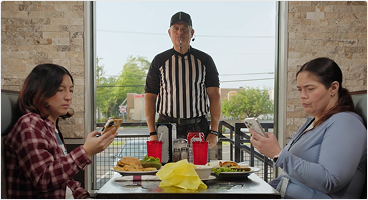
The Challenge of Technoference
When technology disrupts quality time and interactions with loved ones.

Consultation and Coaching
OOR offers professional coaching services designed to support organizations.

Healing & Resilient NJ
Where you can find the resources you need to support your resilience journey!

Glossary of Terms
Our Partners
In the Office of Resilience, we take pride in our partnerships and value the work that they produce. As we continue to build and make connections, we will continue to highlight our partnerships.