Official Site of The State of New Jersey
News Update
New Jersey Division of Animal Health Updates: April 22, 2026
A Message from the New Jersey Department of Agriculture
Dear Veterinarians and Animal Health Stakeholders,
As we enter the busy Spring season, we would like to share an update on the ongoing animal health efforts at the New Jersey Department of Agriculture (NJDA), Division of Animal Health (DAH). New Jersey’s animal operations, ranging from livestock operations to equine facilities, small farms, and growing backyard flocks, continue to demonstrate a strong commitment to animal health. This commitment is essential to protect animal health and support the resilience of New Jersey agriculture.
The NJDA DAH remains focused on disease surveillance, preparedness, and rapid response. We appreciate the continued cooperation of livestock producers, backyard animal owners, and veterinarians in reporting illnesses, submitting samples, and maintaining sound biosecurity practices. These actions strengthen our early‑detection systems and help safeguard animal health from existing threats (e.g., highly pathogenic avian influenza and rabies) and emerging threats (e.g., New World Screwworm).
We are also advancing several key initiatives, including improvements to livestock exhibitions and fairs guidance, collaborations with the Schreiber School of Veterinary Medicine, and outreach efforts targeting small-scale and emerging producers through NJDA’s One Health team. Our team continues to work closely with county boards, cooperative extension, and federal agencies to ensure coordinated communication and timely guidance when issues arise.
In the coming months, we will maintain regular updates through alerts, producer communications, and educational resources. We encourage all veterinarians and animal owners to stay vigilant for unusual illnesses, review biosecurity plans, and contact our office with questions or concerns.
Thank you for your continued dedication to New Jersey’s animal health. Your efforts have a meaningful impact, and we look forward to continuing collaboration throughout the year.
|
Edward D. Wengryn Secretary of Agriculture
|
Dr. Amar Patil Director, Division of Animal Health
|

|
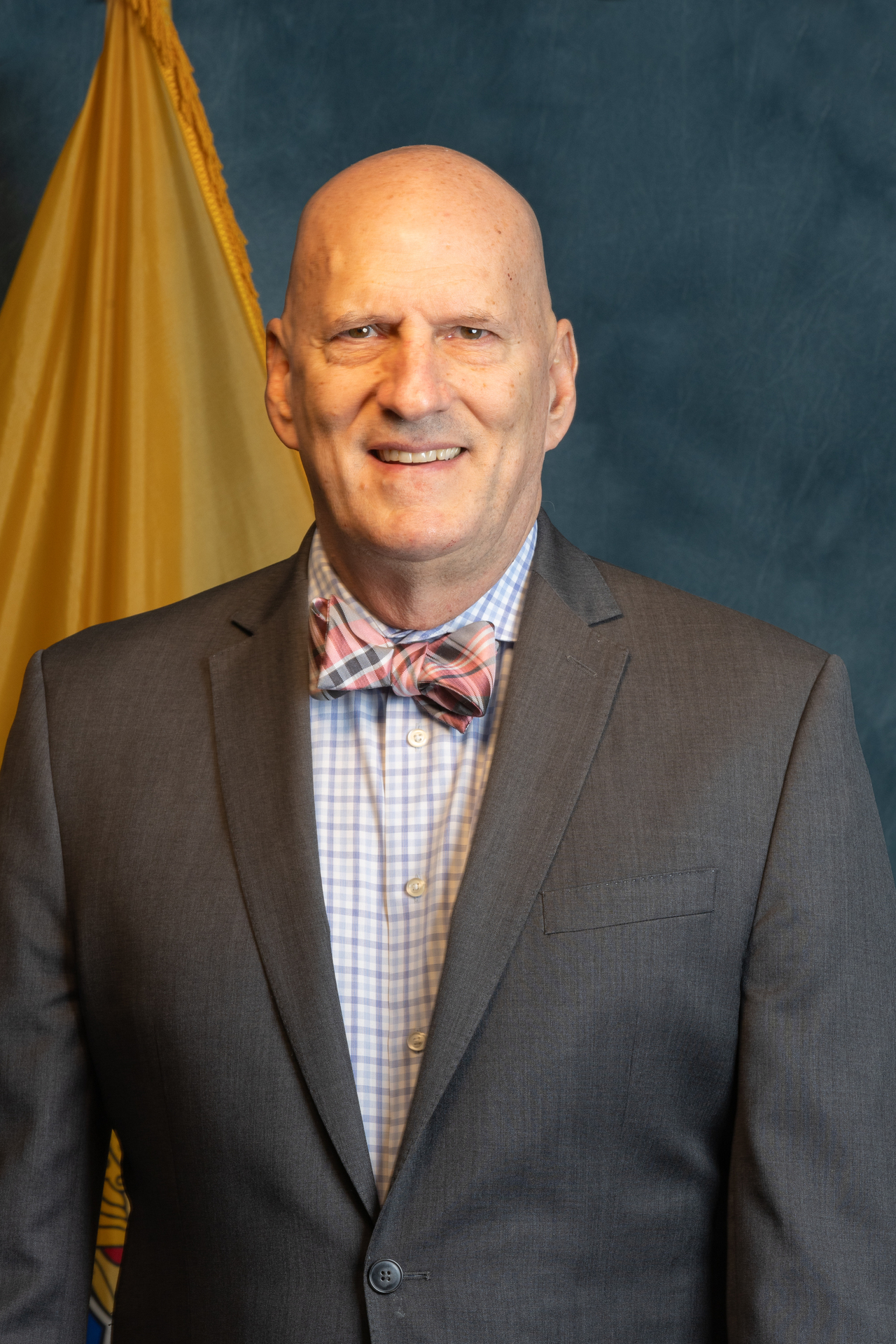
Dr. Shipra Mohan joined NJ Animal Health Diagnostic Laboratory (AHDL) in June 2025 as Assistant Division Director. In this role she manages and oversees the NJ AHDL lab. She earned her PhD from WHO Streptococcus Lab, Delhi University, India. She has extensive experience in laboratory management with Public Health and Animal Health and demonstrates strong leadership skills. Dr. Mohan has a decade of experience in Microbiology (Bacteriology, Serology, Virology and Molecular). In 2019, based on leadership skills her name was nominated for two year course and awarded for Certified Public Manager (CPM) certificate. Outside of work Dr. Mohan enjoys reading, gardening, and yoga. |
Dr. Benjamin Golas is a field veterinarian with the New Jersey Department of Agriculture’s Division of Animal Health. He earned his VMD from the University of Pennsylvania (2013) and a PhD in Ecology from Colorado State University (2022). Dr. Golas has worked in small animal and exotic practice and as a research scientist in disease ecology and epidemiology for wildlife and livestock; he now combines these backgrounds to conduct disease investigations for the Department. Outside of work, he practices aikido and is preparing to begin falconry this fall. |


CVI Cheat Sheet
The Golden Rule: Trust But Verify
State import requirements change faster than most people change their oil.
- The Resource: Start your research at InterstateLivestock.com.
- The Safety Net: If you're unsure, call the receiving State Vet’s office. They would much rather answer a 2-minute question than handle an illegal entry at the border
Official Identification is Not Optional
- "Brown horse" doesn't cut it in the world of regulatory medicine.
- Horses: Ensure the Coggins (EIA) test matches the CVI exactly. If the Coggins says "Star, Strip, Snip" and your CVI says "Blaze," you’re inviting a rejection. Make sure to list the Coggins #, Lab, date and result on the CVI.
- Livestock: Use Official ID. This means USDA-approved tags.
- Pro Tip: If you're using digital CVIs, take high-quality photos. A clear picture of a brand or a unique marking is worth a thousand words of description.
Timing is Everything
- 7 Day Receipt: CVI must be received by the state in which they were issued within 7 days of issuance.
- The 10-Day Rule: Physical inspection of animals to occur within 10 days of the certificate being issued.
- The 30-Day Expiry: Generally, a CVI is valid for 30 days from the date of inspection but confirm with the state of destination as there may be shorter windows during outbreaks.
Specific Requirements for the Big Two
- Cattle/Small Ruminants: Ensure all required negative tests (TB, Brucellosis, Trichomoniasis, etc.) are listed based on the destination state's rules.
- Scrapie Tags: Never let a sheep or goat leave without an official Scrapie ID. It’s the fastest way to get a phone call from a federal investigator.
Go Digital
If you are still using carbon-copy paper forms, you’re working harder, not smarter.
Benefits: Digital platforms (like GlobalVetLink or state-specific portals) auto-fill your clinic info, validate addresses, and instantly transmit copies to both State Vets.
Efficiency: They often catch errors (like missing zip codes or incomplete ID numbers) before you hit "submit."
| Reasons for CVI Rejections |
|
|
|
|
|
|
|
|
|
|
Which Animals Require a Coggins Test?
All equids being imported into New Jersey require a negative test within the past 12 months.
- EXCEPT for foals younger than six months old IF they are accompanied by a dam with a negative test within the past 12 months.
- All equids six months or older being ridden, driven, led, or otherwise moved in a public area, including on roads and at events, require the custodian to possess a negative official test report valid for 24 months after sample collection.
- All equids six months or older changing ownership (e.g., being sold, adopted, rescued, seized, rehomed, exchanged, bartered, given away) require a negative official test with the sample collected within 90 days prior to the transfer occurring.
- EXCEPT any horse claimed in a claiming race conducted by a race track licensed by the New Jersey State Racing Commission. In this exception, retesting for EIA is not necessary so long as this horse and all other horses admitted to the track have been tested and found negative for EIA within 24 months before the date of the claim.
- NOTE: The transferor must deliver to the transferee an unaltered copy of the official test report either personally or by certified mail.
- EXCEPTION: Equidae being imported for immediate slaughter or veterinary care do NOT require a negative test for EIA. Any other movement or transfer without a negative test would require advance authorization from the State Veterinarian. The animal’s custodian must always possess written prior authorization during movement.
New Jersey State Regulations
Quarantines and Embargos on Animals N.J.A.C. 2:5
Livestock and Poultry Import N.J.A.C 2:3
Who Can Perform a Coggins Test?
Blood samples must be collected and submitted by a USDA Category 2 Accredited Veterinarian, and tests run at an approved laboratory meeting the requirements and procedures outlined by USDA Veterinary Services.
Please see the New Jersey Department of Agriculture’s website for specific details on sample submission.
For more information about Equine Infectious Anemia, information for clientele, and tips for accredited veterinarians, see the USDA APHIS website here:
Scanned Copies of Paper Coggins Available Online
The NJDA Animal Health Diagnostic Laboratory (AHDL) proposes to change the delivery method for the USDA EIA Coggins paper form (VS Form 10-11). Currently, the VS 10-11 paper Coggins test result forms are mailed to submitter veterinarians after testing is completed. In lieu of mailing, USDA Guidance allows approved laboratories to upload scanned copies of the VS 10-11 paper form to an online portal for delivery to the submitter veterinarians. This new delivery process will improve efficiency and support updates to our internal testing, reporting, and quality management processes, thereby reducing turnaround time.
In preparation for this proposed change, the veterinarians are requested to establish an online portal account with the AHDL’s lab system if not already done. The scanned copies of EIA Coggins certificates are currently available through the AHDL’s online client portal, enabling veterinarians to access reports from any location and eliminating delays associated with mailed documents.
Within the next few months, the Animal Health Diagnostic Laboratory will no longer mail paper copies of VS 10-11 Coggins test reports by mail unless requested.
Key Changes:
1. VS 10-11 Coggins test results are scanned and uploaded to the client portal, which can be downloaded and/or printed.
2. Until May 31, 2026, both scanned copies online and mailed originals will continue to be provided.
3. Effective June 1, 2026, only scanned VS 10-11 EIA forms will be distributed through the online portal. Original VS 10-11 Coggins result forms will only be mailed upon request. If you want all your original paper Coggins test results mailed to you, please call the lab to confirm your choice.
Veterinarians may request an online portal account by filling out the form below:
Animal Health Diagnositc Lab | Client Portal
If you have any questions regarding this transition or would like to establish AHDL online account, please contact us at (609) 406-6999 or jerseyvetlab@ag.nj.gov.
Background
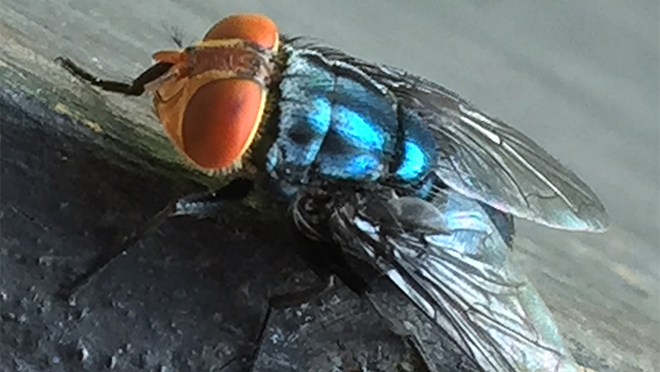
New World screwworm (NWS), Cochliomyia hominivorax, is a species of fly found throughout portions of North, Central, and South America and the Caribbean. NWS is particularly devastating because the fly larvae burrow and feed on living tissue, often causing severe, sometimes fatal damage to animals. NWS can infest any warm-blooded animal, including livestock, companion animals, wildlife, and birds. In 1966, the NWS was eradicated in the United States with a sterile insect program developed by the United States Department of Agriculture (USDA). This sterile insect program created a barrier zone in Panama, keeping most of North and Central America free from NWS and preventing expansion into the United States. A breakthrough incursion in Central America occurred in 2023, with NWS progressing northward. Since last year, reported cases nearing the U.S.-Mexico border has pressed the USDA to take proactive steps to protect against NWS in this county.
The USDA stopped moving cattle, horses, and bison across the U.S.-Mexico border. Mexico’s National Service of Agro-Alimentary Health, Safety, and Quality (SENASICA) continues to report additional NSW cases in domestic animals. Reported cases are updated weekly on the USDA website: screwworm.gov map. By early March 2026, the USDA has announced several new confirmed cases of NWS in Tamaulipas, Mexico. Of these cases, affected species included bovine, equine, canine, and swine. These recent Tamaulipas case have been more than 200 miles from the U.S.-Mexico border and within the area that were scheduled for the release of sterile flies, which began in January 2026.
A U.S.-based sterile fly dispersal facility in Edinburg, Texas has been established. This facility expands USDA’s ability to disperse sterile flies along the southern border and into the United States, if necessary.
What to look for
- Maggots in wounds or other body openings, such as the nose, ears, genitalia, or navel (in newborn animals).
- Wounds that have a bloody discharge or foul odor.
- Wounds that become deeper and larger as the maggots grow and feed on living tissue.
- Animals that have recently given birth, suffered an injury, or undergone a surgical procedure (such as dehorning or branding) are most vulnerable to attracting NWS.
- An animal newly arrived from an affected country with any of the above signs.
Immediately Report Signs of NWS
If the animal had recent travel history from a Central American country or Mexico and has compatible clinical signs suggestive of NWS, contact the NJ Department of Agriculture Division of Animal Health at 609-671-6400 to report your suspicions of a foreign animal pest. Further guidance will be provided.
If possible, collect maggots from all parts of the wounds. Include different sizes and appearances.
Place collected specimens in 70%-90% alcohol – do not use formalin.
Resources for Veterinarians
Treatment and Prevention Options
New World Screwworm Current Status
USDA APHIS New World Screwworm
USDA APHIS National Veterinary Accreditation Program Training Module: New World Screwworm
USDA APHIS New World Screwworm: Be Aware and Prepare (Information for Veterinarians)
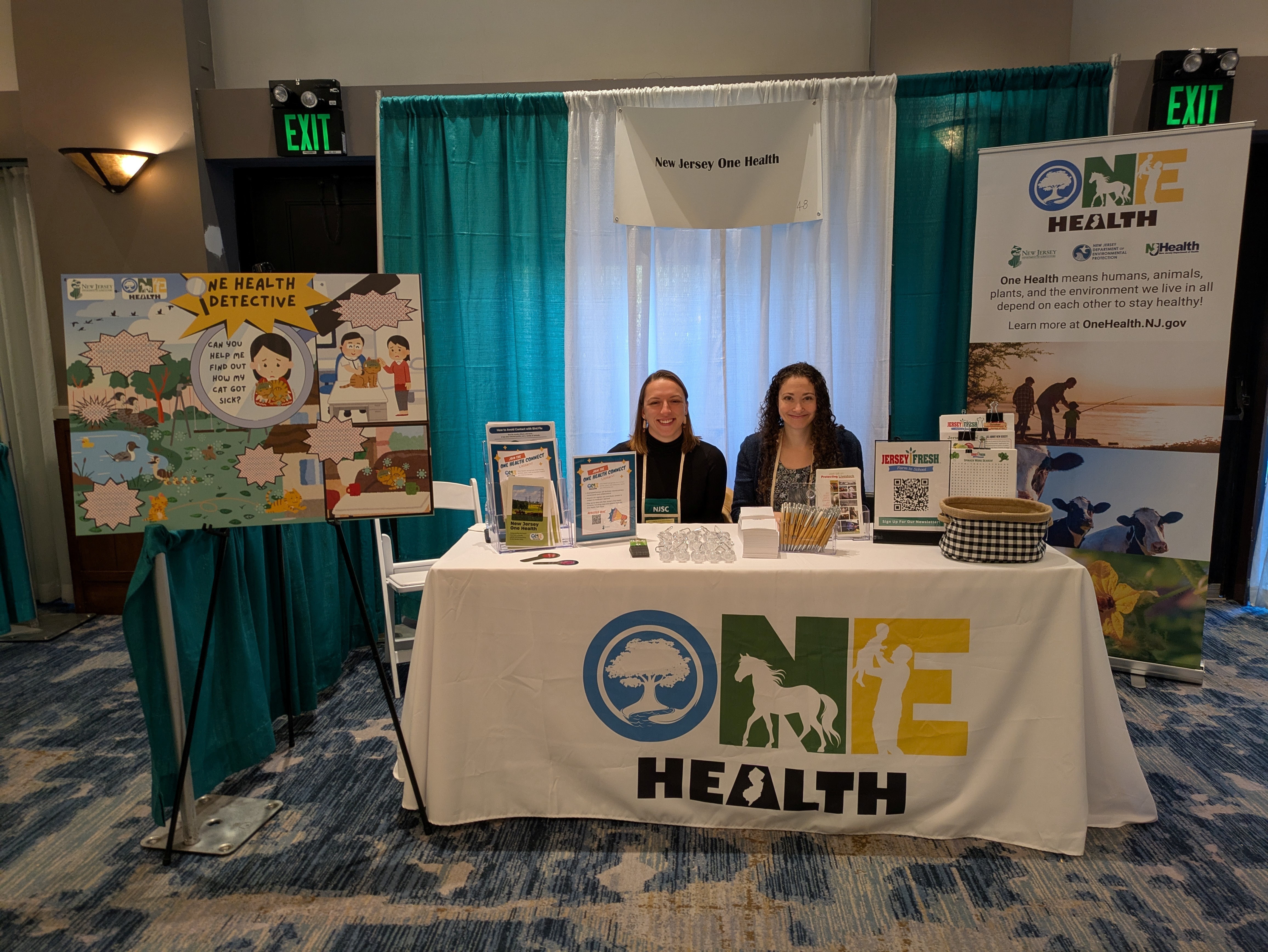
One Health
A One Health approach recognizes that the health of people, animals, plants, and their shared ecosystems are interconnected. Veterinarians understand this concept and see clear cross-species health linkages in their everyday practice, whether in the form of zoonotic disease spillover, shared impacts of unhealthy environments, or the power of the human-animal bond.
New Jersey led the U.S. in formalizing One Health coordination by passing legislation establishing the New Jersey One Health Task Force. Housed in the New Jersey Department of Agriculture, the Task Force is chaired by Division of Animal Health Director and New Jersey State Veterinarian Dr. Amar Patil, who aims to ensure that animal health is considered equitably in the Task Force’s efforts. Other members of the Task Force include designees from the NJ Departments of Health and Environmental Protection as well as public appointees from academia, veterinary medicine, and human medicine. Task Force meetings are held quarterly with a virtual option to promote broad attendance. Everyone is welcome!
Following its inaugural meeting in February of 2025, the Task Force had an eventful first year.
The Task Force establishing a Strategic Plan, initiating cross-sectoral dialogues, and coordinating a needs assessment for One Health collaboration in New Jersey.
In late 2025, the Task Force completed a three-stage assessment following the internationally-recognized One Health Systems Mapping and Analysis Resource Toolkit (OH-SMART), with a virtual mapping session, 1-on-1 interviews, and an in-person workshop. This assessment, along with the Task Force’s efforts from the past year, will be reported out in their Report to the New Jersey Governor and Legislature, to be shared on the One Health resources page later this year.
To stay up to date with the One Health efforts in New Jersey, join the OneHealthConnect Listserv – a platform to help New Jerseyans connect with professionals in other disciplines. The listserv currently reaches 200+ members spanning human, animal, and environmental health domains. To get involved in NJ One Health, contribute content to the listserv, attend Task Force meetings, and reach out to us at OneHealth@ag.nj.gov with questions and ideas. We look forward to connecting with New Jersey’s hardworking veterinary field in promoting the health of animals, humans, and the environment!
 |
|
|
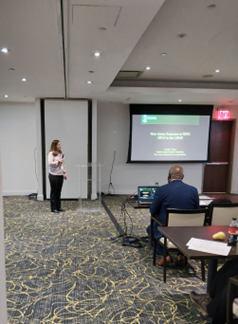
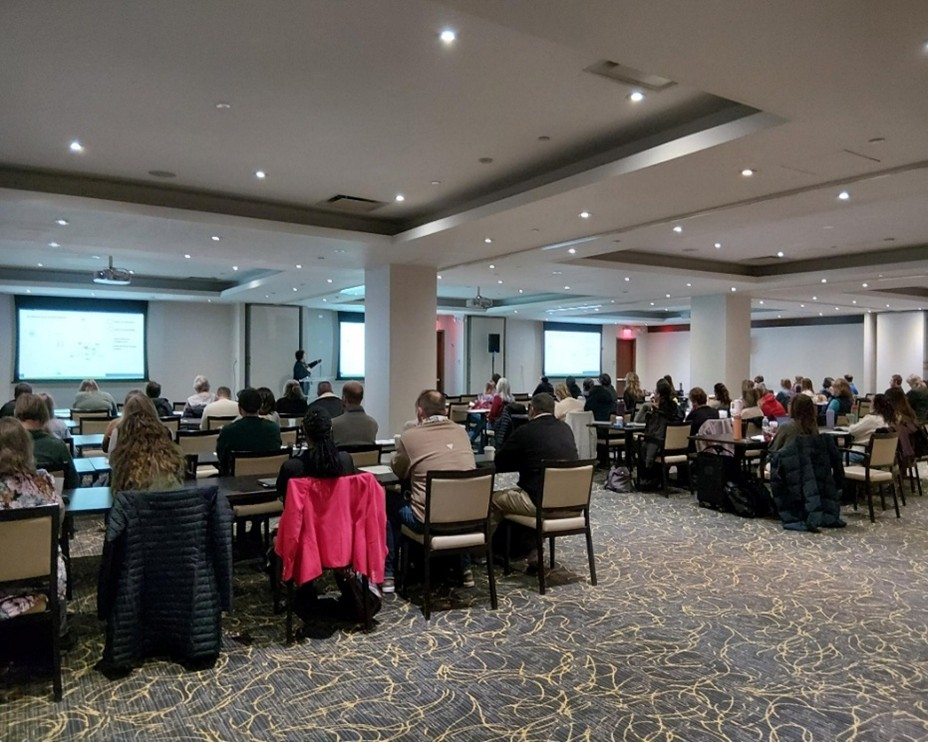
The USDA hosted the annual Live Bird Market Working Group meeting in New York City in February. Representatives from the New Jersey Department of Agriculture (NJDA) attended the two-day meeting, along with other state and federal officials from across the country. Stakeholders, including poultry distributors and live-bird market owners from the tri-state area, also attended the meeting. Various topics were presented, including one from New Jersey that reviewed domestic poultry and live-bird market highly pathogenic avian influenza (HPAI) detections in 2025. |
Amongst the many other topics discussed, the National Veterinary Services Laboratory (NVSL) provided an update on nationwide surveillance testing and current diagnostics for avian influenza. The Southeast Poultry Research Laboratory (SEPRL) provided updates on HPAI vaccine trials. The meeting was a great forum that highlighted the collaborative efforts and responses to this devastating virus. Since February 2022, over 195 million domestic birds have been affected by HPAI in all 50 states and 1 territory. There has been an increase in small backyard flock producers within the state and the NJDA provides outreach to anyone wishing to obtain biosecurity information for backyard flock producers or hobby farms. The Animal Health Diagnostic Laboratory also performs necropsy and diagnostic testing services. Please visit the Division of Animal Health’s avian influenza webpage or contact the Division of Animal Health at 609-671-6400 for more information or questions on avian influenza. |
Reignition of NJ’s Animal Emergency Working Group
January 30th marked a meeting to re-establish membership and officers for the Animal Emergency Working Group. The Division of Animal Health emergency coordinator and program specialist hosted representatives in partner agencies for the year’s first Animal Emergency Working Group meeting. The group worked to define new bylaws and mission statement, including officers and membership considerations. The next meeting will occur on April 10th at 10am at 200 Riverview Plaza Trenton and virtually. Representation from the state’s veterinary workforce is encouraged during the meeting. Call NJDA DAH (609-671-6400) to learn more about becoming involved!
More information at: https://www.nj.gov/agriculture/animalemergency/