 Official Site of The State of New Jersey

History of the Stigma-Free Zones of New Jersey
A Stigma-Free Zone (SFZ) is an educational initiative widely adopted across the state. The mission is “to educate about mental illness and fight stigma.” Any municipal group, school, church, non-profit or service organization, etc. can join simply by forming a local chapter. Just appoint a contact person for correspondence called an “SFZ Ambassador” for your group; create a “Task Force” of volunteers and hold meetings to carry out a plan to:
“Do something about mental illness and stigma.”
Fulfill the promise to be a SFZ by creating a “Do Something” project. Perhaps a mental illness awareness event at a town game, a school meeting on the loneliness caused by mental illness, or a post-traumatic stress disorder webinar for local veterans. You decide who to educate, and how.
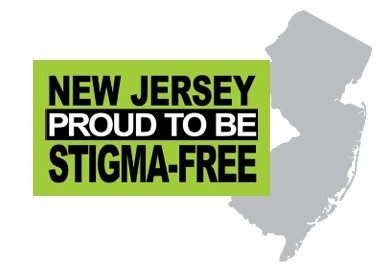
Excellent toolkits (and the required logo) are linked below to help. Why reinvent the wheel?
The SFZ is not a 501(c)(3) and nobody owns the initiative. No one needs permission to educate about mental illness and stigma under its banner nor does the SFZ pay staff or enforce rules. The New Jersey Governor’s Council on Mental Health Stigma maintains staff and a working subcommittee to help in your SFZ endeavors. To keep the SFZ working, new volunteers are always welcome! We need you. Contact the Council at: njgcfeedback@njamhaa.org
2011: The SFZ Initiative Began at NAMI Hudson
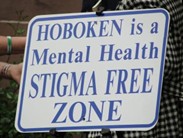
Hoboken officially became the first Stigma-Free Zone in the country during a ceremony hosted by the Hudson County chapter of NAMI, the National Alliance on Mental Illness. "Basically, we're making a statement," said Brenda Luchetti, the event’s creator and coordinator. "Mental illness is a disease and the stigma is part of the problem." Ms. Luchetti was assisted by Councilwoman Theresa Castellano and Mayor Dawn Zimmer. Together, they created a “Town Resolution” to be stigma-free and set a precedent for hundreds of New Jersey towns to follow. The event was successful and even received New York Press coverage. In the years that followed, the Stigma-Free Zone concept was adopted and further developed by other communities across the state.
2012: The Initiative Truly Flourished in Paramus

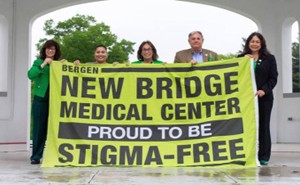
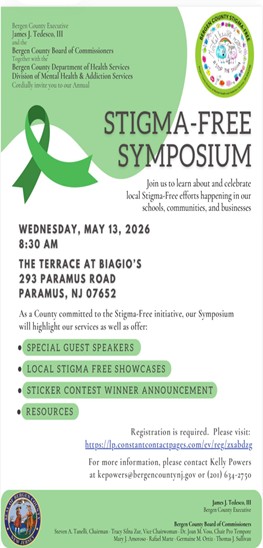
Long-time resident Mary Ann Uzzi heard about the Hoboken resolution and decided this was an idea whose time had come! Uzzi wisely involved a team of Paramus officials. The mayor approved SFZ road signs, a Task Force held events and recruited others, including Bergen County Executive Jim Tedesco. Their signs got lots of attention. Car magnets bearing the lime green SFZ logo went on every police car. New groups sprang up in nearby towns and held mental health roundtables and marched in parades fighting stigma. Michele Hart-Loughlin at the Bergen Division of Mental Health created an SFZ Toolkit. Schools joined. A dance troupe represented the SFZ at Disney World! Participants won awards. Churches, the library, and rotaries joined. The county sponsored Mental Health First Aid training for citizens and police. Behavioral healthcare providers including CarePlus NJ and New Bridge Medical Center donated funds, staff, and meeting space to sponsor educational events for the public. The initiative spread as Bergen dove whole-heartedly into fighting stigma. After six years of non-stop campaigning, all 70 Bergen County towns had created their own Task Forces and passed Stigma-Free Town Resolutions, just as Hoboken did at the beginning. See a real Town SFZ Resolution here:
Stigma-Free Resolution
Bergen’s tremendous community effort shows that a handful of spirited advocates and volunteers can inspire real change! Ordinary folks proved time and time again that a new Stigma-Free Zone is easy to replicate and always impactful – given its project-driven design. 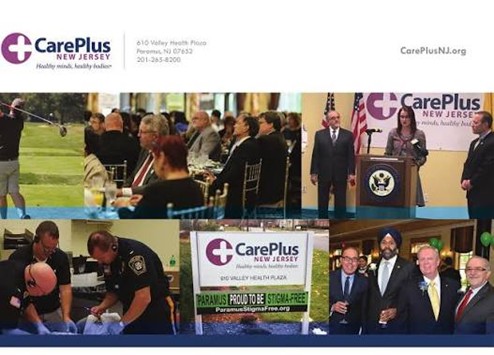

2012: Codey Fund for Mental Health Contributes
As per the late Governor Codey said during a March 2019 interview with The Stigma-Free Zone News of New Jersey,
"When Richard Codey became New Jersey Governor in 2004, his first thought was for mental health — a cause that was both near and dear to his heart. He immediately established a Task Force to create reform for the state’s mental health system, and he allocated $200 million for housing units for individuals with mental illness. Governor Codey strongly favored including mental health funding in employee medical benefit packages and in Medicare. As the Task Force recommended, the New Jersey Governor’s Council on Mental Health Stigma, a working group of volunteers appointed by the sitting Governor, was created in 2004 and it still operates today. Its mission, like the Stigma-Free Zone Initiative, is to spread mental health education to create understanding of mental illness and acceptance of individuals who have it. They have recognized and awarded volunteers from the SFZ and all walks of life who are fighting stigma in New Jersey communities, and the Council members still act as mentors and supporters of new SFZ’s forming today."
"The Codey Fund for Mental Health was created in 2012 by NJ Governor Richard Codey and his wife Mary Jo “to ensure that compassionate, quality mental healthcare is accessible to everyone and that the stigma associated with mental illness is overcome through public awareness and education.” Since its founding, the Codeys’ Essex County based non-profit has worked tirelessly to spread a stigma-free message across New Jersey. According to Codey Fund President Kevin X. Codey, “The Codey family, their staff, and volunteers convinced over 30 towns and 10 colleges, including Codey’s alma mater, Fairleigh Dickinson University, to adopt a Stigma Free mission.”

2015: Initiative Goes Statewide and across the Pond via its Volunteers
In May 2015, Assemblyman Tim Eustace wrote the bill NJ AR236, asking state municipalities to adopt Stigma-Free Zone Town Resolutions. Through this legislation, the movement spread statewide. The efforts of Mary Ann Uzzi; Director of Bergen’s Division of Mental Health Services Michele Hart-Loughlin; and the state-wide newsletter, The Stigma Free Zone News of NJ (now defunct) all played vital roles in spreading the initiative. Demarest Ambassador Cynthia Nelson Chazen’s SFZ News of NJ was emailed monthly to 12,000 SFZ advocates, county mental health contacts, state Municipal Alliances, and school personnel.
Read NJ AR236 here:
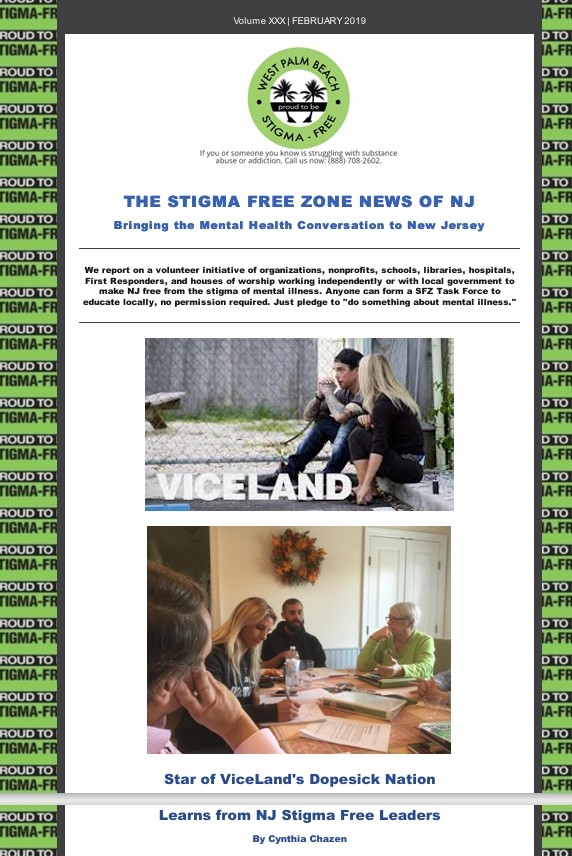
The Stigma Free Zone News of NJ gained 70,0000+ followers on X/Twitter, and attracted advocate Dan Farnworth, who visited the Paramus SFZ group. In 2018, he was sponsored by the Winston Churchill Memorial Trust (now called the Churchill Fellowship) and was tasked with making a trip around the world to report back on “best practices in mental health.” Farnworth took the SFZ concept to UK’s Parliament and an SFZ Resolution was eventually passed!

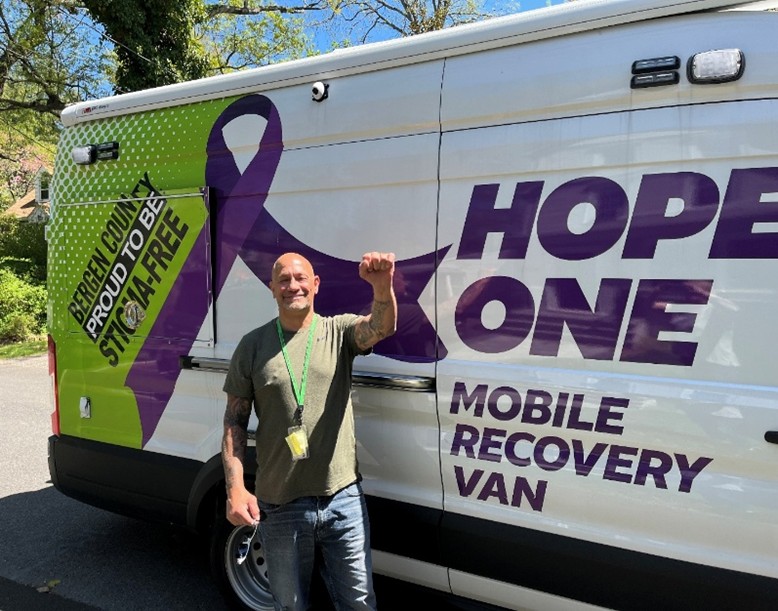
Today, every New Jersey County has at least one Stigma-Free Zone. Most counties across the state have active Stigma-Free Campaigns. These initiatives (usually housed under Mental Health or Human Service Departments) include newsletters or websites; SFZ Task Forces; and events to educate about local mental health resources and fight stigma. They offer pre-made SFZ toolkits, de-stigmatizing language guides, and other actionable plans for towns and organizations. Here are just a few excellent examples:
• Stigma Free Zone – Bergen County, NJ – Official Website
• Morris County Stigma-Free Communities Initiative – Morris County, NJ
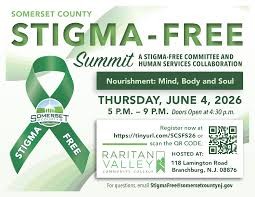
• STIGMA FREE SOMERSET COUNTY | Somerset County
2024: The NJ Mayors Wellness Campaign Joins In
The New Jersey Mayors Wellness Campaign (MWC) is an initiative operated by the New Jersey Health Care Quality Institute (NJHCQI) that provides all NJ towns with tools to tackle health concerns and improve mental well-being. A major pillar of this effort involves encouraging municipalities to become Stigma-Free Zones. Visit their site for basic information about mental illness and suicide, community resources, and a great toolkit on SFZ formation.
MWC_Mental-Health-Toolkit_2022_Digital_FINAL.pdf
MWC_Mental-Health-Toolkit_2022_Digital_FINAL.pdf
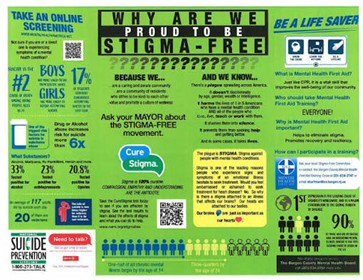
The motto of the Stigma-Free Zone (SFZ) is “Anyone can educate about mental health and stigma”. This breeds originality and taps the ingenuity of volunteers who come together and pledge to “Do something about mental illness” for their communities.
Every SFZ aims to address stigma where they work or live. Municipal SFZs tend to focus on educating law enforcement personnel, legislators, or the public. School and university groups draw on internal resources such as counselors, nurses, and social workers to create age-appropriate mental health education and interactive projects for their campuses and students.
The SFZ recognizes that people still sometimes feel they need permission to talk about mental illness. We give people this permission by involving them.
Leadership Is Needed
The Stigma-Free Zone was designed to be emulated. “Anyone can educate about mental health” is an approachable idea. SFZs grow because people advocate and educate on their terms.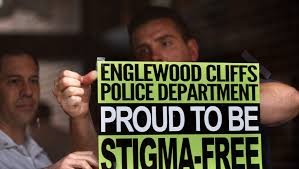
Sustainability – Why Get Involved?
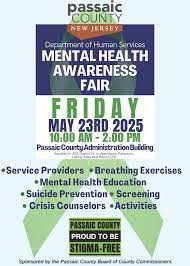
Stigma-Free Zones continue to make a real difference. Lives are saved if people feel empowered and supported in their mental illness challenges instead of stigmatized and silenced.
Since 2011, NJ counties have increased funding for mental health. First responders get ongoing mental health training to make more peaceful crisis interventions, and they now are understanding their own job stressors. Churches and colleges have stepped up and are taking care of their own via mental health events. The SFZ is just people, first and foremost.
Everyone benefits when we educate about stigma, and education must be both local and ongoing.
Outcomes
As the Stigma-Free Zone (SFZ) initiative is so grassroots in its orientation, outcomes are difficult to track. Seventy Bergen towns are now SFZ’s, plus every New Jersey county has at least one. The exact number of volunteers changes over time. But, every SFZ created over the past 15 years produced at least one event that educated the public about stigma and mental illness — and that is what’s important! More than once, a life was saved when people you know spoke out to understand and support mental illness — as a health challenge and not as a threat.
Get involved today! You will make a difference!
To get involved, you can simply start your own SFZ by using our toolkits and our logo. Or reach out with questions and for support to the New Jersey Governor’s Council on Mental Health Stigma at njgcfeedback@njamhaa.org
You can also talk to the administrator near you who oversees mental health information and services for your county. A list of those departments is here:
Let’s End Stigma!