 Official Site of The State of New Jersey
Programs and Services
The New Jersey Department of Agriculture Division of Animal Health offers New Jersey producers several programs and services. All programs are voluntary and many of the programs and services are offered free of charge. There are services and programs that are tailored to all aspects of poultry, livestock, and equine agriculture in New Jersey.
If you can not find a program to the right that would suit you best, please feel free to contact the department to obtain more information concerning your animals or business and find out what programs might best suit you.
Contact: (609) 671-6400
NJ operates two state and federally approved CEM Quarantine facilities. See below for more information:
- Ri-Arm Farm CEM Quarantine https://riarmfarm.com/quarantine.php
- Walnridge CEM Quarantine Info.cemqt.walnridgefarm@gmail.com
CEM Facility Call for Applications
New Jersey CEM Quarantine Facility Application
SAMPLE New Jersey CEM Quarantine Facility License Agreement
Breif History
For more than a century -- since 1883 -- industry, states, tribes, territories and USDA have together advanced animal disease traceability. This has resulted in the eradication of a number of animal diseases in various livestock and poultry sectors. In addition, advancements in animal disease traceability have resulted in the documentation of disease freedom, which has facilitated domestic and international animal and animal product movement.
Following the diagnosis of bovine spongiform encephalopathy in the United States in December of 2003, collaborative efforts to advance animal disease traceability were accelerated in order to align with advancing information technology resources.
A New Framework
On February 5, 2010, USDA announced a new, flexible framework for animal disease traceability in the United States. Building upon successes of efforts by all partners in advancing animal disease traceability since 2004, this new framework is to be administered by states and tribal nations. Because states and tribal nations are at varying stages of capability, and the new framework is aligned with outcome-based performance measures of traceability, needs vary in leveraging state, tribal and federal resources to meet appropriate performance measures.
For more information, please visit the USDA's Animal Disease Traceability website at www.aphis.usda.gov/traceability/ or contact the New Jersey Department of Agriculture Division of Animal Health at 609-671-6400.
Livestock
The NJ Dept. of Agriculture does care about the welfare of all animals but has the authority to investigate animal cruelty complaints involving livestock only, not pets or wildlife.
The NJ Department of Agriculture will initiate an investigation where the raising conditions of livestock are questioned. To start the process, please fill out the Humane Complaint Form that is found on our website:
This will provide us with the information needed to properly process the complaint.
Standards for Humane Treatment of Domestic Livestock
Pets
If you have information regarding animal cruelty or abuse involving pets, contact the Police Department in the municipality in which the animal cruelty or abuse happened. Local and county law enforcement agencies have Humane Law Enforcement Officers (HLEOs) that oversee animal cruelty investigations.
Wildlife
All suspected hunting, fishing and trapping violations should be reported to the NJ Department of Environmental Protection (DEP) through the NJ OPERATION GAME THIEF (NJ-OGT) HOTLINE at 1-855-OGT-TIPS. All other environmental related violations or emegencies should be reported to 877-WARN-DEP (877-927-6337).
The following information can help you learn about Fair and Show recommendations and regulations for preventing the spread of diseases. Practicing good biosecurity will help keep animals and people healthy and enjoying the fair.
New Jersey Fair and Show Animal Health Recommendations
4-H Poultry, Rabbit, Or Cavy Health Form
Certified Pullorum Tester Training Class
New Jersey Fairs and Shows Health Certificate
All persons associated with any aspect of the current fair and show season are encouraged to remain especially vigilant for any sign of unusual diseases in an animal, flock or herd. Additional security measures to protect the livestock and poultry exhibited should also be considered.
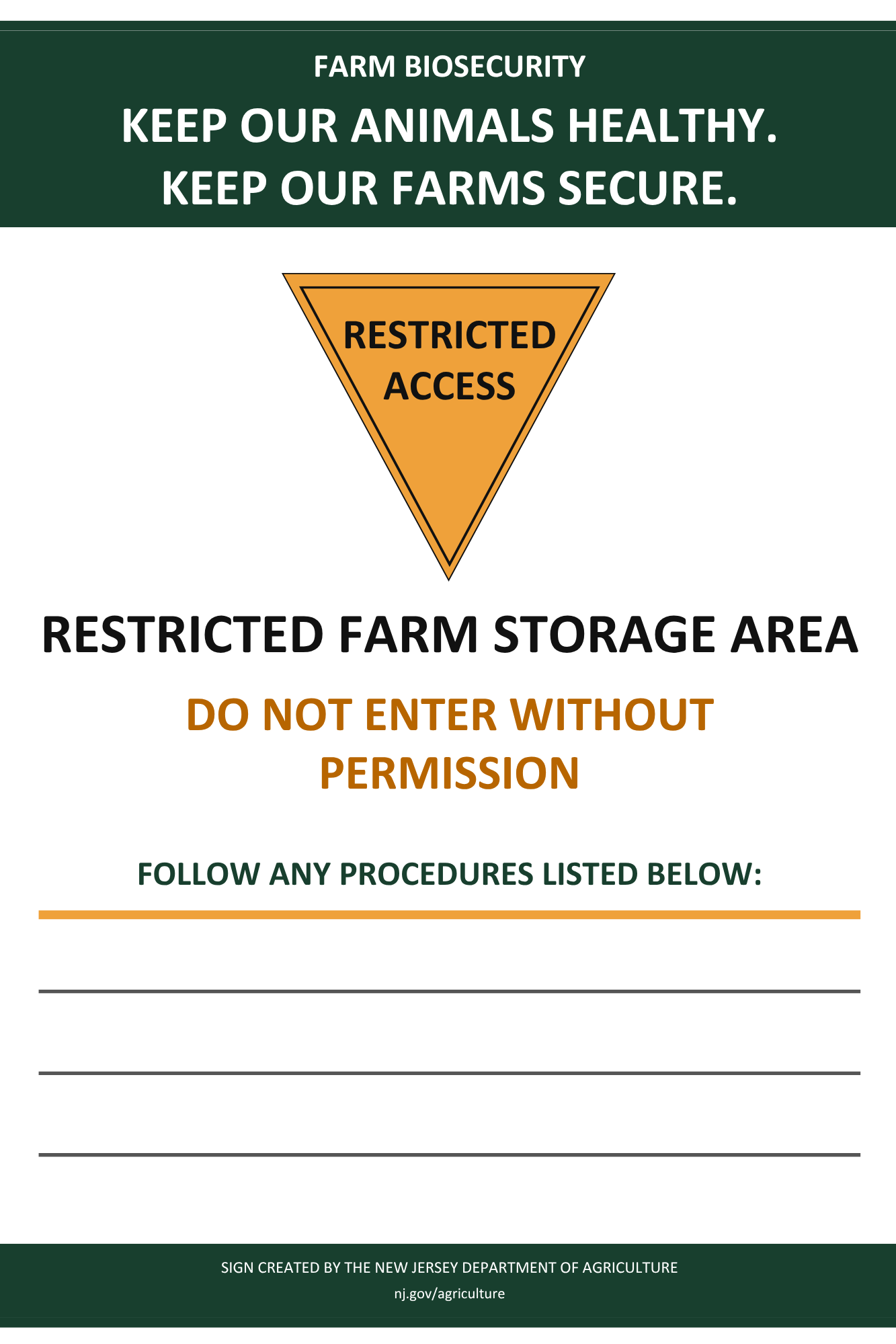
Downloadable Signs
Check out One Health Outreach Materials for more helpful printable materials


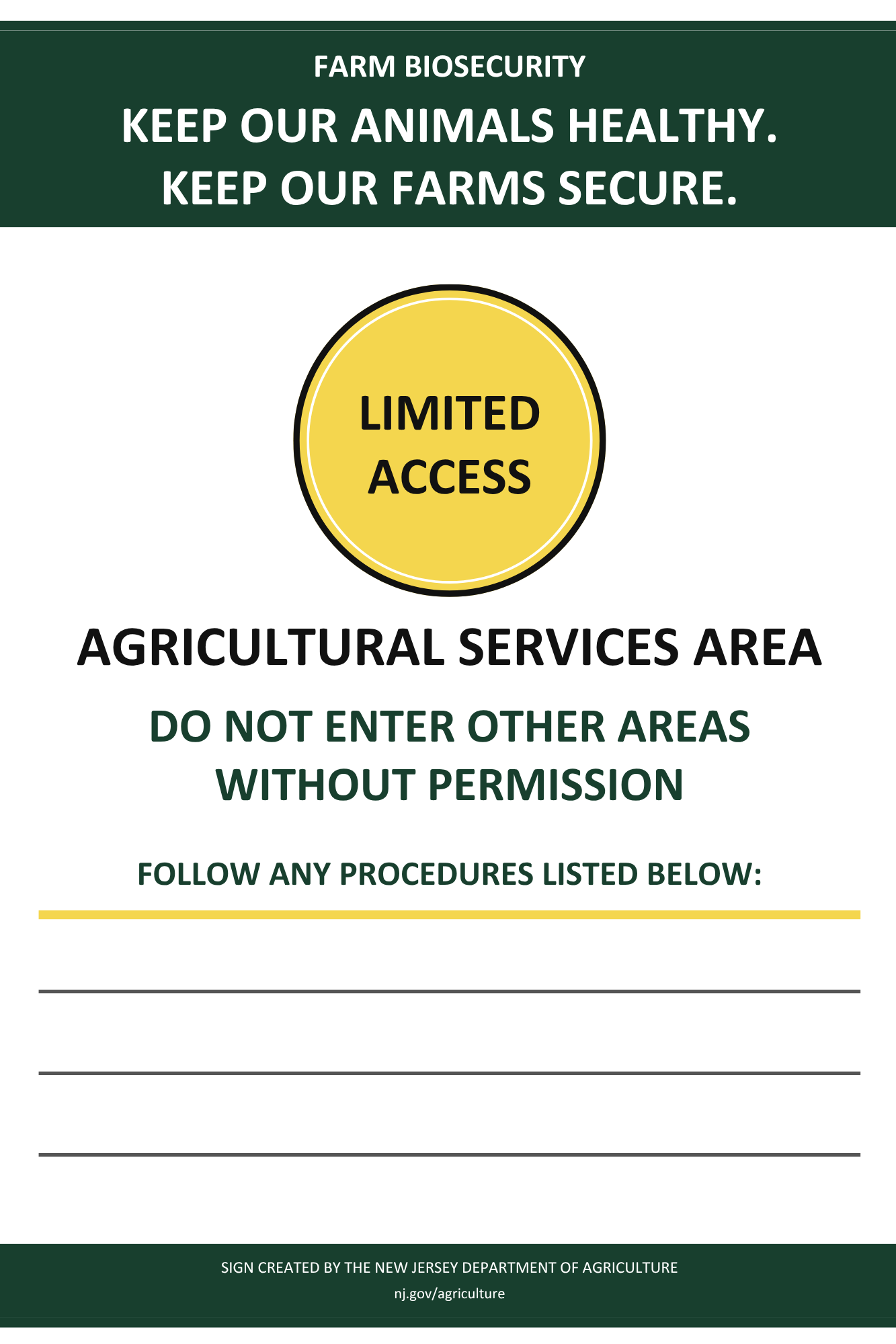
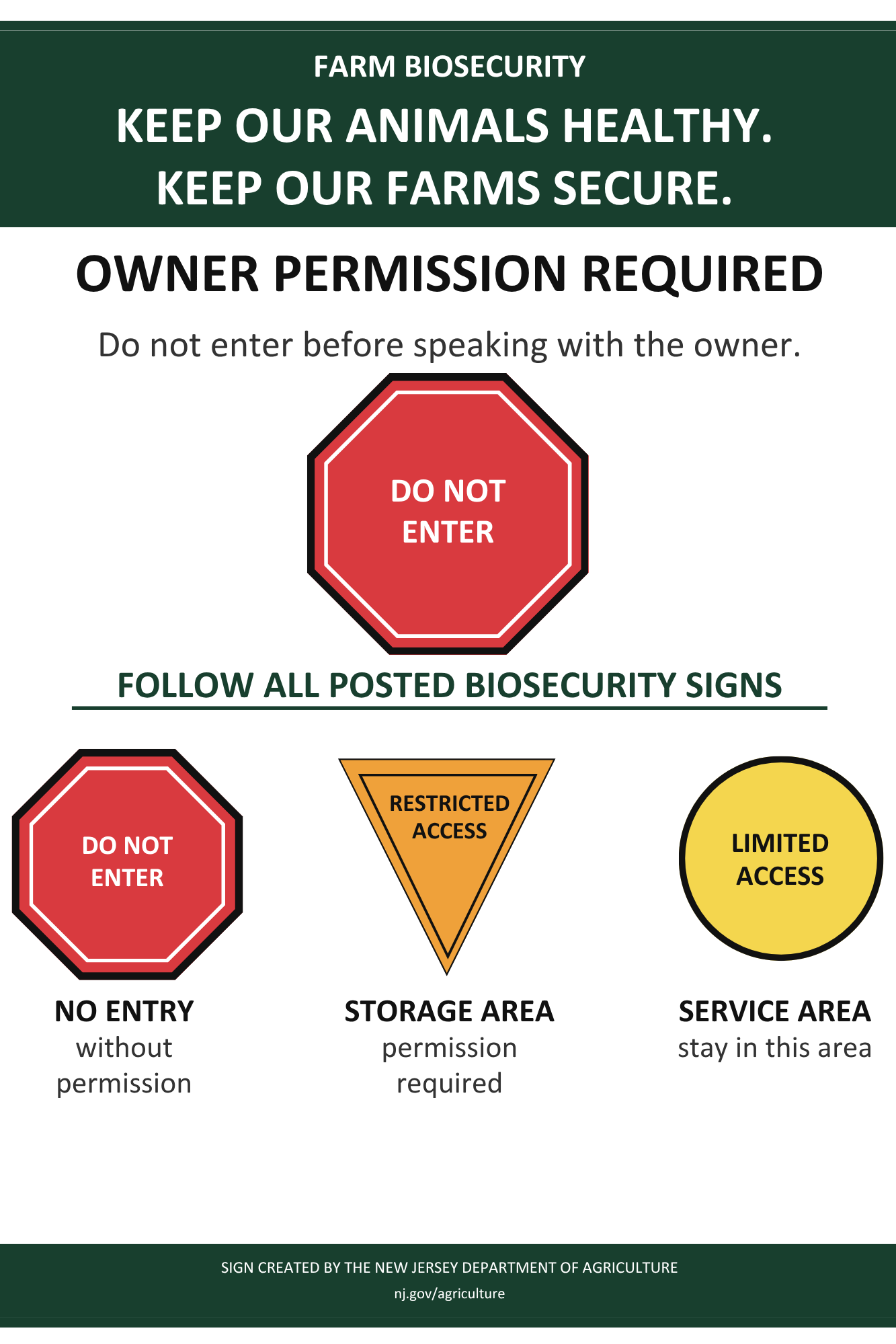
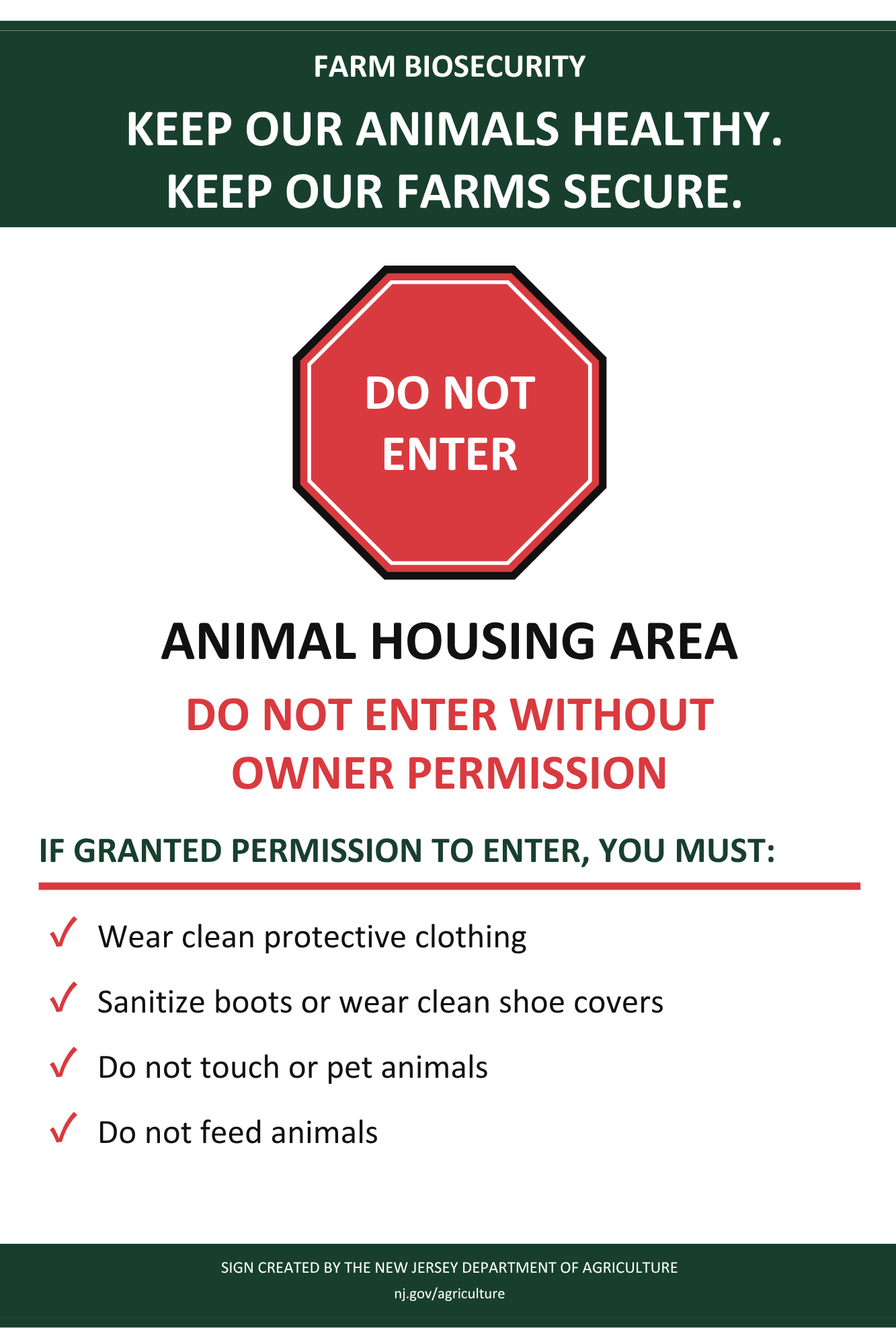
Different groups of animals have specific biosecurity concerns. Everyone can be a part of protecting their health through best biosecurity practices.
Fair Season Biosecurity- South Dakota State University Extension
Biosecurity and Fairs: What You Need to Know- Iowa State University
Biosecurity at Fairs: Five Tips- Iowa State University
It's Agricultural Fair and Exhibition Season: Do You Know How to Protect Your Show Animals?
Poultry:
Swine:
Key Facts for People Exhibiting Pigs at Fairs
Swine Influenza: Issues for Fair Organizers to Consider When Planning Fairs
Measure to Minimize Influenza Transmission at Swine Exhibitions, 2016
PED Virus Information for Fair Organizers
PED Virus Information for Exhibitors
Guidance for opening a Live Bird Market or Poultry Distributorship
Requirements for Movement of Poultry within the New Jersey Live Bird Marketing System
Poultry Invoice and Directions
Live Bird Marketing System Uniform Standards
For information on Poultry Inspection Certificates call 609-671-6400
Interactions between people and animals provide valuable and enjoyable educational experiences that should be encouraged. However, during such contact, there is some risk of disease transmission. To protect both humans and animals, the New Jersey Department of Agriculture in consultation with the New Jersey Department of Health and Senior Services encourages all fairs to implement the following precautionary steps to protect both visitors and animals from disease.
1. Provide a Hand-cleaning Station for use prior to and after contact with animals.
a. Provide running water or antibacterial hand wipes to clean dirt off hands
b. Provide alcohol-based hand rubs for use on clean hands
2. Provide cleaning supplies in a safe manner to protect visitors and animals
a. Trash cans should be available to prevent animals from eating the wipes
3. Post signs indicating:
a. The location of the Hand-cleaning Station or facilities when they are some distance from the exhibit
b. The procedure to be followed
c. The importance of the procedure
d. Post the “Lose the Germs” poster series, or similar signs
4. Do not allow human food or drink in animal contact areas.
5. Forbid smoking in animal contact areas, and at Hand-cleaning Stations.
6. Ensure that no feed is fed to the animals unless specifically provided by the fair.
Click here for further information on ways to minimize the spread of disease from animals to visitors from the Centers for Disease Control.