
Fall enrollment at colleges and universities across the country is reported through the federal Integrated Postsecondary Education Data System (IPEDS) Fall Enrollment Survey in the spring that follows and typically becomes publicly available around June, at the end of the academic year.
To provide an early look at the shape of higher education enrollment in New Jersey, the New Jersey Office of the Secretary of Higher Education (OSHE) collects preliminary fall enrollment data from institutions through the New Jersey IPEDS Form #20 before it is finalized and reported through federal IPEDS. This includes 90 institutional reporting units that represent all degree-granting institutions of higher education in New Jersey.
In the following report and interactive dashboard, dive into OSHE’s analysis of fall 2025 semester enrollment estimates.
Preliminary estimates for fall 2025 suggest that overall college enrollment in New Jersey increased by about 1.9%.
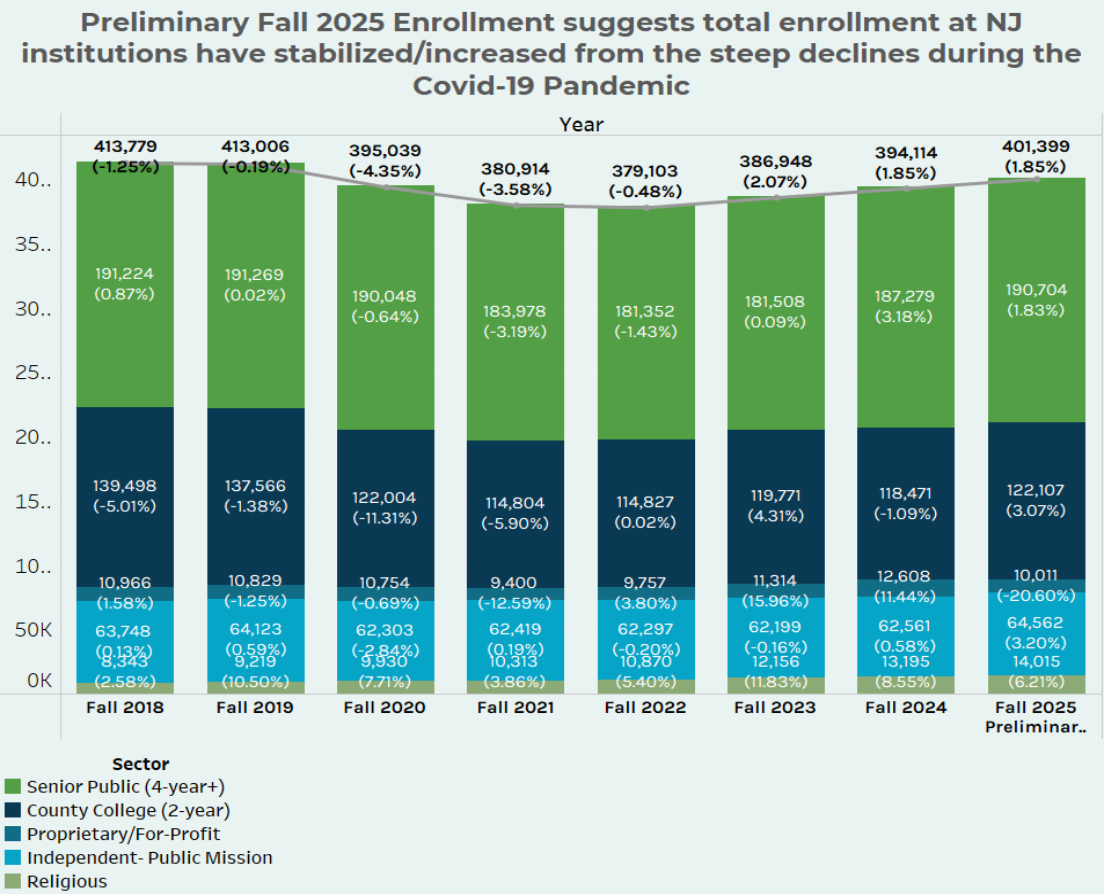
Source: OSHE Preliminary Enrollment NJIPEDS Form #20, Internal Analysis
For the full analysis and more information by sector and institution:
Note on methodology: the preliminary data reported here is captured from enrollment counts earlier in the semester, before they become the official record for the fall semester reported to the U.S. Department of Education through IPEDS. This timing matters because enrollment can fluctuate in the first weeks of the semester as students add or drop classes without penalty. As a result, preliminary counts for many of the institutions often differ, sometimes significantly, from final numbers reported for the federal survey. The preliminary figures presented here should be viewed as early estimates rather than official totals.
 Official Site of The State of New Jersey