Forest Health in New Jersey
New Jersey Forest Service surveys New Jersey's forests both from the ground and the air for various insects and diseases. While hundreds of insects and diseases damage our forests, foresters suppress only those that spread quickly and will not weaken on their own. Often the worst pests and diseases are non-native and introduced to our forests accidentally. Without their native predators, these pests will thrive and spread.
Spotted Lanternfly
(Lycorma deliculata)
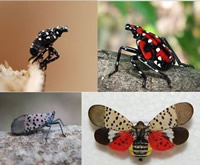 Details Details
Leaf hopper insects that feed on the phloem of young stems and excrete large quantities of honeydew onto plants. Honeydew facilitates the growth of sooty mold that further weakens plants.
Susceptible Species
Prefers the invasive “Tree of Heaven,” but makes use of over 70 different plant species including fruit trees, ornamental trees, woody trees, vegetables, herbs, vines, and agricultural crops
Signs of Infestation
Weeping wounds on trees, sooty mold, heightened activity from wasps, hornets, ants, and bees
Affected Areas
Atlantic, Cumberland, Essex, Hudson, Middlesex, Monmouth, Morris, Ocean, Sussex, Union, Warren, Mercer, Hunterdon, Somerset, Burlington, Camden, Gloucester, and Salem Counties
More information Spotted Lanternfly
Beech Leaf Disease
Details
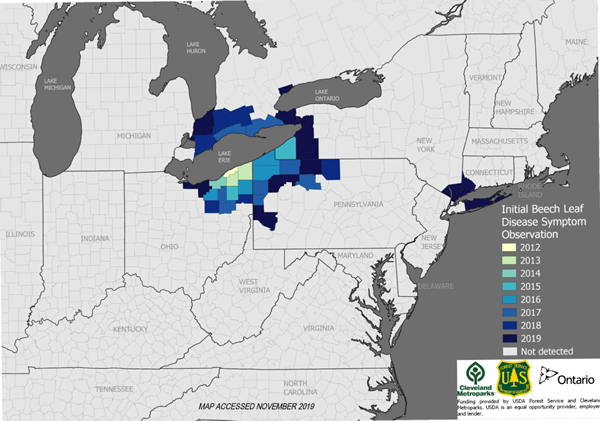
The cause of beech leaf disease is unknown, but a foliar nematode has been found to be associated with BLD. BLD causes defoliation, dieback, and eventual mortality in affected trees. It has been spreading rapidly since its initial detection in Northeast Ohio in 2012.
Susceptible Species
American, European, and Oriental Beech
Signs of Infestation
Dark banding on the leaves with curled edges, visible on green and brown leaves.
Affected Areas
Not yet detected in New Jersey, but currently found in Ohio, Pennsylvania, New York, and Ontario.
More information
Pest Alert Beech Leak Disease PDF(658 kb)
https://www.dontmovefirewood.org/pest_pathogen/beech-leaf-disease/
http://www.lakemetroparks.com/along-the-trail/august-2018/beech-leaf-disease
Southern
Pine Beetle
(Dendroctonus frontalis)
  Details Details
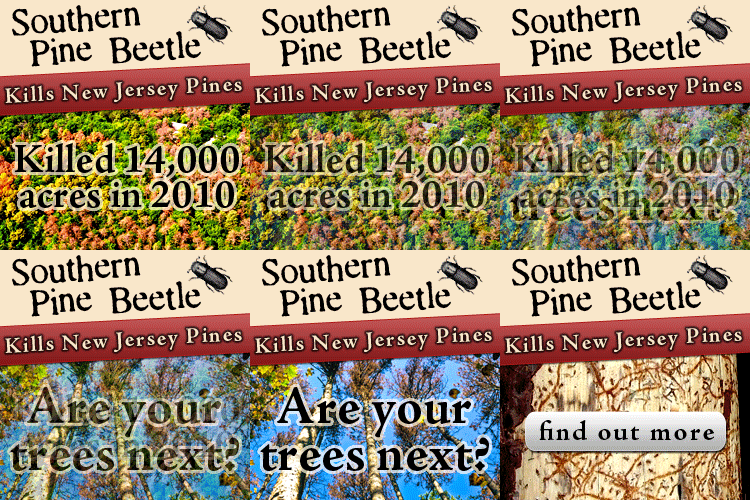
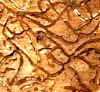
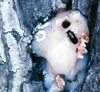
This forest pest causes significant damage across its range. It is one of the only bark beetles that can attack healthy trees, and adult beetles cut off water and nutrient supplies to trees by boring through the bark and creating S-shaped galleries in which they lay their eggs.
Susceptible Species
SPB attacks
all species
of pine
including pitch, shortleaf, Virginia, white,
loblolly, and red.
Signs of Infestation
Pitch tubes, exit holes, fading crown, S-shaped galleries under bark
Affected Areas
Pine forests in southern New Jersey
More information Southern pine beetle from State Forestry Services
Gypsy
Moth
(Lymantria dispar)
Details
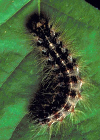
Larvae feed on leaves from May to June. Several successive years of defoliation can result in tree mortality. The high gypsy moth population in New Jersey can be attributed to reduced activity of the fungal parasite Entomophaga maimaiga, due to lack of precipitation.
Susceptible Species
Prefers oaks and but also attacks many deciduous trees and shrubs
Signs of Infestation
Defoliation, oval egg masses, caterpillars
Affected Areas
Statewide
More information Gypsy moth from the US Forest Service
Hemlock
Woolly Adelgid
(Adelges tsugae) 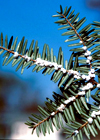
Details
Nymphs and adults feed on sap from the tree's twigs. This
insect has infested all 26,000 acres of Hemlock stands
to some
degree
in New Jersey.
Some hemlock stands have been destroyed, while others have
only low HWA infestations.
Susceptible Species
Eastern hemlock
Signs of Infestation
Egg masses, dying limbs
Affected Areas
Statewide
More information Hemlock woolly adelgid from the US Forest Service
Eastern Pine Looper
(Lambdina pellucidaria)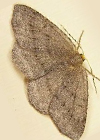
Details
After overwintering in the soil beneath the host tree, moths emerge in May and June to lay eggs on the tree's needles. By mid-summer, the larvae hatch and eat notches out of the needles.
Susceptible Species
Pine species
Signs of Infestation
Brown needles, defoliation
Affected Areas
Ocean and Eastern Burlington Counties
Emerald
Ash Borer
(Agrilus planipennis)
  Details Details
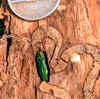
The invasive destructive insect, Emerald Ash Borer, has been found in New Jersey and nearby states such as Maryland, New York, and Pennsylvania. Adult beetles lay eggs in bark crevices, and larvae then burrow under the bark and feed on the cambium, cutting off water and nutrient transport within the tree
Susceptible Species
White ash, green ash
Signs of Infestation
D-shaped exit holes, woodpeckers
Affected Areas
Statewide
More information More information Emerald ash borer from emeraldashborer.nj.gov
Asian
Longhorned Beetle
(Anoplophora glabripennis)
Details
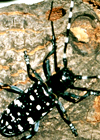
Female beetles chew holes in the bark where they deposit eggs. After hatching, larvae bore into the tree and begin eating right below the bark, disrupting nutrient and water flow through the tree. They then continue deep into the tree where they eat the heartwood.
Susceptible Species
maples, willows, poplars, ash,
horse chestnuts, elm, and buckeye trees
Signs of Infestation
3/4" to 1 1/4" adults, 3/8" exit holes, oozing sap, sawdust
Affected Areas
Union and Middlesex Counties
More information Asian longhorned beetle from the US Forest Service
Sudden
Oak Death
(Phytophthora ramorum)
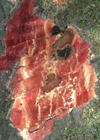
Details
Plant pathogen found in CA, OR, WA, FL, GA
Susceptible Species
75 Species including many oaks
Signs of Infestation
Brown leaves, large bleeding cankers
Affected Areas
Not yet found in NJ
Bacterial Leaf Scorch
(Xylella fastidiosa)
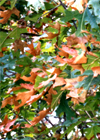
Details
The bacterium
is transmitted to healthy trees by feeding leafhopper and
spittlebug insects
moving from diseased herbaceous plants, such as goldenrod,
blackberries, and clover, to healthy trees. This disease
continues to be a serious health threat to urban shade trees
in NJ.
Susceptible Species
Red, pin, and scarlet oaks, sycamore, elm.
Signs of Infestation
Brown discoloration along leaf margins.
Affected Areas
South-western New Jersey
Beech Bark Disease
(Nectria coccinea)
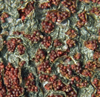 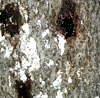 Details Details
Non-native scale insects infest and wound trees, allowing the fungus to enter
Susceptible Species
American Beech, European Beech
Signs of Infestation
Sparse foliage, woolly scales, ooze on trunk, small red fungal fruiting bodies
Affected Areas
Northern New Jersey
More information Beech bark disease from the US Forest Service
Oak Wilt
(Ceratocystis fagacearum)
  Details Details
Red oaks are seriously threatened by this disease and die within weeks, whereas White oaks are the lesser susceptible species and can take 1 or more years to die
Susceptible Species
Oak Wilt affects both Red and White oak species
Signs of Infestation
Fungal mats, bark cracking, leaf discoloration
Affected Areas
Not detected in NJ currently
More information Oak Wilt from State Forestry Services
Scarlet Oak Sawfly
(Caliroa quercuscoccineae)
Details
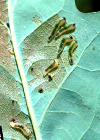
Larvae feed on the bottom of oak leaves, leaving only a leaf skeleton of veins behind. Repeated defoliations may affect vigor or kill the tree.
Susceptible Species
Red and white oaks
Signs of Infestation
Skeletonized or transparent leaves, defoliation starting in upper crown, larvae feeding on leaves
Affected Areas
Northern New Jersey
More information Scarlet oak sawfly Pest Alert
Thousand Cankers Disease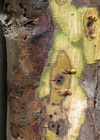
Details
The disease-causing fungus (Geosmithia morbida) is transmitted into the phloem of the tree by the walnut twig beetle (Pityophthorus juglandis) as it constructs its galleries. Cankers develop around the galleries as a result of the fungus and can enlarge to girdle the branch or stem.
Susceptible Species
Black walnut
Signs of Infestation
Branch dieback, many small cankers on branches and bole, tiny bark beetles, circular or oblong cankers under bark, tiny entrance and exit holes
Affected Areas
Not found in NJ yet
| 
 Governor Phil Murphy • Lt.Governor Sheila Oliver

