Official Site of The State of New Jersey
Tick and Mosquito Borne Diseases
PROTECTING NEW JERSEY LIVESTOCK FROM VECTOR-BORNE DISEASES
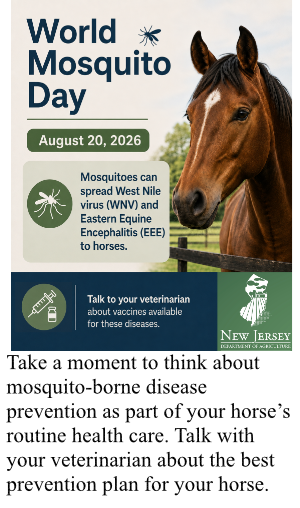
Mosquitoes and ticks are vectors; they carry and can transmit disease-causing pathogens that affect the health and welfare of livestock and people. In New Jersey, mosquito activity typically increases during the warmer months, making prevention and vector control an important part of herd and farm management.
We cannot eliminate all mosquitoes and ticks, but we can take steps to protect our livestock. These steps include recognizing signs of illness, reducing exposure of livestock to vectors, and disease prevention via vaccination.
WHAT TO WATCH FOR
There are multiple diseases of livestock, including horses, that can result from mosquito or tick bites. A few prominent ones that can occur in New Jersey livestock include:
- Eastern Equine Encephalitis (EEE): A mosquito-borne viral disease that can cause neurologic illness in horses and humans and is often fatal.
- West Nile Virus (WNV): A mosquito-borne viral disease that causes neurologic disease in horses and flu-like symptoms in humans.
- Theileria orientalis Ikeda: A tick-borne protozoal parasite that causes anemia, poor production, and occasionally severe illness and death in cattle.
Contact your veterinarian promptly if your livestock or horses develop signs such as:
- Fever
- Depression or lethargy
- Pale or yellow gums
- Reduced milk production
- Abortion
- Difficulty walking
- Muscle tremors
- Difficulty standing
- Behavioral changes
- Other unexplained neurologic signs
Testing for mosquito-borne disease is available at NJ Animal Health Diagnostic Laboratory (https://www.nj.gov/agriculture/ahdl).
REDUCING MOSQUITO AND TICK BURDENS AROUND YOUR FARM
Mosquitoes require standing water to complete their life cycle. Even small amounts of water can support mosquito larvae. Here are a few ways to reduce mosquito breeding habitat in your area.
- Empty, drain, or refresh water in buckets, tubs, wheelbarrows, tires, tarps, and other containers at least weekly.
- Keep water troughs clean and refresh water regularly.
- Eliminate standing water in clogged gutters, equipment, or low-lying areas whenever practical.
- Improve drainage around barns, paddocks, and feeding areas where water collects.
- Repair leaking faucets or water lines that create persistent puddles.
- Maintain ornamental ponds or water features with appropriate circulation or biological controls when applicable.
- Dispose of unused containers that can collect rainwater.
- Work with your county mosquito control agency if persistent mosquito breeding areas cannot be eliminated.
Ticks tend to be found in wood and brushy areas, particularly where the edge of woods meet fields of tall grass. Here are some strategies for reducing tick populations around your livestock.
- Keep grass mowed in areas used by livestock and people.
- Remove brush, leaf litter, and overgrown vegetation around barns and fence lines.
- Maintain well-defined pasture edges and reduce unnecessary brush encroachment.
- Inspect animals routinely for ticks, particularly after grazing wooded or brushy areas.
- Discuss appropriate tick prevention products with your veterinarian.
VACCINATION IS IMPORTANT FOR PREVENTION
Vaccination is one of the most effective ways to protect horses from mosquito-borne diseases. Unfortunately, there are no current vaccines for tick-borne diseases in livestock or horses.
Horse owners should work with their attending veterinarian to develop an appropriate vaccination schedule for Eastern Equine Encephalitis and West Nile Virus. In New Jersey horses are typically vaccinated for these diseases annually in the Spring as weather starts to warm. However, re-vaccination in the Fall may be recommended in addition, particularly for horses that may travel to southern states. Generally, equine mosquito-borne disease is detected in New Jersey horses in August through November.
Recommendations may vary depending on an animal's age, health status, travel, and local disease risk. Other livestock species may have different prevention recommendations, so it is important to consult with your local veterinarian.
ADDITIONAL RESOURCES
For more information on mosquito and tick prevention in New Jersey, visit:
- Rutgers Equine Science Center – Information on Eastern Equine Encephalitis, West Nile Virus, ticks, and horse health.
New Jersey Department of Health – Fight Bite NJ – Mosquito bite prevention, mosquito-proofing your property, and vector-borne disease information.
New Jersey Department of Environmental Protection – State Mosquito Control Commission – Mosquito control resources, county mosquito control agencies, and frequently asked questions.
Joint agency press release July 23, 2026 – “Mosquitoes – Always a Nuisance and Sometimes Dangerous”