Back
to top

Department of the Treasury

Celebrating Treasury’s Semiquincentennial

America is celebrating its 250th birthday – and so is the New Jersey Department of the Treasury!

This year, 2026, marks 250 years since the department’s founding in 1776, underscoring its long-standing role as an essential component of State government. While its responsibilities have evolved over time, Treasury’s core mission remains unchanged; to safeguard the State’s fiscal stability and ensure responsible stewardship of public resources.

Treasury’s early responsibilities reflected the first organized efforts to manage sovereign debt and taxation independent of British oversight. During the Revolutionary War era, the department administered funds used to support the United States government’s military efforts, including payments for clothing, arms and military supplies, bounties for servicemembers, and advances to wounded soldiers. These duties formed the foundation of the State’s fiscal continuity following independence.

Over the course of 250 years, the scope and scale of Treasury’s responsibilities have grown significantly. Today, the department maintains a workforce of more than 3,000 employees and administers one of the largest public pension funds in the nation. Treasury is responsible for oversight of the State Budget; the collection and administration of State taxes, fees, and revenues; the issuance and management of State debt; and the administration of pension and health benefit plans for public employees statewide.

As the United States commemorates its own semiquincentennial, Treasury proudly recognizes its parallel history and enduring role in the development of both the State and the nation.

Research for this historical commemoration was conducted in collaboration with the New Jersey State Archives, which provided key primary records documenting the Department’s earliest operations.
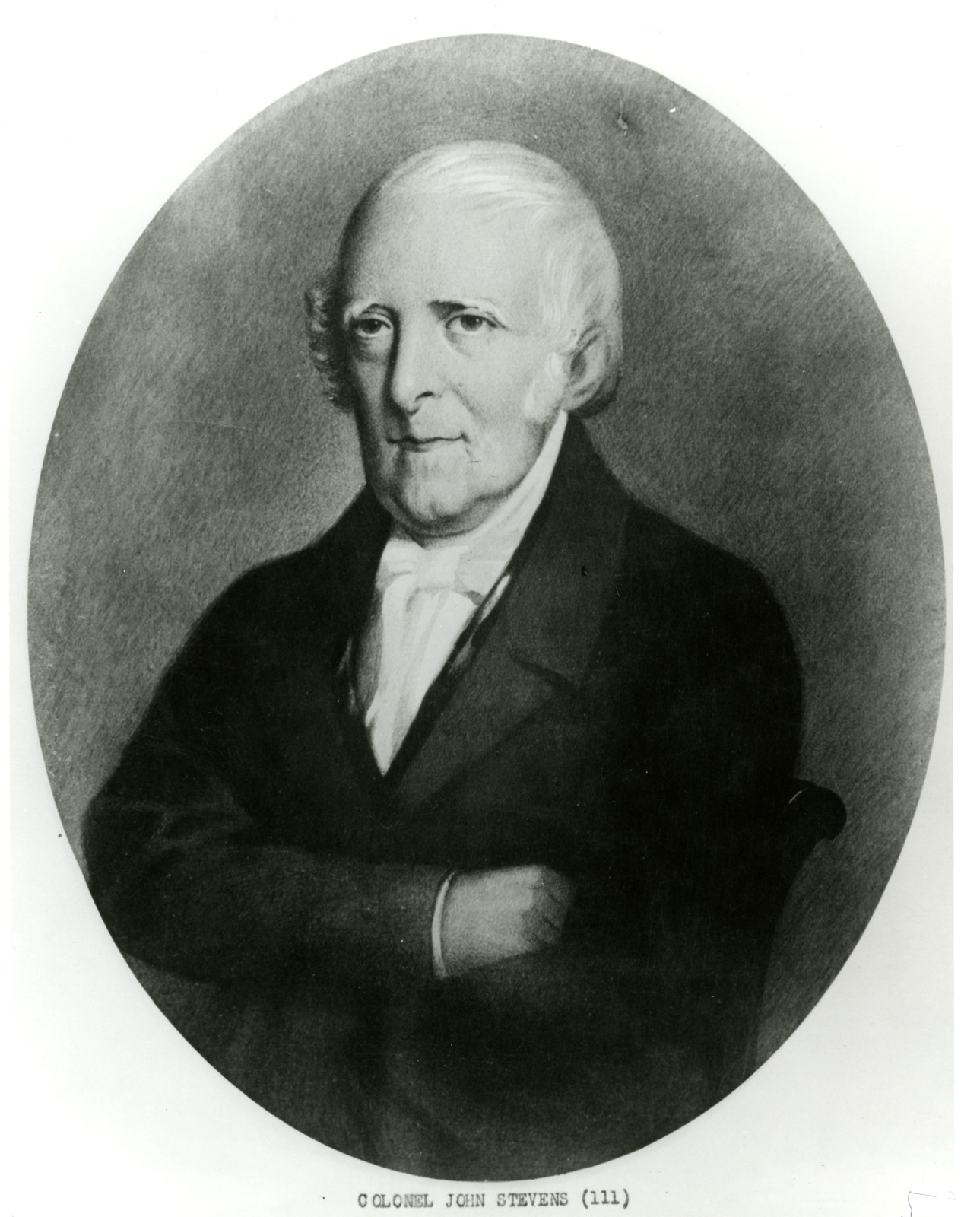

Although Richard Smith was formally elected as the first State Treasurer, he served only for a brief period (1776–1777), therefore many historians have instead considered John Stevens to be the first State Treasurer.
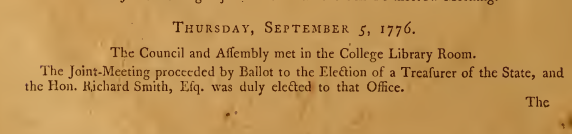
1776 Joint Meeting Notice

Photo Credits: NJ State Archives
1 of 10NJ Department of the Treasury - 250 Years
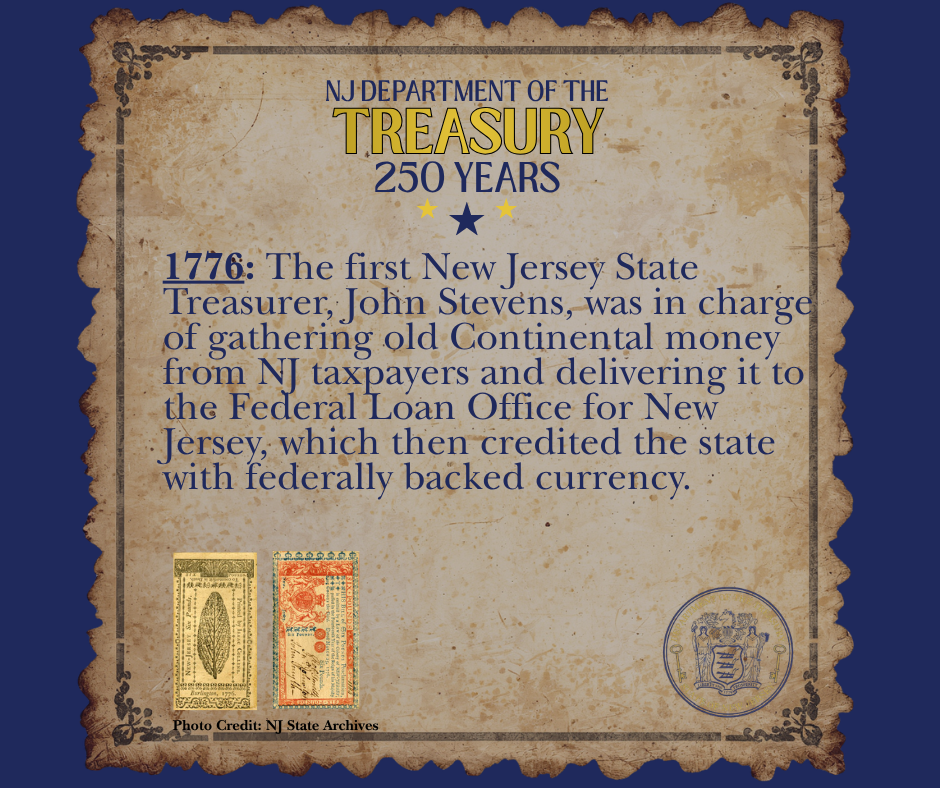
2 of 101776: The first New Jersey State Treasurer, John Stevens, was in charge of gathering old Continental money from NJ taxpayers and delivering it to the Federal Loan Office for New Jersey, which then credited the state with federally backed currency.
3 of 101776: Following the adoption of the first State Constitution, the Treasurer had duties originally rooted in Revolutionary War-era finance. This creation marked the first signs of sovereign debt and taxation independent of British oversight which led the way for post-independence fiscal continuity.
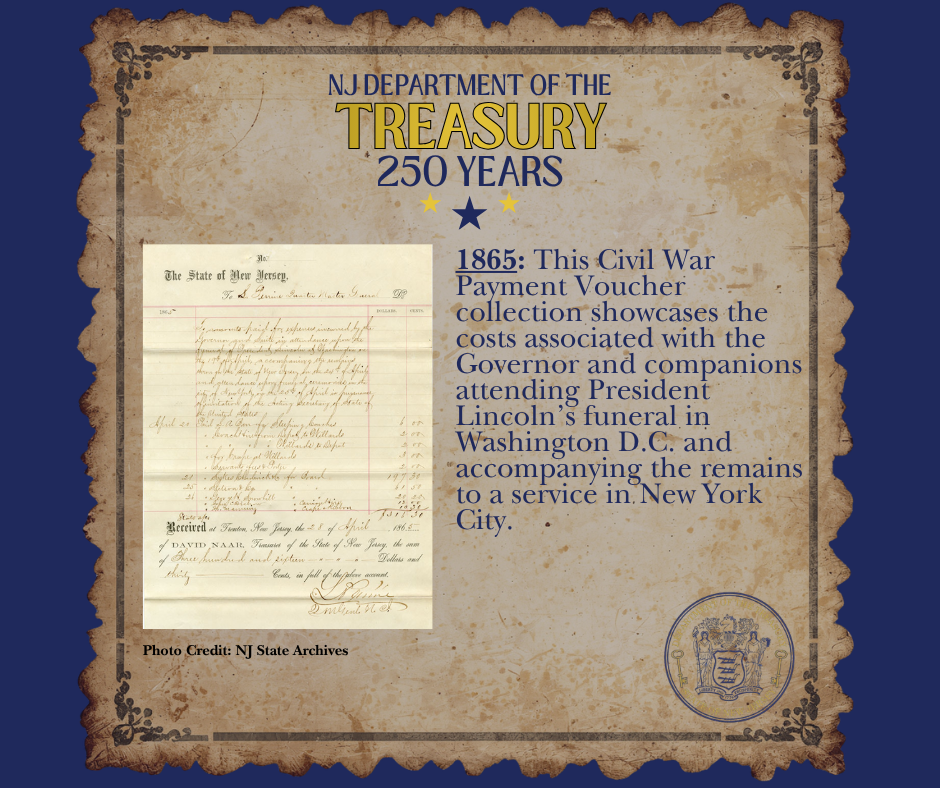
4 of 101865: This Civil War Payment Voucher collection showcases the costs associated with the Governor and companions attending President Lincoln’s funeral in Washington D.C. and accompanying the remains to a service in New York City.
5 of 101916: The department absorbed the duties from earlier entities such as the State Treasurer’s Office, established in 1776, and the Board of Treasury, creating a centralized system for managing taxation, debt, and investments as New Jersey entered the rapid growth of the early twentieth century.
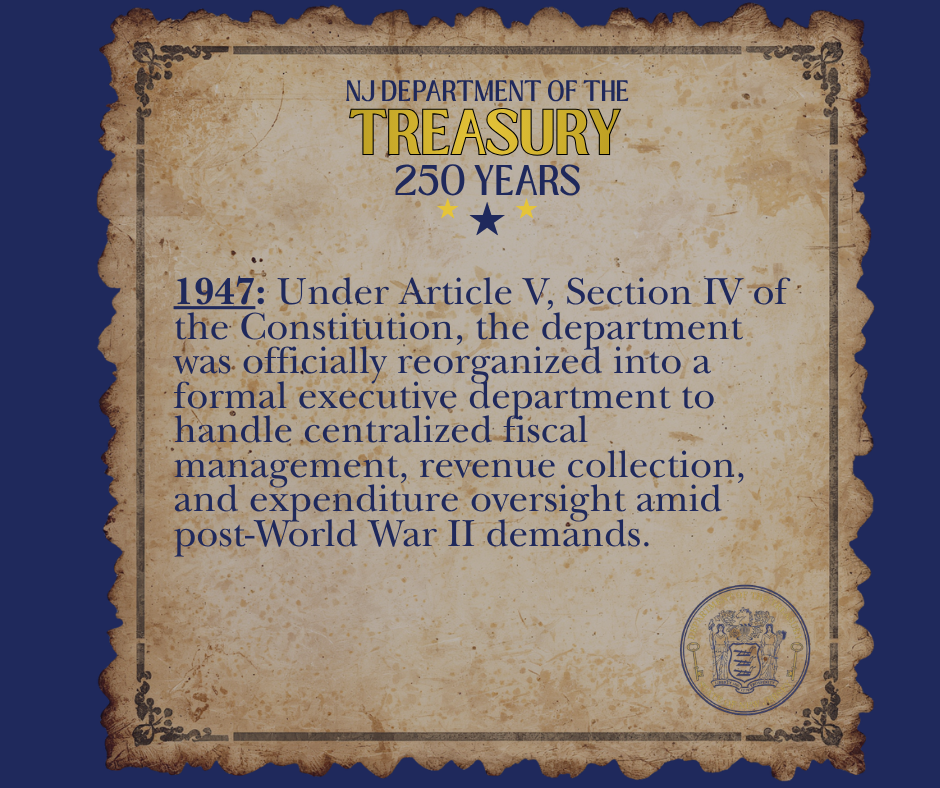
6 of 101947: Under Article V, Section IV of the Constitution, the department was officially reorganized into a formal executive department to handle centralized fiscal management, revenue collection, and expenditure oversight amid post-World War II demands.
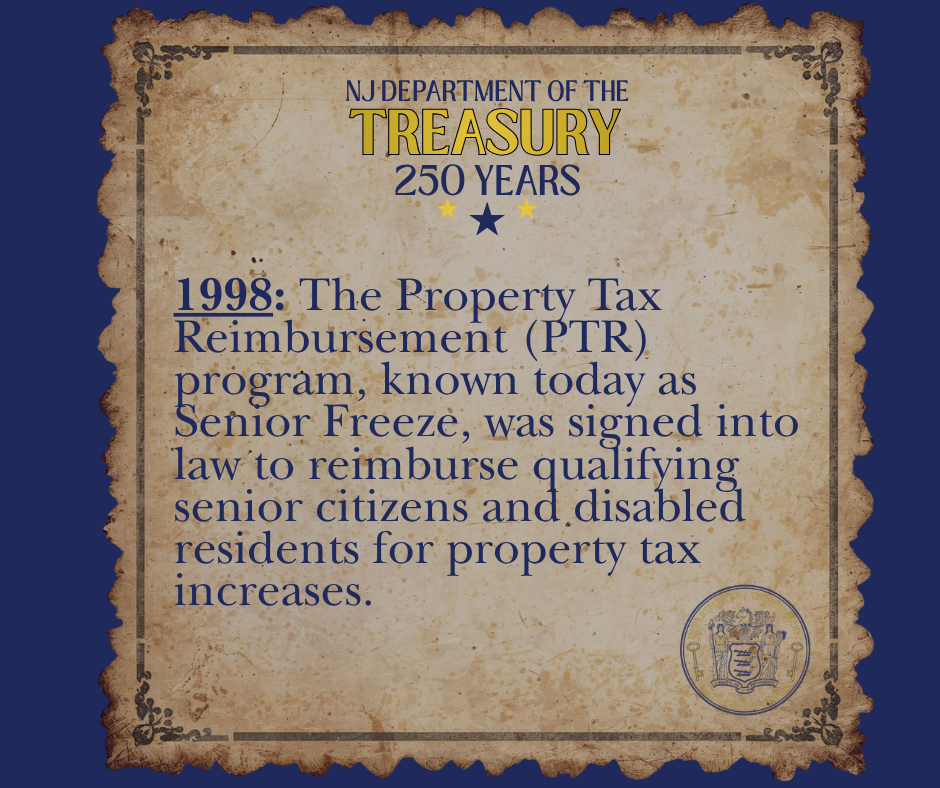
7 of 101998: The Property Tax Reimbursement (PTR) program, known today as Senior Freeze, was signed into law to reimburse qualifying senior citizens and disabled residents for property tax increases.
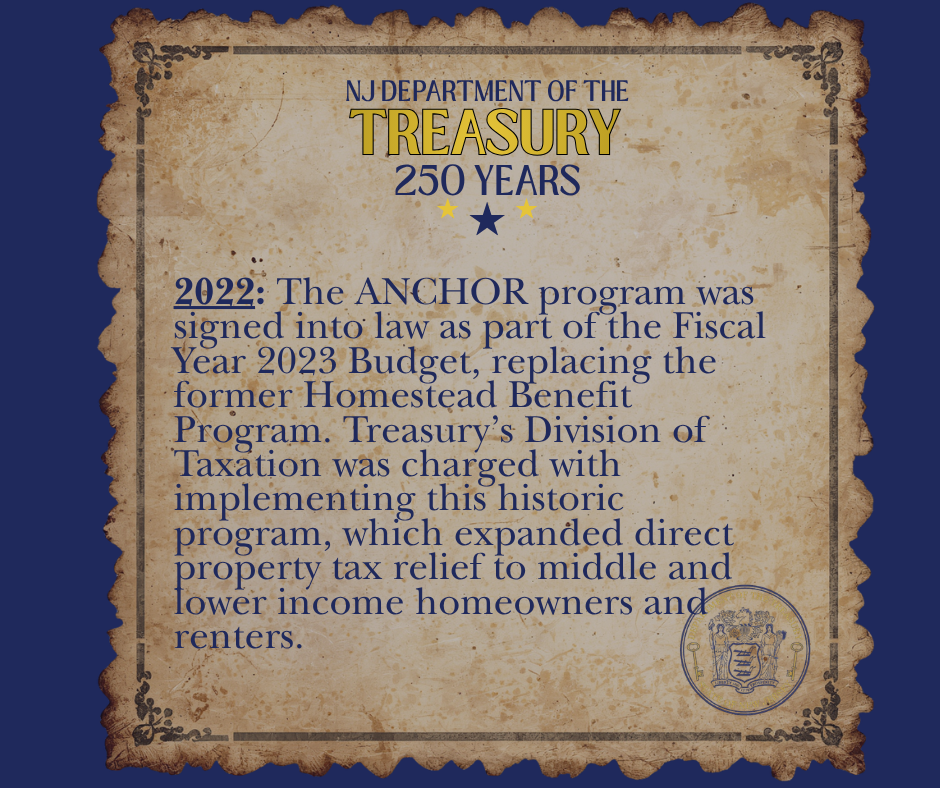
8 of 102022: The ANCHOR program was signed into law as part of the Fiscal Year 2023Budget, replacing the former Homestead Benefit Program. Treasury's Division of Taxation was charged with implementing this historic program which expanded direct property tax relief to middle and lower income homeowners and renters.
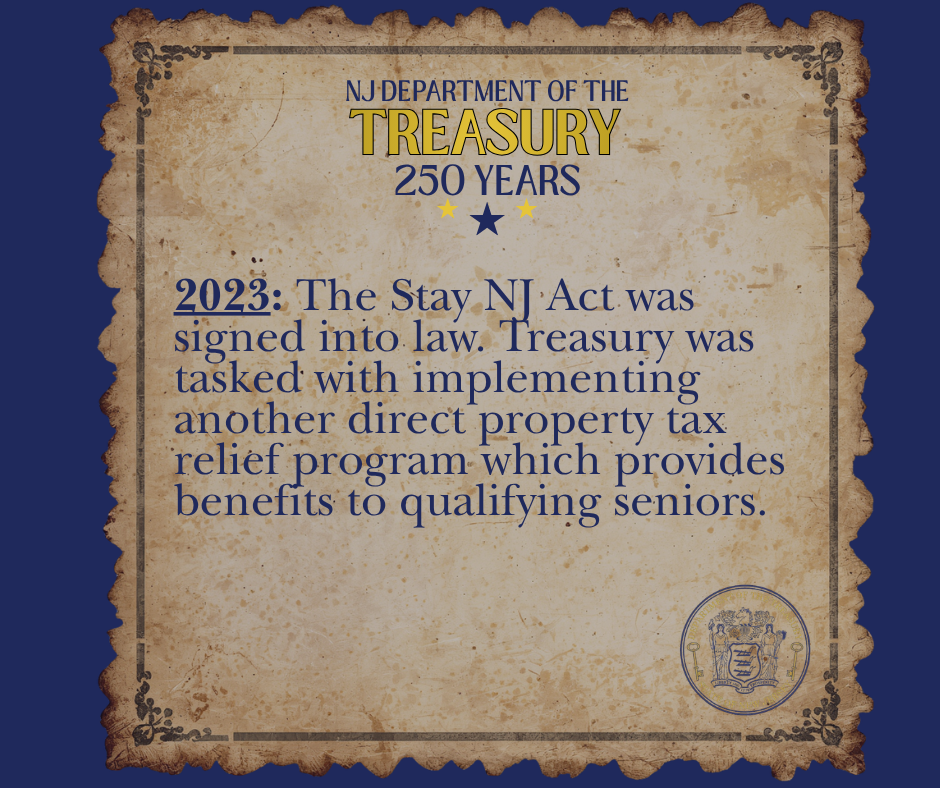
9 of 102023: The Stay NJ Act was signed into law. Treasury was tasked with implementing another direct proprty tax relief program which provides benefits to qualifying seniors.
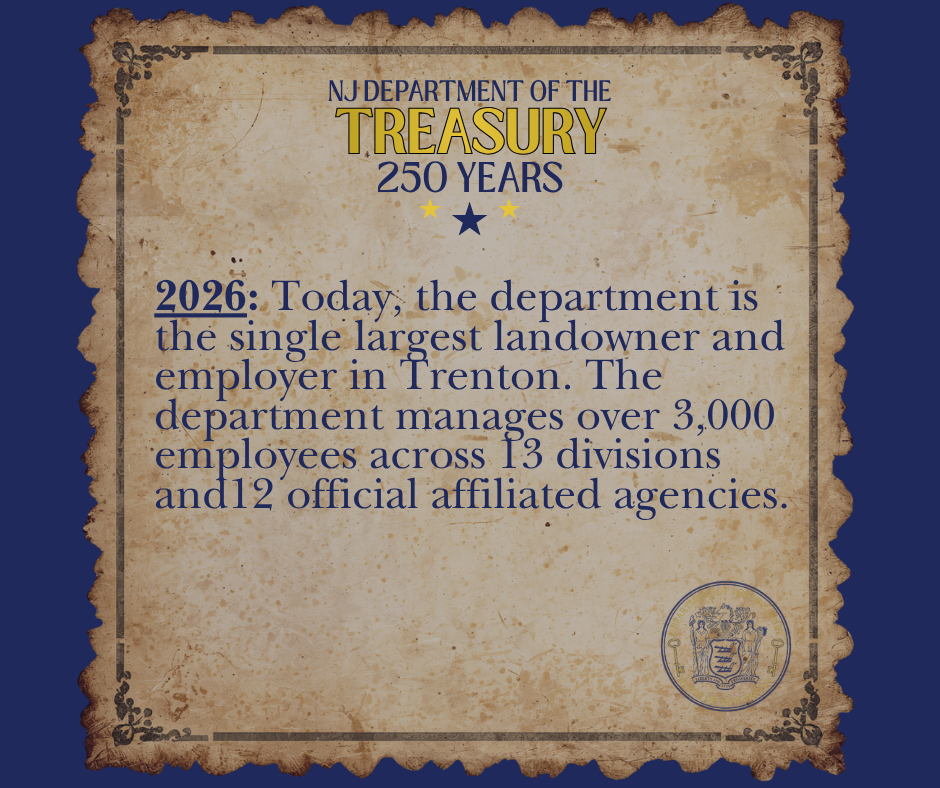
10 of 102026: Today, the department is the single largest landowner and employer in Trenton. The department manages over 3,000 employees across 13 divisions and12 official affiliated agencies.

Last Updated: Monday, 06/29/26