Official Site of The State of New Jersey
2025 in Review -- a year of continued growth & equity at NJ-CRC
In 2025, the Commission continued expanding access to regulated cannabis for patients and consumers across the state, with more than 396 licensed businesses operating in 211 municipalities. New Jersey’s cannabis market continued to mature, generating nearly $860 million in sales during the first three quarters of the year. During the same period, approximately $49.5 million in tax revenue and just over $8 million in SEEF funds were collected.
Equity remained central to the Commission’s work in 2025. From licensing and education to data transparency and community engagement, the NJ-CRC took deliberate steps to ensure that the benefits of legalization continue to reach diverse entrepreneurs and communities most impacted by cannabis prohibition, while holding licensees accountable to the standards set forth under the CREAMM Act.
Agency Updates
In 2025, the Commission’s leadership team saw notable changes. Commissioners Sam Delgado and Maria Del Cid-Kosso both departed the board during the year; both having served since the Commission's formation. Amelia Mapp joined as a new Commissioner, bringing additional perspective as the agency continued to grow and evolve its oversight functions. Harris Laufer was also confirmed to the Commission in 2025.
New staff and subject-matter experts were added across key offices to continue supporting the Medicinal Cannabis Program, licensing, compliance, and data analytics. Additionally, the NJ-CRC improved its interactive Cannabis Dispensary Finder, making it easier for patients and consumers to find licensed medicinal and adult-use dispensaries. Users can now also search exclusively for microbusinesses.
Medicinal Cannabis Program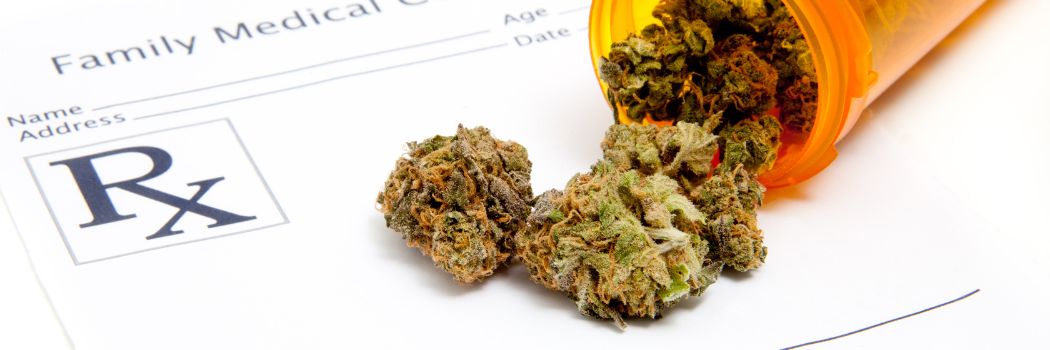
As of the end of 2025, the Medicinal Cannabis Program has a total of 52,877 patients, 3,397 caregivers, and 1,530 healthcare providers enrolled. In 2025, 6,499 new patients were added to the registry. During the year, a total of 25,264 patient and caregiver cards were issued, which includes physical and digital cards.
The Medicinal Cannabis Program Virtual Town Halls held on March 19, 25, and 26, 2025, gathered extensive input from patients, caregivers, healthcare providers, and community members, with nearly 500 written comments submitted and close to 300 individuals registered to speak.
During the town halls, participants expressed overall satisfaction with the program's impact on quality of life and symptom management, especially chronic pain, anxiety, and sleep disorders. However, both healthcare providers and patients noted that there are still gaps in education and information, as well as a lack of clear guidance on dosing, strains, and product selection. Patients also expressed concerns about product availability, including issues with insufficient potency, inconsistent THC levels, limited medical-specific options, and the need for clearer labeling and education on terpenes.
Some patients reported financial barriers, such as high product prices and renewal fees, which have led them to ration their medication, shop in the gray market, or discontinue treatment altogether. There remains strong patient support for "home grow." Additionally, access and convenience challenges persist, including limited dispensary locations, travel difficulties, and inconsistent hours. These issues particularly affect elderly and disabled patients.
Government Relations
We continued to increase the number of municipalities that have opted into the cannabis market and expanded our presence at key events throughout the state. By the end of 2025, 211 municipalities in New Jersey had allowed at least one class of cannabis business within their jurisdiction.
With the support of the Office of Communications and the Office of Diversity, Equity, and Inclusion (ODI), we participated in the League of Municipalities Conference, engaging with hundreds of municipal officials. Acting Executive Director Christopher Riggs and Director of Government Affairs Matthew Craig led a panel at the conference, providing updates and answering questions about the legal cannabis market.
Additionally, we enhanced our ability to track municipal changes by investing in the Obedio platform, which grants us access to every municipal resolution related to cannabis in New Jersey. This investment will enable us to explore more efficient and effective ways to support local municipalities and cannabis businesses.
Looking ahead, we are eager to continue meeting with the community and elected leaders to educate them about cannabis and the evolving market.
Commitment to Equity
Equity remained central to the Commission’s work in 2025. Of the businesses licensed to operate under the CREAMM Act:
- Nearly 70% are diversely owned
- 41% qualify as impact zone businesses
- 29% are microbusinesses
- 16% are designated social equity businesses
- 12% are led by individuals with prior marijuana-related convictions
These outcomes continue to exceed national diversity benchmarks for the cannabis industry.
Introducing the Social Equity Scorecard
In December, the NJ-CRC unveiled the Social Equity Scorecard, a new statewide framework designed to measure and recognize meaningful community impact by cannabis businesses. The Scorecard moves equity from intent to outcomes through verified actions, documentation, and data, using a tiered public recognition system.
The program will roll out in the first quarter of 2026, with opportunities for feedback from business owners, advocates, and community stakeholders.
Education, Training, and Workforce Development
The New Jersey Cannabis Training Academy (NJ-CTA) marked a milestone year, completing all ten levels of its core curriculum, launching badge-specific training for licensees, and fully translating its portal into Spanish.
By the end of 2025:
- More than 2,000 students registered
- Over 200 participants earned certificates of completion
- More than 50 cannabis companies enrolled employees for training
- The NJ-CTA was also recognized nationally as the largest and most comprehensive cannabis technical assistance program in the United States.
Engagement, Oversight, and Accountability
Public engagement and compliance remained key priorities. The Commission conducted public hearings, listening sessions, and enforcement actions to reinforce age-verification, advertising, and consumer safety requirements.
In November, the Office of Diversity and Inclusion and the Office of Data Analytics hosted a Cost of Compliance Listening Session, gathering feedback from licensees to inform an upcoming comprehensive survey on regulatory costs and operational challenges.
Applications and Licensing
By the end of 2025, more than 270 medicinal and adult-use dispensaries were operating across 21 counties, improving access for patients and consumers statewide. As of December 17, 397 cannabis businesses were licensed to operate under the CREAMM Act, with retailers accounting for the largest share of operating businesses.
Licensing activity remained strong. As of November 18, the Commission received 3,128 applications, approving 2,412, with additional applications under review or pending resubmission across the licensing and compliance offices.
Compliance and Investigations
The Office of Compliance and Investigations (OCI) conducted 166 investigations based on complaints received or reviews of business practices during on-site visits. Most complaints were resolved through communication with cannabis businesses, helping them return to compliance without needing further penalties. The issues included:
- Failure to keep data consistent between tracking systems (Metrc and Point-of-Sale)
- Problems with packaging and labeling
- Allowing on-site cannabis consumption
- Improper product storage
- Not effectively supporting the medicinal cannabis patient population.
There were also complaints received regarding unsanctioned events held by dispensaries that were in violation of NJ-CRC regulations.
Overall, OCI issued 37 Notices of Violation in 2025. Notably, in October, all eight licensed cannabis testing laboratories received Notices of Violation because they were not using the testing standards required by New Jersey law.
State law requires testing laboratories to follow New Jersey’s Interim Testing Standards, which are based on Maryland’s cannabis testing standards (N.J.S.A. 24:61-19(e); Resolution 2021-9). Although New Jersey previously had its own testing guidance, that guidance was rescinded, and all laboratories were required to follow the Maryland Technical Authority for Cannabis Testing, Revision 3.0 (Resolution 2025-05-01-05; N.J.A.C. 17:30-19.4(a)(1)).
Investigations show that all eight laboratories were not using the required testing standards at the time of review.
Three laboratories were additionally cited for providing untrue or misleading information related to material facts about their qualifications to hold a testing license (N.J.A.C. 17:30-18.3(c)(4)).

The Market
Combined medicinal and adult-use cannabis sales exceeded $1.16 billion over the last four reported quarters, reflecting a 12.3% year-over-year increase from Q3 2024 to Q3 2025.
Adult-use sales continued to drive growth, increasing 19.88% year over year from October 2024 to October 2025. During the same period, average adult-use flower prices declined, reflecting increased supply and market competition.
Medicinal cannabis sales declined year over year, a trend the Commission continues to monitor as patient access, pricing, and market dynamics evolve.
Flower continues to be the top-selling product, accounting for just over 42% of the market. Vape cartridges rank second at 26.4%, down from 29% last year. Edibles represent 11% of the market and raw pre-rolls account for 10.7% of the market. The remaining 10% of the market consists of concentrates, shake and trim, capsules, pills, as well as lotions, creams, and tinctures.
Cannabis Consumption Areas became a reality for residents of New Jersey in 2025. In July, the first four licenses were awarded for these designated, state-regulated spaces where adults aged 21 and older can legally consume cannabis products purchased on-site. Consumption areas at licensed dispensaries are now open in Atlantic City, Merchantville, and Newark.
The Social Equity Excise Fee (SEEF)
The SEEF is assessed on cannabis growers when they sell or transfer their products to other licensed categories. The revenue generated from this fee is required to be used for programs that promote education, economic growth, and social services for individuals and communities adversely affected by the criminalization of cannabis. In 2025, the SEEF rate was set at $2.50 per ounce of usable and unusable cannabis. (During the December 2025 meeting, the Commission voted to keep the SEEF at $2.50 per ounce for 2026.) As of Q3 2025, the SEEF has generated $15,430,384.
*Usable cannabis refers to cannabis that is ready for sale and consumption, such as flower, while unusable cannabis refers to cannabis that is not in its final consumable form and is intended for further processing, such as stems and leaves.
Messaging and Community Outreach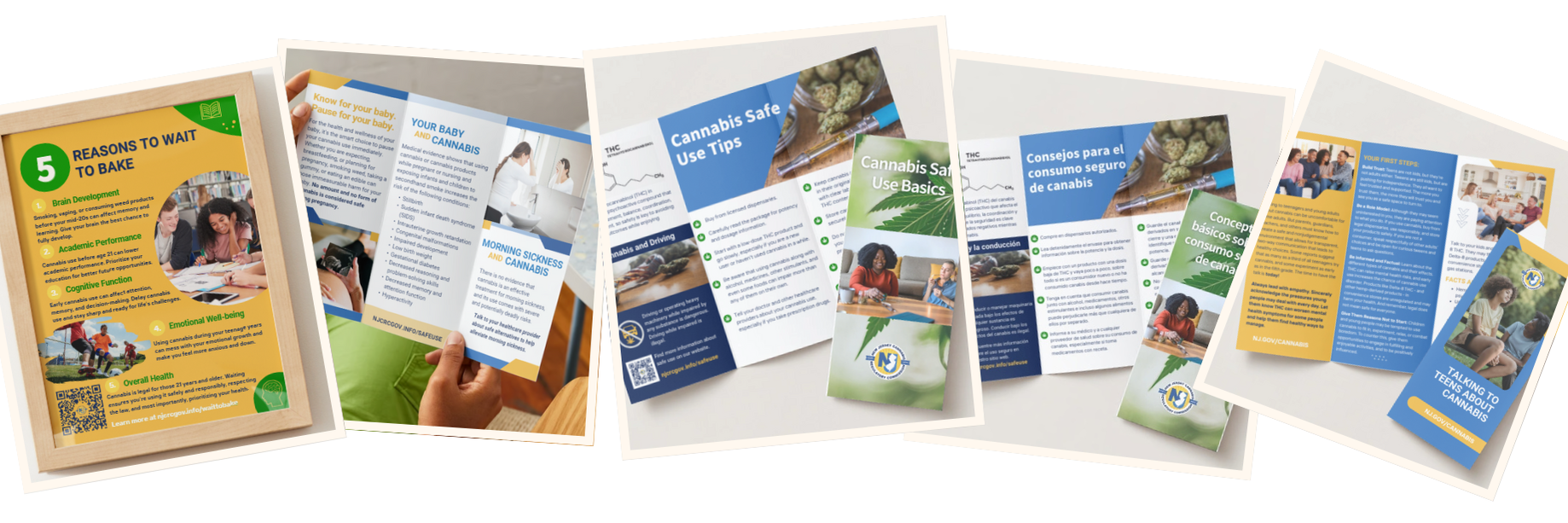
The Communications Unit used social media, emails, and podcasts to deliver consistent, plain-language information to residents, patients, businesses, and other stakeholders. The agency published approximately 250 unique social media posts across Facebook, Instagram, X, and LinkedIn, focused on cannabis safety, regulatory requirements, and consumer education, including safe-use guidance, licensing updates, and compliance reminders.
During the year, the Commission distributed 46 e-newsletters and emails to approximately 30,000 subscribers, providing timely information on regulatory changes, program updates, and key Commission actions.
The Commission also produced four podcast episodes, using the format to explain regulations, highlight program developments, and share information directly from subject-matter experts. Across all channels, outreach centered on safety, transparency, and helping stakeholders understand how New Jersey’s cannabis laws and regulations apply in practice.
The Commission creates printed and digital materials aimed at deterring cannabis use among children, teenagers, and young adults; informing pregnant individuals about the dangers of cannabis use; promoting caution among seniors; discouraging driving under the influence; advocating for safe practices and moderation; and dispelling common misconceptions about cannabis.
New Jersey based business owners, healthcare providers, government agencies, and non-profits can request printed copies of these materials. All materials are available in English and Spanish, with other languages available upon request -- materials can be downloaded from our Toolkits page.
In 2025, the Office of Communications distributed 22,390 trifolds and posters, as well as 2,343 safe use bags. Staff from the Office of Communications, supported by the Office of Diversity and Inclusion, attended fifteen events throughout the year across the state. On average, NJ-CRC interacted with 50 to 65 people at each event.
Safe-use *Campaign
The “Cannabis SMART” campaign launched in November 2025, focusing on the same audiences and key messaging as our community outreach efforts. The campaign utilizes a multi-channel strategy, delivering messages through connected TV (CTV), audio platforms, digital display ads, and Meta platforms.
English-language audio ads for pregnant women and seniors, along with Spanish-language content, successfully delivered tailored safe-use messages. Connected TV and display ads advocating for youth deterrence, abstinence during pregnancy, safe and informed usage, and not driving under the influence, targeted teens, parents and pregnant individuals, as well as seniors and adults over 21.
Out-of-Home (OOH) placements played a complementary role by providing high-impact and repeated exposure in key commuter and high-traffic areas. The campaign has so far generated 3,903,430 impressions, significantly expanding the message reach beyond digital platforms. Among these locations, Route 23, 1.5 miles west of I-287 (east/southbound), stood out as a top performer, delivering 96,980 impressions.
The holiday segment of the campaign, running from November 20 to December 31, effectively enhanced the reach of the “Cannabis SMART” messaging during a time of increased social activity and potential risks. This effort generated a total of 1,872,083 impressions through various tactics. The campaign is scheduled to continue until August 2026.
*Campaign numbers as of December 31, 2025
As New Jersey’s cannabis market continues to mature, the NJ-CRC remains focused on balancing growth with responsibility—supporting a regulated industry that is safe, equitable, transparent, and accountable to the people it serves.
We make it easy to stay informed about cannabis in New Jersey. We encourage you to stay engaged by participating in public meetings -- either by registering to speak or leaving written comments. Missed something? You may find all public meeting and SEEF hearing recordings here. Check out CRC High Points podcast and follow us on Instagram LinkedIn, X, Facebook and YouTube. Be sure to also check out our Safe Use page for cannabis safety information.
DISCLAIMER
The information presented in this blog post is for informational purposes only and should not be used as a substitute for professional medical advice, diagnosis, or treatment. Seek advice from your physician or other qualified healthcare provider if you have any questions about a medical condition or incorporating cannabis into your treatment. Do not ignore professional medical advice or delay seeking it due to anything you may have read on this website.
Previous Blog Posts
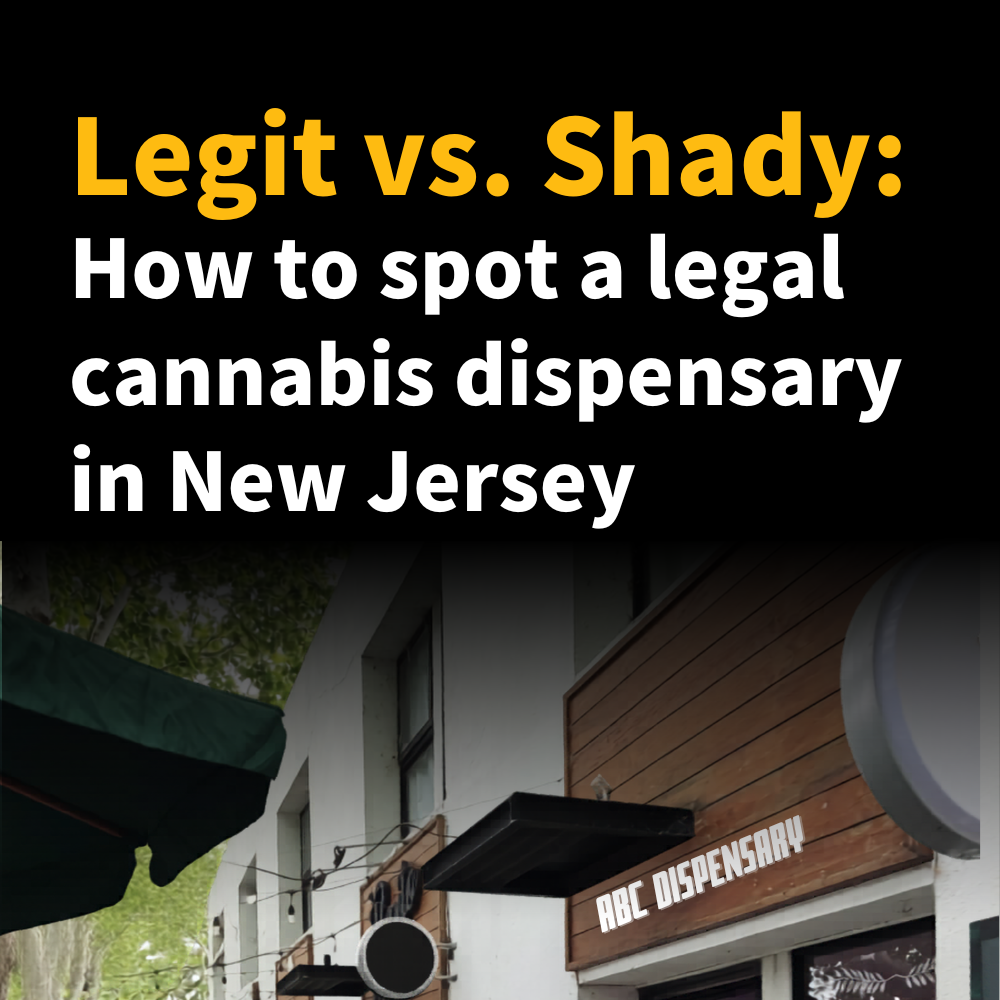
Legit vs. Shady: How to spot a legal cannabis dispensary in New Jersey
04/27/2026
New Jersey has a regulated cannabis market with more than 300 licensed dispensaries across the state. In 2025, the NJ cannabis industry generated more than $1.16 billion in sales and $67.5 million in sales tax. With any new and lucrative industry, unlicensed operators try to cash in. Illegal marijuana isn’t just a legal risk for the business operators; it can also be dangerous for consumers. Unregulated products skip the safety testing, labeling requirements, and warnings that New Jersey law requires, and the shops don't have the guardrails in place to protect vulnerable populations like kids, teens, and young adults from gaining access to these products. Is legal cannabis on your shopping list? Here's how to spot a state-licensed cannabis dispensary:
Five years of regulation, responsibility, and growth
04/2/2026
As we approach the New Jersey Cannabis Regulatory Commission’s fifth anniversary, I’ve been reflecting on what it means to build two things at once: a new government agency and a new regulated industry. Neither comes with a roadmap. Both require patience, clarity of purpose, and the willingness to make difficult decisions in real time. In five short years, the Commission has significantly expanded access to medicinal cannabis and launched the adult-use market, which to date has generated approximately $4 billion in sales. But our success cannot be measured solely by speed; it must be measured by whether we built an industry grounded in equity, accountability, and meaningful opportunity. From the beginning, our work has been guided by a set of core principles that continue to shape every decision we make.

How Terpenes Affect Your Cannabis Experience
03/24/2026
Terpenes are aromatic compounds found in plants, including cannabis. They give plants their characteristic scents, help protect them from mold, fungus and other pathogens, and play a crucial role in modulating cannabis' psychoactive effects. For example, two strains with identical THC percentages can feel completely different, one may leave you sedated and the other may leave you energized. More than a hundred terpenes exist in cannabis, each with its unique aroma and potential therapeutic benefits. Terpenes are essential for shaping the plant’s impact on the human body and mind.