Official Site of The State of New Jersey
Special Education Public Reporting (IDEA Section 618)
Section 618 of the Individuals with Disabilities Education Act (IDEA) requires the NJDOE to report information to the U.S. Department of Education on students with disabilities, ages 3 through 21, who receive special education services from public school districts, and to make certain summary information publicly available.
This page provides those required public reports, organized by topic and available for download. It also includes district-level information on students with disabilities, including counts by disability category, educational environment, and reason for exiting special education. State- and district-level special education classification rates are also available.
The special education classification rate is the percentage of all enrolled public-school students who are receiving special education services under an Individualized Education Program (IEP).
As of October 15, 2024, New Jersey reported 242,001 students with IEPs, corresponding to a statewide classification rate of 17.35%.
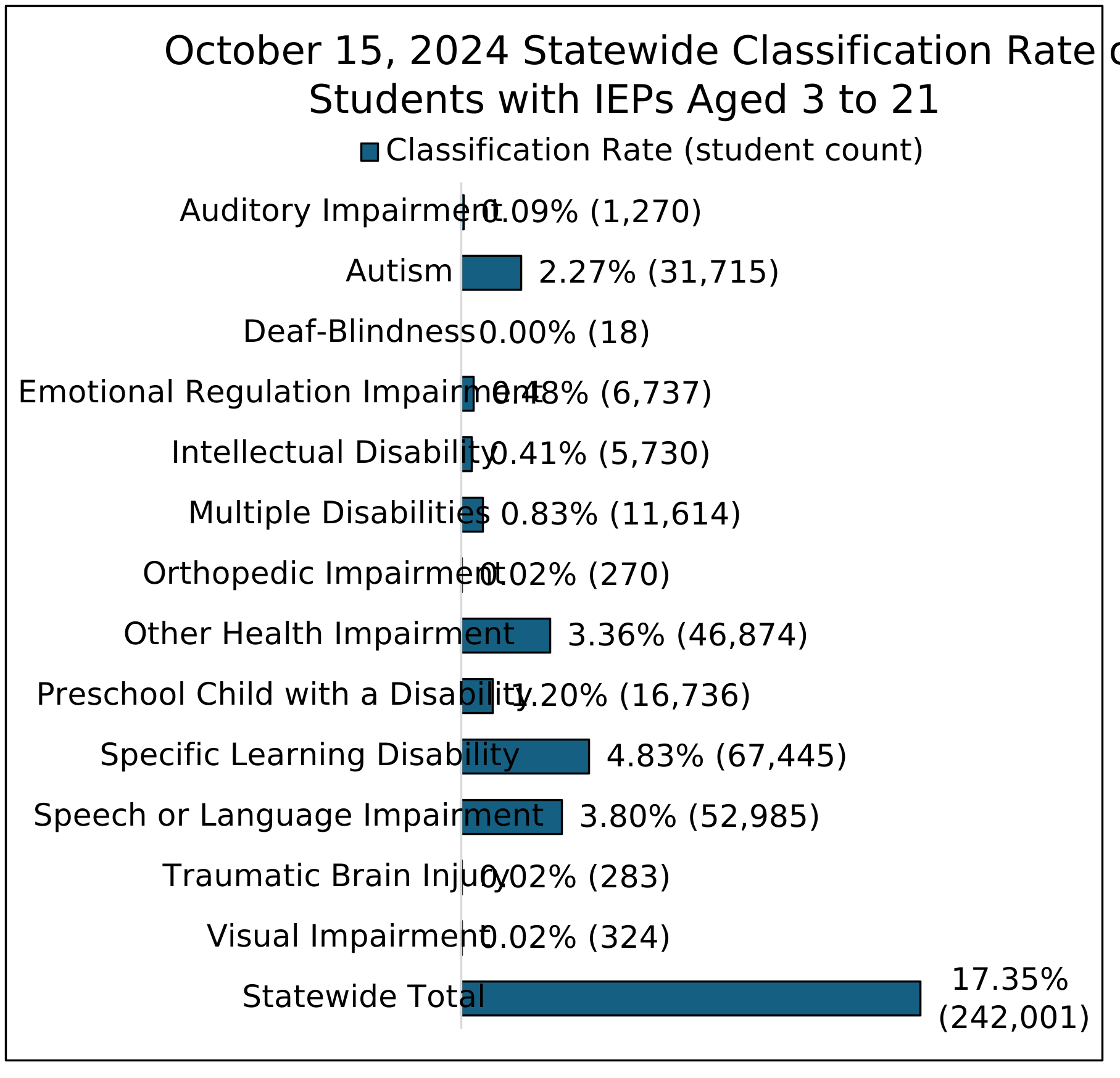
The classification rates data file includes the counts used to calculate classification rates by disability category at the state level, as well as the overall classification rate for each district.
2025 Classification Rates (Excel)
Maintenance of Effort (MOE) requires, on a year-to-year basis, that districts receiving Individuals with Disabilities Education Act (IDEA) Part B funds budget and spend at least the same amount of state and local funds for the education of students with disabilities. In certain circumstances, districts may reduce their required level of state and local spending.
Coordinated Early Intervening Services (CEIS) are supports for students who need additional academic or behavioral assistance. Districts may voluntarily use up to 15% of their IDEA Part B allocations to provide CEIS. Districts identified with significant disproportionality are required to reserve 15% of their IDEA Part B funds to implement Mandatory CEIS, also referred to as Comprehensive CEIS or CCEIS. Visit our webpage on Significant Disproportionality for more information.
The MOE and CEIS data file provides district-level information on IDEA Basic and Preschool allocations, MOE reductions, CEIS and CCEIS status, the reasons for CCEIS requirements, and the number of children receiving CEIS and CCEIS services.
MOE and CEIS Data Report (Excel)
This section provides the number of students with disabilities receiving special education services under the Individuals with Disabilities Education Act (IDEA) and the educational settings in which those services are provided. Visit our Educational Environment Dashboard for more insights into the placement of students with disabilities in the least restrictive environment.
The Special Education Student Count and Educational Environment data file includes state- and district-level counts and percentages for preschool and school-age students, reported by public school status, educational environment, age, disability category, race/ethnicity, gender, and multilingual learner (ML) status.
This section describes how and when students with disabilities stop receiving special education services. Students may exit special education for a variety of reasons, such as graduating with a regular high school diploma, aging out of eligibility, or no longer requiring special education services. For more information on the activities related to employment and education former students with disabilities are engaged in one year after they exit school, visit the Indicator 14: Post-School Outcomes webpage. Our New Jersey Transition Toolkit provides resources to assist in preparing students with disabilities for the transition from school to adult life.
The Exiting Special Education data file provides state- and district-level counts and percentages of students with Individualized Education Programs (IEPs), ages 14 through 21, who exited special education in the previous school year. Data are reported by basis of exit, disability category, age, race/ethnicity, gender, and multilingual learner (ML) status.
Dispute resolution processes under the Individuals with Disabilities Education Act (IDEA) provide families and districts with structured options for addressing disputes related to a student’s special education. Visit our Dispute Resolution webpage for more information.
The Dispute Resolution data file provides statewide counts of written, signed complaints; mediation requests; due process complaints; and expedited due process complaints.
2025 Dispute Resolution (Excel)
This section provides information on the special education personnel who support students with disabilities in New Jersey public schools. Visit the NJDOE’s Certification website for information on the requirements to become a special education teacher or service provider in New Jersey. The Engagement, Professional Development and Technical Assistance section of our website provides training and engagement opportunities for personnel.
The Personnel data file provides the number of full-time equivalent (FTE) special education teachers, related services personnel, and special education paraprofessionals employed or contracted to work with students with disabilities, ages 3 through 21, at the state level.
2025 Personnel Data (Excel)
This section summarizes disciplinary actions involving students with disabilities who have Individualized Education Programs (IEPs), including removals from their educational placement. For more information on the NJDOE’s policies and procedures regarding the discipline of students with disabilities, visit our Discipline webpage.
The Discipline data file provides state- and district-level information on disciplinary removals of students with IEPs, including suspensions, expulsions, and removals to interim alternative educational settings. Data are reported by disability category, race/ethnicity, gender, and multilingual learner (ML) status, and include information on the length and type of removal, reasons for removal (such as drug or weapon offenses), and whether educational services were provided during expulsions.
2025 Discipline Data (Excel)
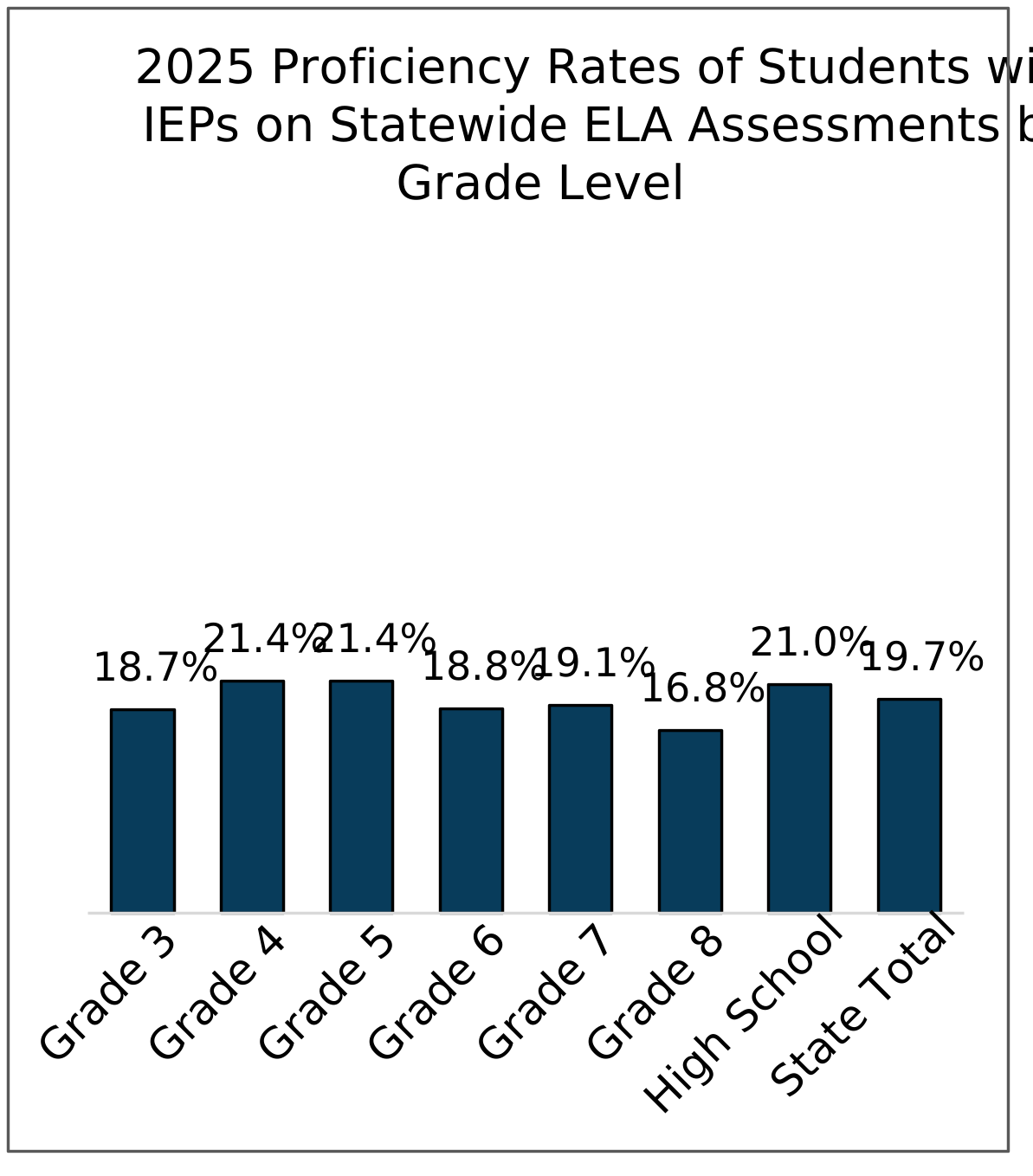
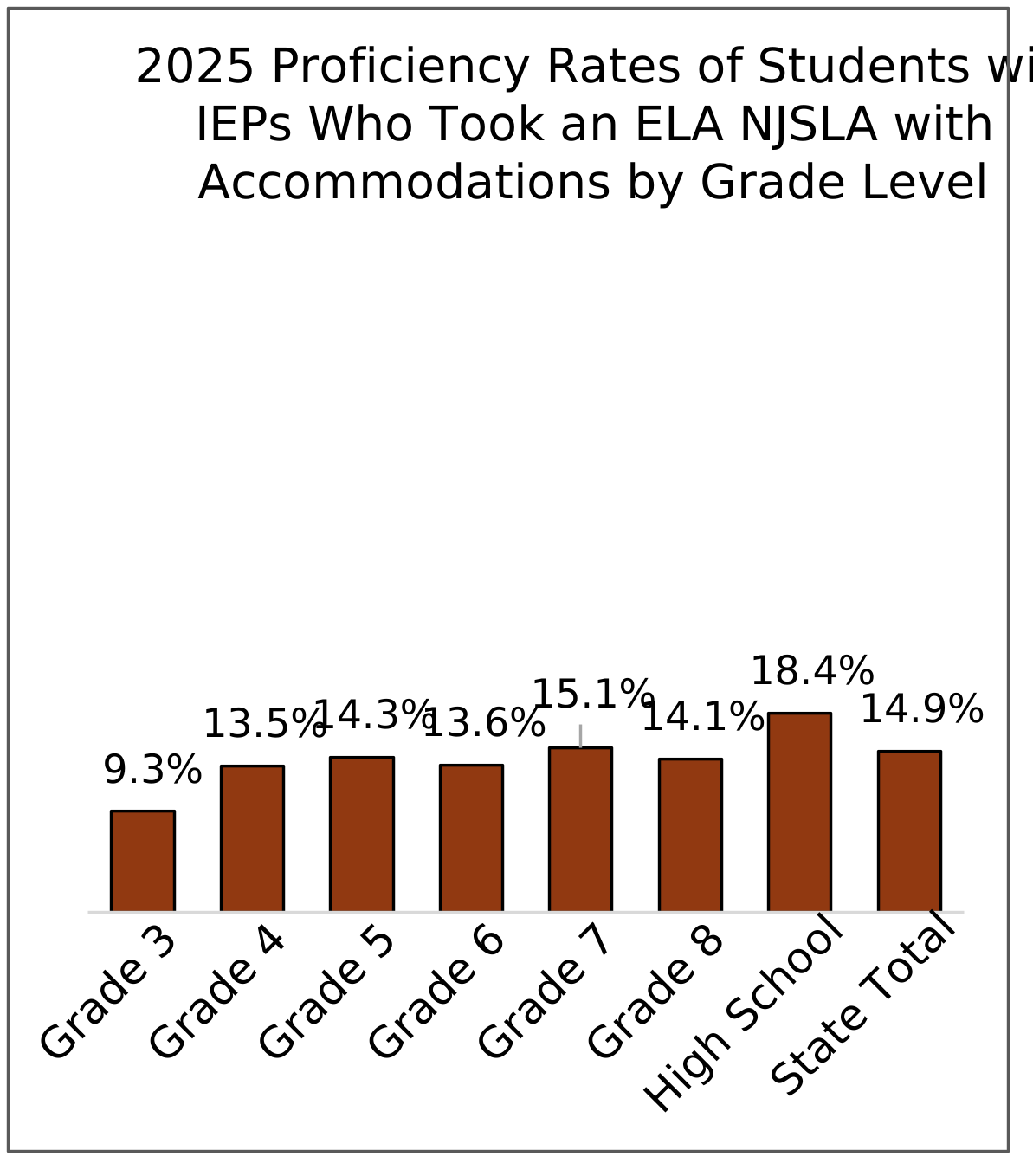
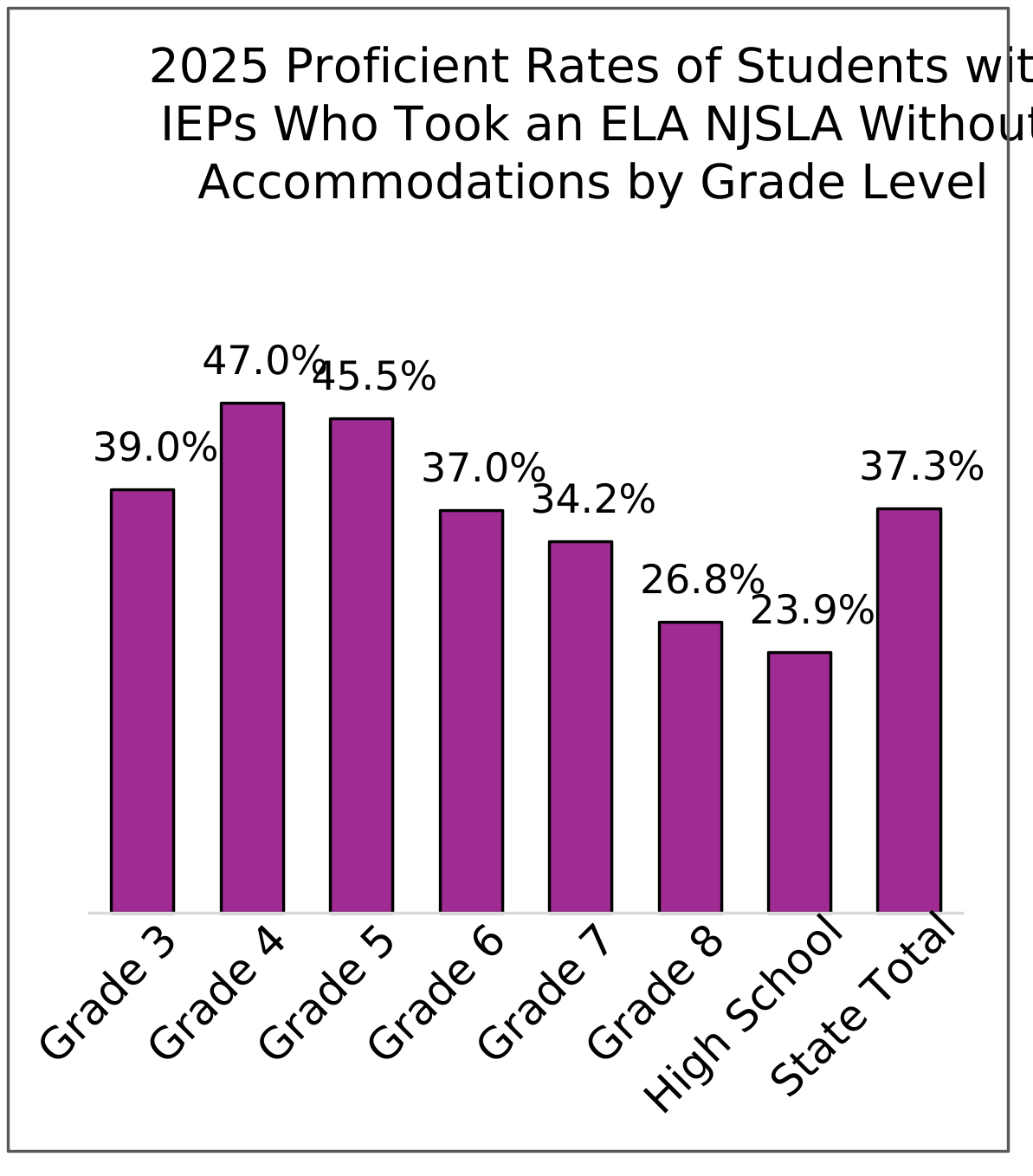
This section summarizes the participation and performance of students with disabilities on New Jersey’s statewide assessments. Assessment data describe how students, including those with Individualized Education Programs (IEPs), participate in assessments and perform relative to grade-level proficiency expectations. Visit the Assessment webpage for more information on New Jersey’s statewide assessments.
| English Language Arts (ELA) Proficiency and Participation Rates | |
 |
 |
 |
 |
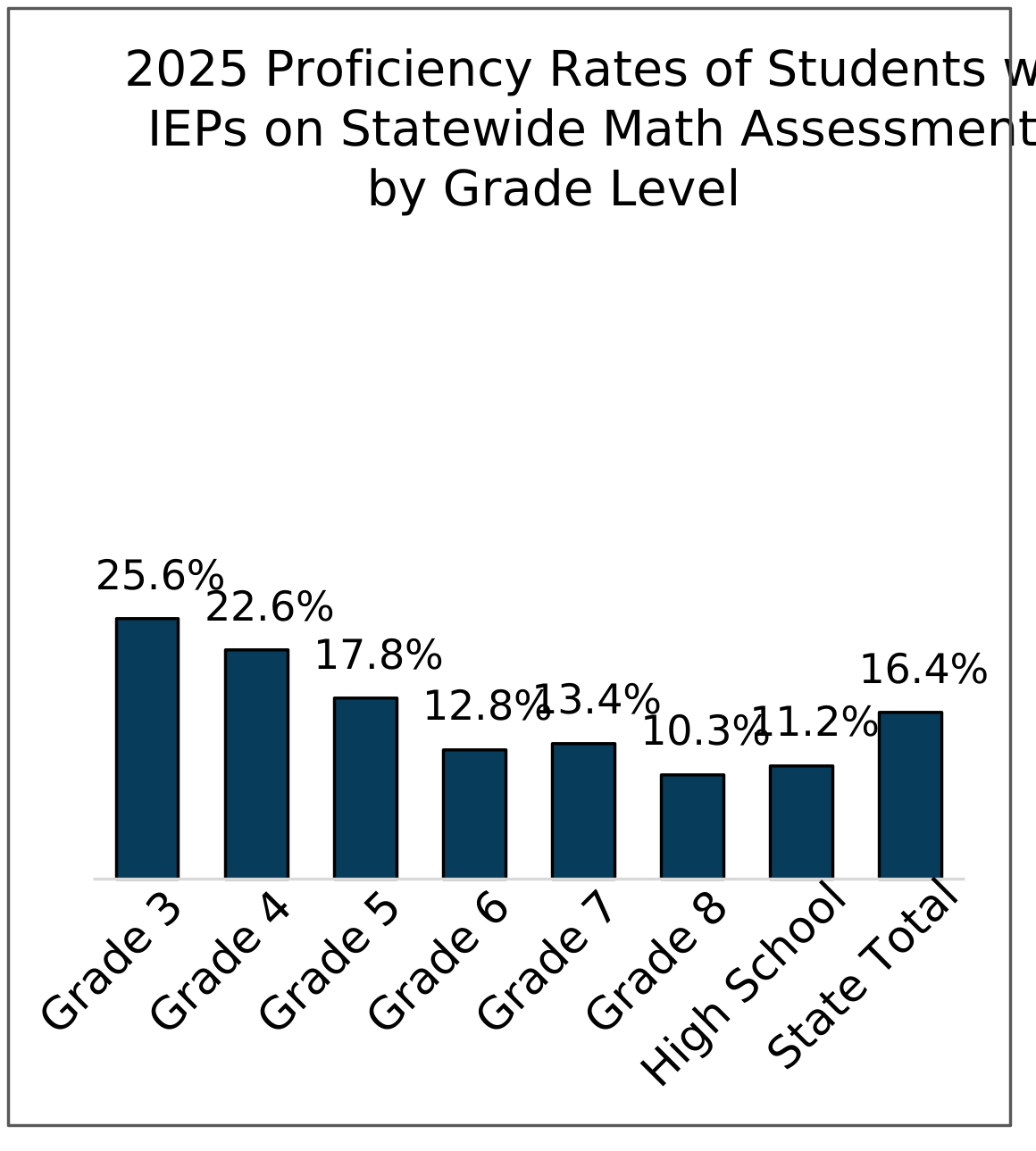
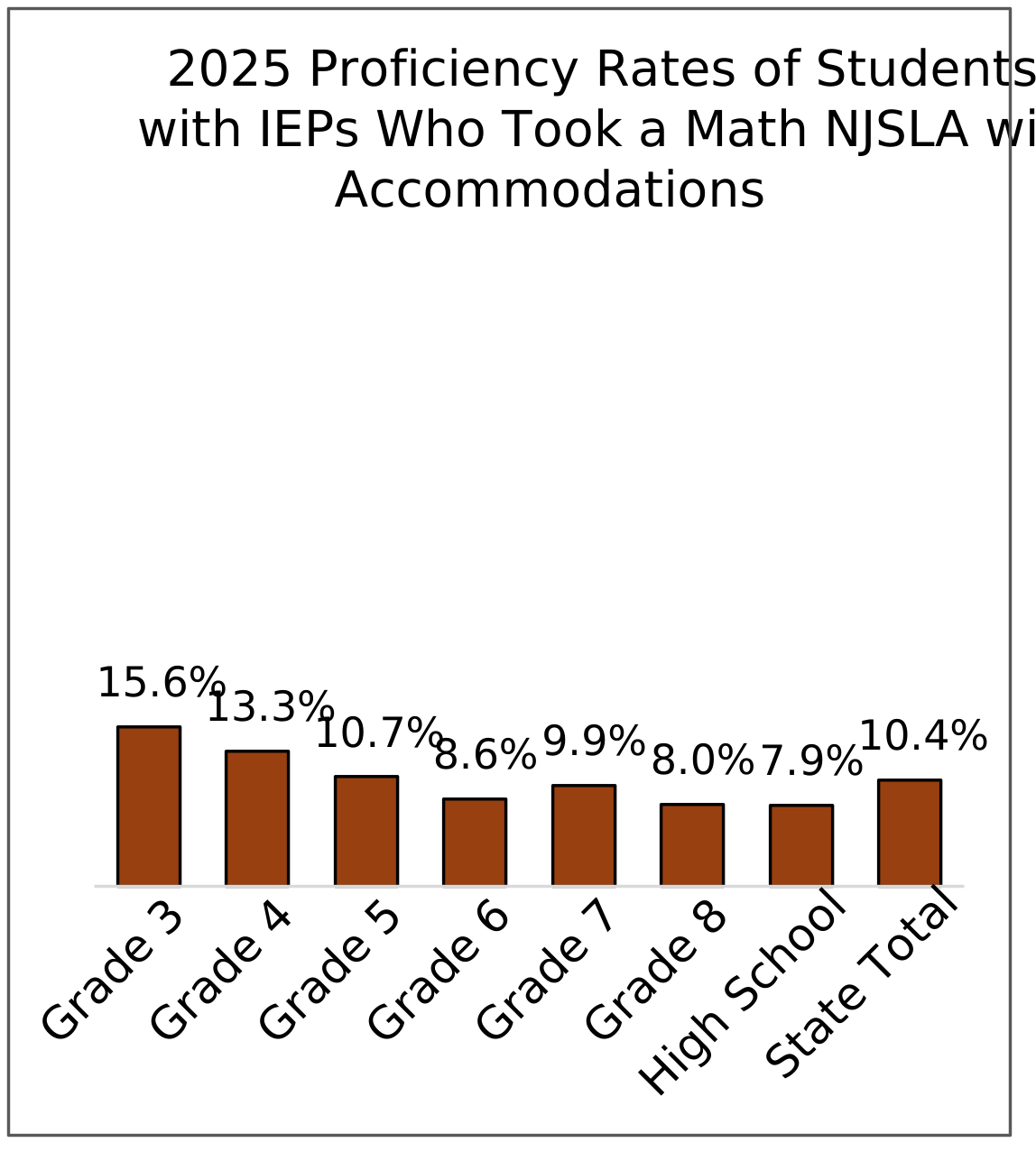
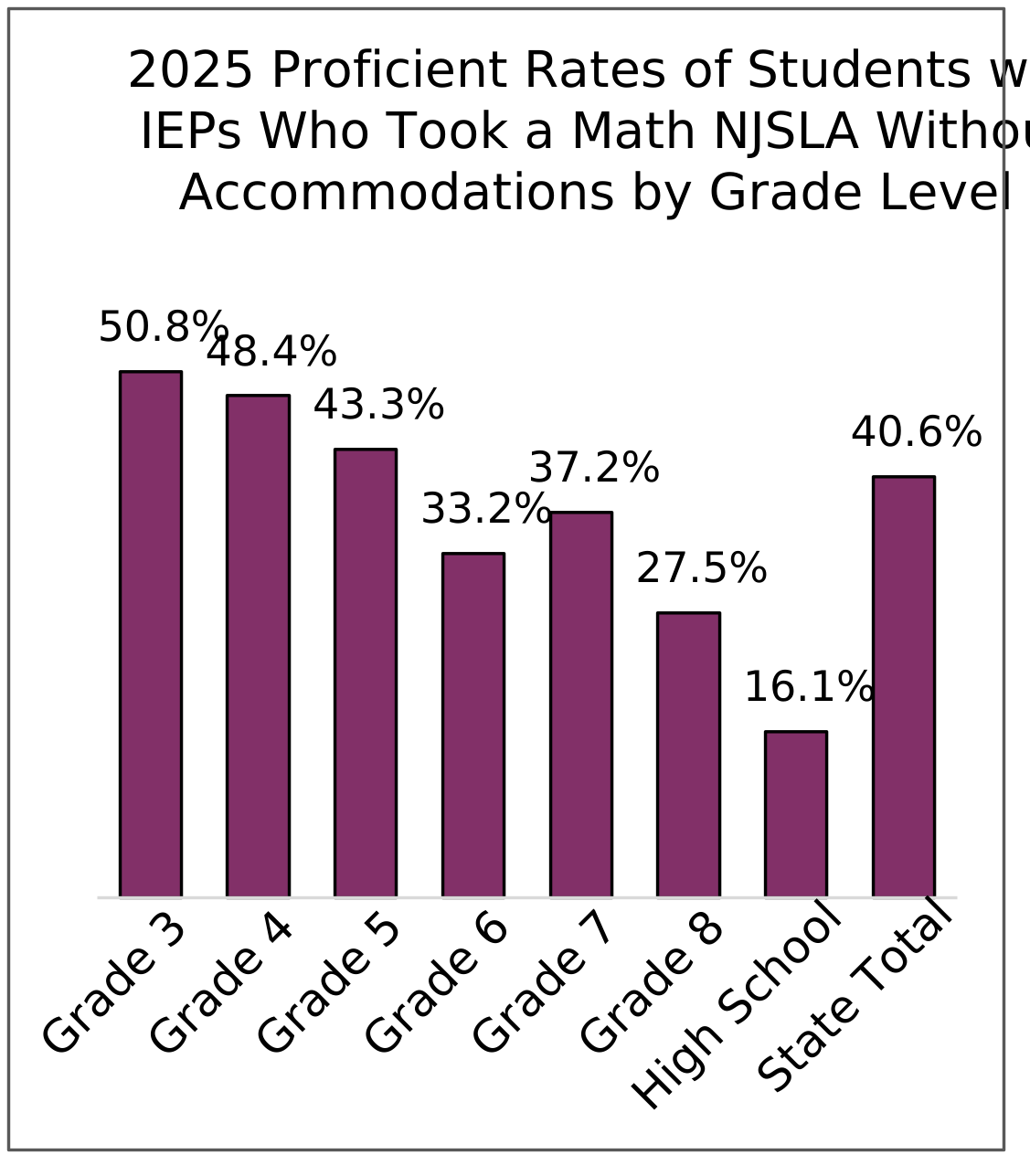
| Math Proficiency and Participation Rates | |
 |
 |
 |
 |
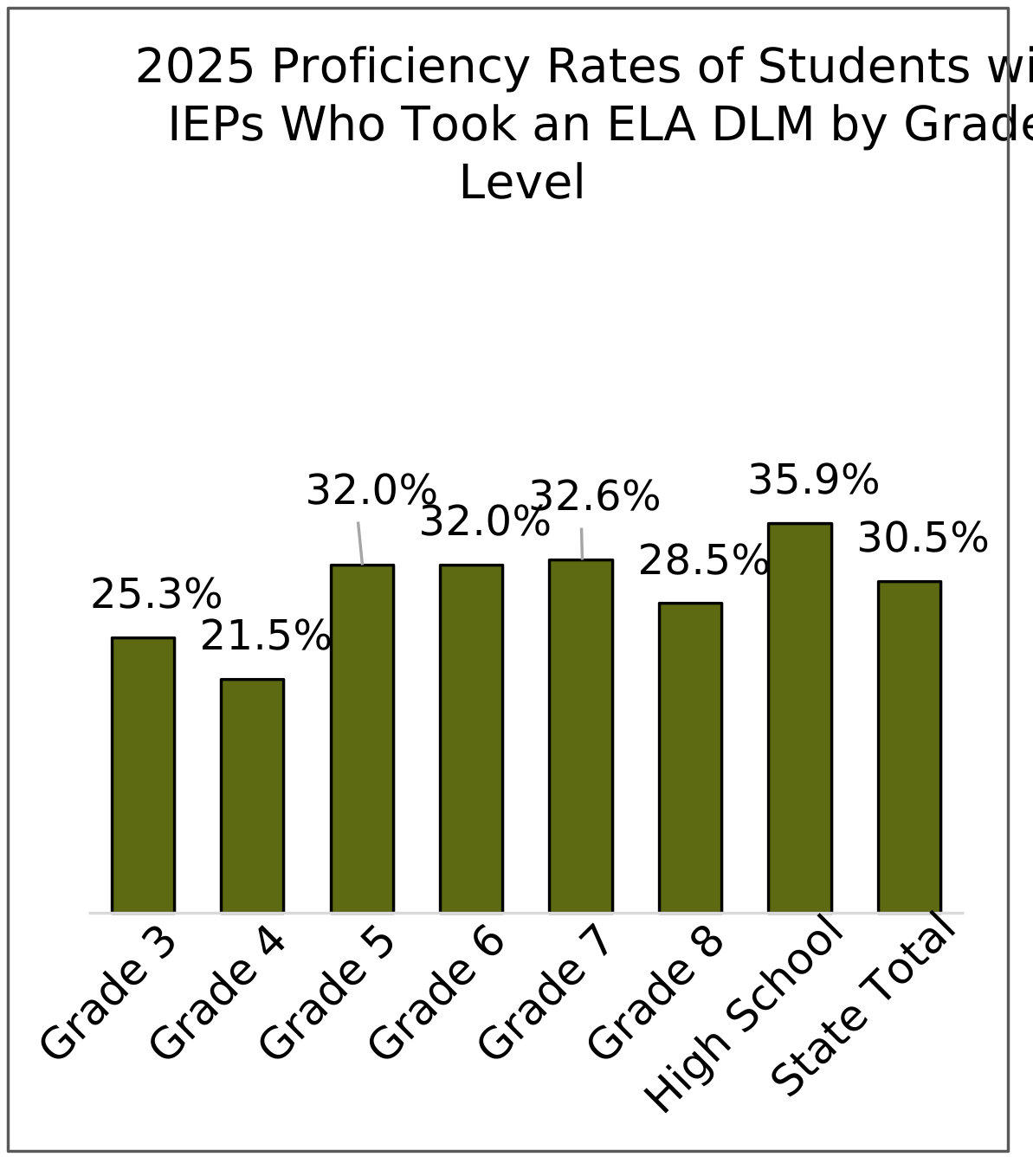
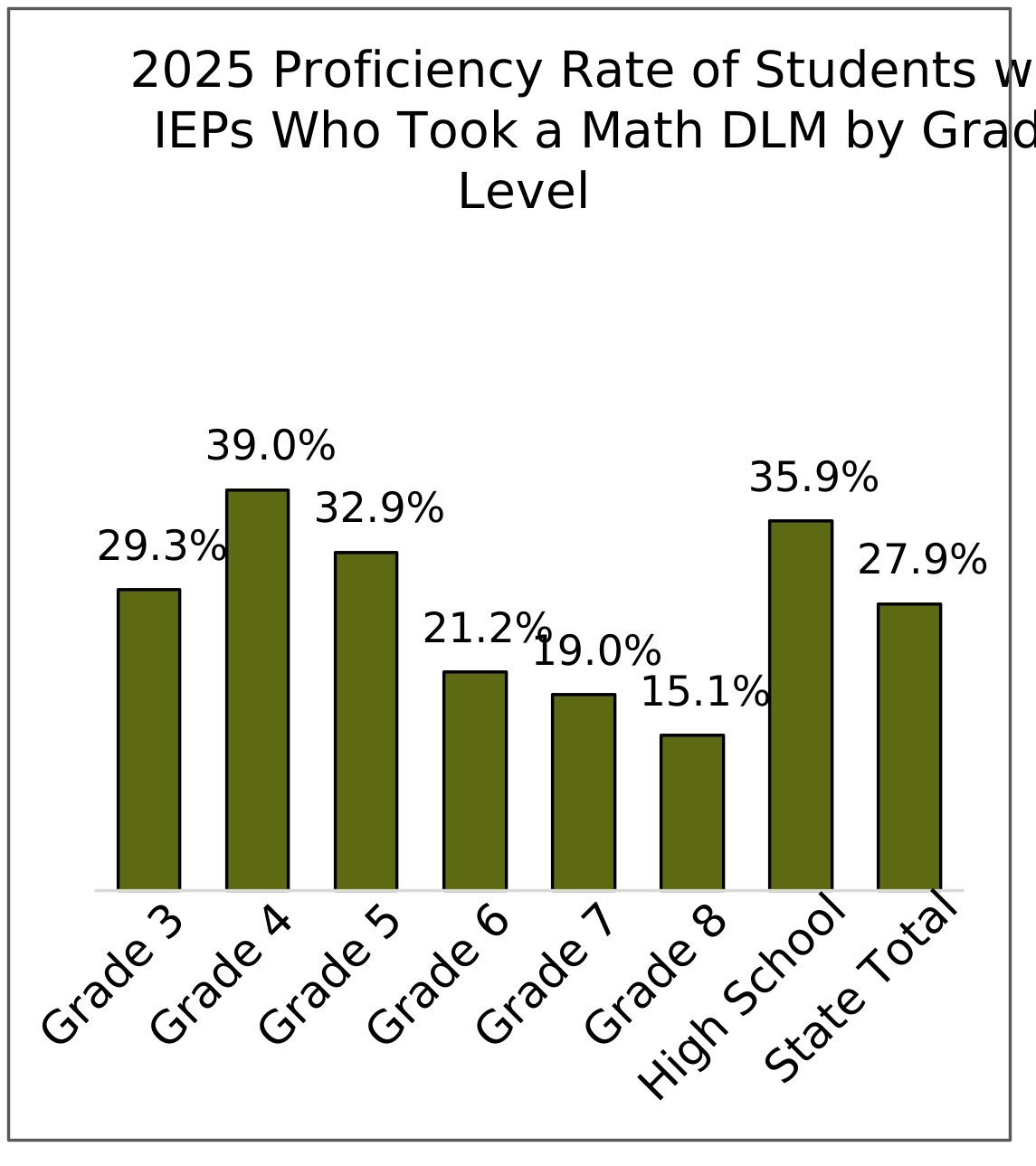
| Alternate Assessment (Dynamic Learning Maps, DLM) Proficiency in ELA and Math | |
 |
 |
/education/specialed/monitor/ideapublicdata/pics/2025ELARatesbyGradeLevel.svg
The State Assessment Participation and Performance data file provides state-level information on student participation in and performance on English Language Arts (ELA) and Mathematics assessments. Data include the number and percentage of students tested by grade level, special education eligibility status, and assessment type, including the New Jersey Student Learning Assessment (NJSLA) with or without accommodations and the alternate assessment, the Dynamic Learning Maps (DLM). The file also reports the number of students with IEPs who scored at or above the proficient level.
2025 Assessment Data (Excel)