| NJ Home | | | Services A to Z | | | Departments/Agencies | | | FAQs |

|
||||||||||||
|
| ||||||||||||

|
|
|
 |
||||||||||||||||||||||||||||||||||||||||||||||||||||||||||||||||||||||||||||||||||||||||||||||||||||
Cultural ResourcesFirst StreetOverview
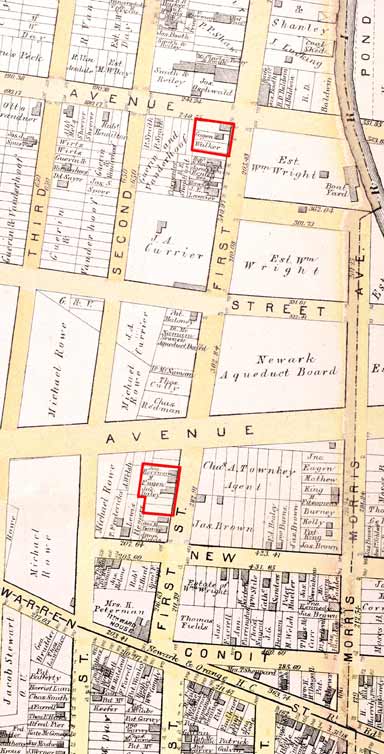
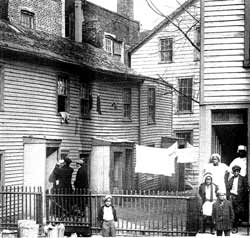
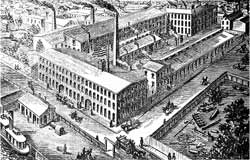
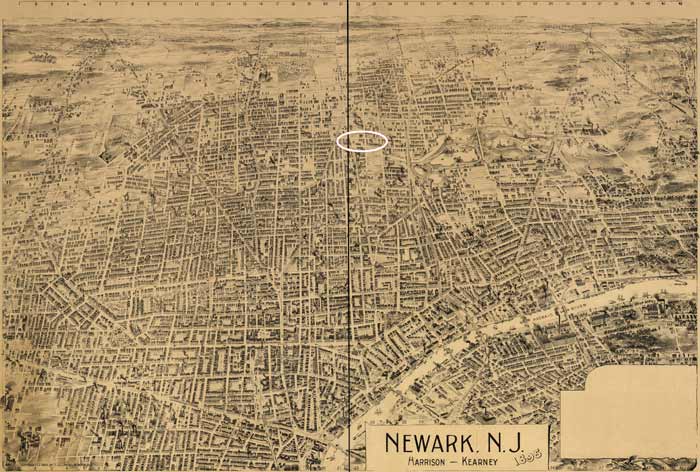
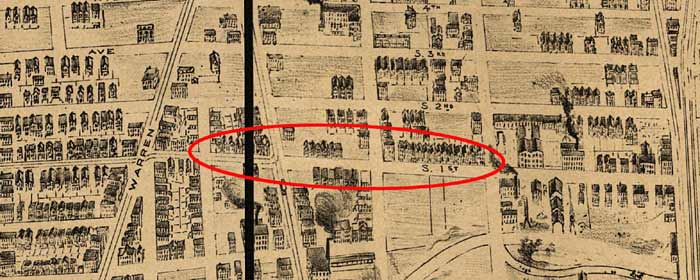
With industry expanding in the city, workers needed housing. By the late 1880s several new houses had been constructed along First Street, and by the end of the century nearly 30 houses had been built on these blocks. Still, the neighborhood was not as crowded as other parts of the city, and open space could be found, with empty lots among the houses and Branch Brook Park nearby.
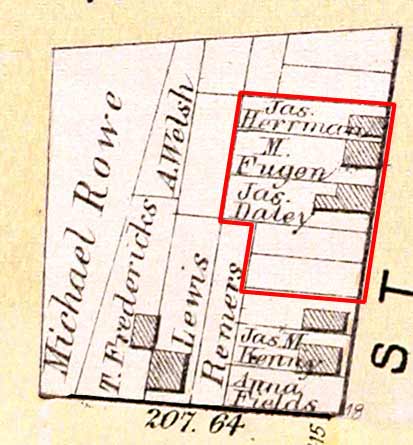
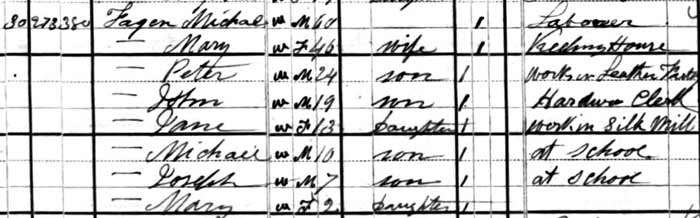
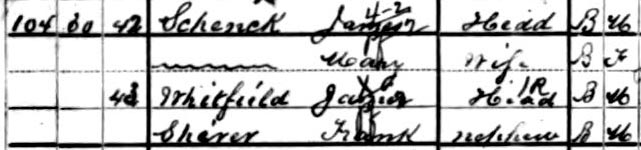
Historic documents, such as property records, censuses, and city directories provide information about who lived in specific houses. One of the earliest houses on the street belonged to the Fagan family, who purchased land here for $600 in 1868. They built and moved into 30 First Street in 1870. The 1880 census listed Michael Fagan as the head of the household. He was born in Ireland around 1820, emigrated to the United States around 1855, and lived at 30 First Street with his wife Mary and their six children until his death in 1893. He was a laborer. Mrs. Fagan kept house, but the oldest daughter, 13-year-old Jane, was a mill girl.
The censuses and city directories have been combed to piece together a story of who lived in each house and whose trash may have ended up buried in the back yards that the archaeologists excavated. Archaeology |
||||||||||||||||||||||||||||||||||||||||||||||||||||||||||||||||||||||||||||||||||
Archaeologists decide where to dig. Before water lines and sewers were laid in the streets, residents used well or rain water. Every house collected water in a cistern, and had a backyard outhouse or privy. With the installation of water hookups, residents no longer needed wells or cisterns. They also hooked up to the sewers and installed indoor water closets, which made backyard privies obsolete. As the privy pits generally were lined with stone and were cleaned out periodically, residents often used the empty pits for garbage disposal. The trash provided archaeologists with an excellent collection of artifacts - objects from the past - that became clues to their lifestyles. |
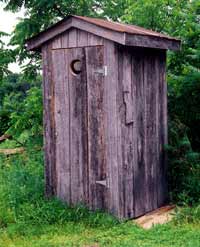 Before sewers, residents used an outhouse, also called a privy. Under this structure was a pit, often lined with wood or stone. |
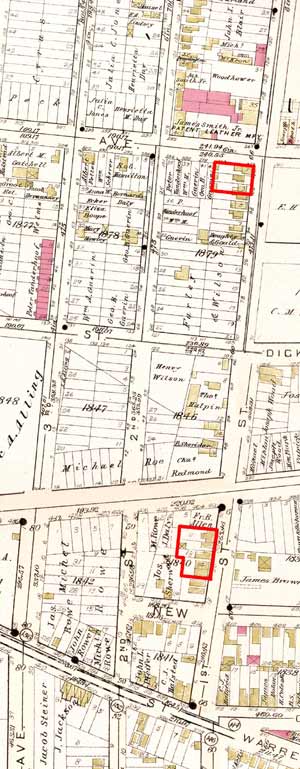
To find out when utilities were available in First Street, researchers used historic maps and records, such as the Annual Reports of the Commissioners of the City of Newark, available at the Newark Public Library.
Water and sewer hookups on First Street were done in stages. By 1885 water pipes had been installed between West Market and Sussex, and by 1891 all of the houses would have had access to sewers. Of course, not every owner hooked up promptly, and some people may have continued to use backyard privies longer than others. Tenants would have to wait for the landlord to pay the fees to hook up to public utilities and then pay to install indoor plumbing. At home sites that were built before utilities, archaeologists expected to find deposits of 19th-century trash in old privy shafts, and they conducted test excavations in these yards. |
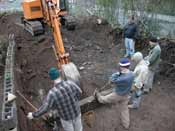
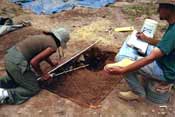
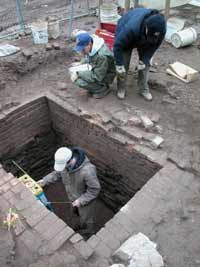 Workers excavate a structure in the back yard of number 106 First Street. |
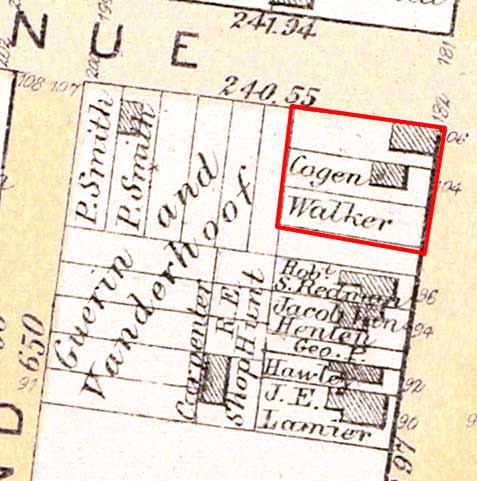
The New Jersey Department of Transportation (NJDOT) found that eight of the home lots it purchased to widen First Street had abandoned privy shafts with deposits of household trash in the backyards.

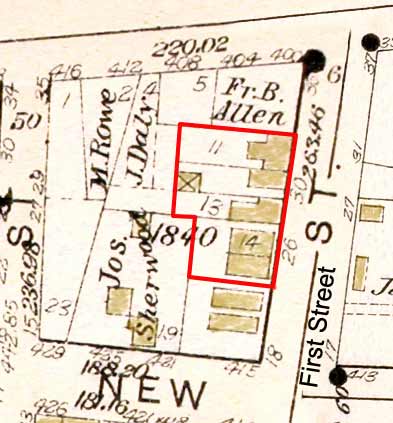
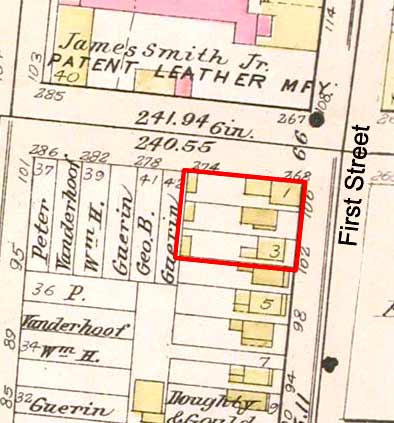
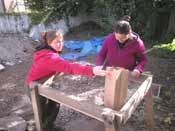
NJDOT used a backhoe to strip away upper layers of fill soil, down to the old, buried surface layer or to the tops of old pits. They mapped the exposed area and, as new features appeared, they added them to the map. Once a shaft was located, workers dug a portion of soil by hand with shovels and trowels and sifted it through wire mesh to determine the type of deposit. When workers excavated soils one layer at a time, they uncovered distinct layers from residents' separate dumping episodes. Then they placed artifacts in bags labeled with the address, the number of the excavation unit, and a consecutive number representing the soil layer. The backyard archaeological sites are registered with the New Jersey State Museum and are given official Smithsonian site numbers. Listed after the street and number are the digits for New Jersey (28), two letters (Ex) for Essex County and a unique number for each site. The assigned numbers are: |
|
| 24 First | 28Ex123 | 26 First | 28Ex124 |
| 28 First | 28Ex125 | 30 First | 28Ex117 |
| 32 First | 28Ex116 | 102 First | 28Ex113 |
| 104 First | 28Ex112 | 106 First | 28Ex111 |
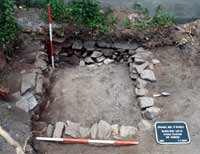
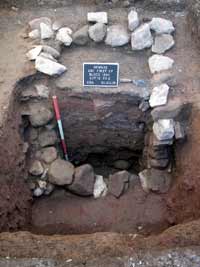
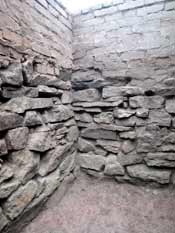 An unusual brick and stone structure at the back of 106 First Street may have been a rebuilt privy for the saloon. |
|
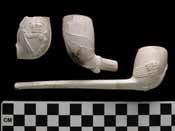
Documents can tell us a lot about the people of historic First Street. Artifacts give us information about how these residents lived, about differences in lifestyles among the families, and how their lives may have changed over time. Other materials recovered included food remains and food containers, which showed how much households spent on food and how food preferences differed along ethnic lines. There also were examples of style, such as ceramic and glass dishes and decorative items for home dining; personal items, such as smoking pipes, clothing items and buttons; toys that belonged to the children who grew up in the houses; grooming and hygiene items; and medicine bottles. |
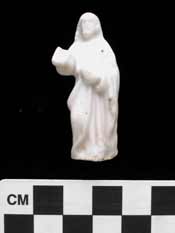 This porcelain religious figurine was recovered from within a shaft structure in the back yard at 104 First Street. |
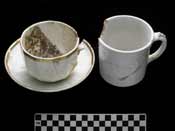 A fancy gilt-edged porcelain cup and saucer and a mug with a lily-of-the-valley molded design made of white granite or ironstone, which was a type of earthenware popular in the 1870s and 80s, were found at 104 First Street. |
|
|
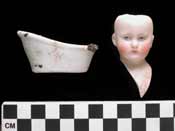 A porcelain toy bathtub and doll's head were recovered from the back yard of 30 First Street. Two girls grew up as members of the Fagan family in the 1870s and 1880s. |
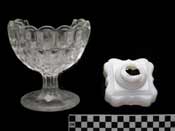 Excavations at 104 First Street yielded several fancy items for the home, including this molded glass compote and milk glass lamp base. |
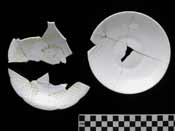
Items from stores and saloons are examples of how these establishments fit into the social and economic life of a neighborhood. Of the two porcelain saucers found in the brick and stone shaft structure at 106 First Street, the one on the left has a painted design. The dishes may have been from the saloon that stood on this lot, or may have belonged to one of the families living above the saloon. |
 |
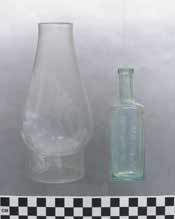 A lamp chimney, left, and a medicine bottle, right was found at 104 First Street. The medicine bottle has the pharmacy's name -- P.S. VAN PATTEN NEWARK -- embossed on the glass, but its specific contents are unknown. |
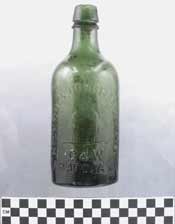 A Saratoga Springs water bottle was found in the backyard of 104 First Street. The bottle may have been discarded by the Koegans, who lived here in the early 1870s. |
The archaeological deposits can be used as time capsules to study specific households. For example, from one deposit to another, a change in styles of dishes may reflect a change in household composition, new residents with different cultural backgrounds, or fluctuations in household wealth.
 |
Contact Us | Privacy Notice | Legal Statement | Accessibility Statement |  |
| department: home | about | NJ commuter | in the works | business | engineering | freight, air & water | capital | community | data | links | index | ||
| statewide: NJ Home | about NJ | business | government | state services A to Z | departments |
||
| Copyright ©
State of New Jersey, 2002-2020 Department of Transportation P.O. Box 600 Trenton, NJ 08625-0600 |
|
|
Last Updated: December 4, 2007 |
||