 Official Site of The State of New Jersey
Pregnancy leave, complications, and work accommodations
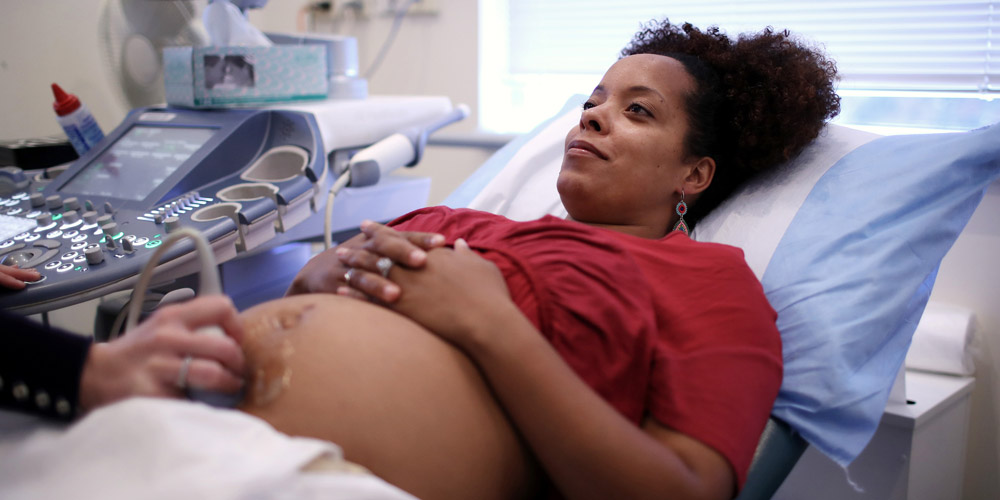
Here’s what to do if your health care provider has you stop working earlier than you anticipated, or you need more time to recover after the birth than is typical.
How long can expecting mothers receive benefits?
Typically, you can get benefits starting 4 weeks before your due date. After birth, you can typically get 6 weeks for recovery if you have a vaginal delivery and 8 weeks for a c-section.
If you need to be out longer either before or after birth because of a health complication, or if your employer can’t provide a reasonable accommodation, it’s possible to get additional temporary disability benefits.
Additional benefits for health complications
If you have a health complication that means you need to leave work more than 4 weeks before your due date, or if you need more than 6 to 8 weeks to recover, your healthcare provider must certify you need additional leave.
Some common complications include:
- High blood pressure (pre-eclampsia)
- Uncontrolled gestational diabetes
- An incompetent cervix and/or placement of a cerclage
- Symphysis pubis dysfunction
- Hyperemesis gravidarum (HG)
- Pre-partum and post-partum depression
Being at risk or having a history of complications is not enough. Your healthcare provider must certify you are currently experiencing symptoms.
Your healthcare provider must list the specific complication. For example, if they put you on bedrest, they must list the pregnancy-related complication that prevents you from working. If not, we will have to ask for more information before approving your claim.
When you need a workplace accommodation for risks to your health
You may need a change to your normal job duties or workplace so that you can continue to work and maintain your health during your pregnancy. For example, if you work in a warehouse, and your healthcare provider instructs you not to lift heavy boxes starting 8 weeks before your due date, you have the right to ask for accommodation under the New Jersey Law Against Discrimination.
Your employer must work with you to find an accommodation that meets your needs once they know you need one. They are required to provide you with an accommodation unless your employer can show that it would be extremely difficult or expensive. If your employer can’t provide a reasonable accommodation, you could get additional temporary disability benefits.
Examples of accommodations
- More break time
- Changed eating/drinking policies
- Workstation changes/relocation
- Time off/flexible scheduling
- Flexibility to attend doctor’s appointments
- Changes to uniforms/dress codes
- Sitting/standing more often
- Help with manual labor
- Changes to job duties, expectations, production standards, or quotas
- Remote work
- Temporary transfer to a different position
Read the New Jersey Division on Civil Rights’ fact sheet, frequently asked questions, and guidance on pregnancy and related workplace accommodations to learn more.
Your employer may ask you to get a note from your healthcare provider about why you need a workplace accommodation.
Additional temporary disability benefits
If they cannot make a reasonable accommodation, you may get additional temporary disability benefits.
- Apply for temporary disability benefits when you stop work.
- Be sure your healthcare provider lists your restriction as the complication on their medical form, such as “no heavy lifting.”
- NJDOL will contact your employer to confirm they couldn’t make an accommodation.
When you need a workplace accommodation for risks to your baby's health
Sometimes you can continue to do your normal work, but the workplace conditions might harm your baby. Risks to your baby’s health are not considered a pregnancy complication, the diagnosis must apply to you as the mother.
An example is working with chemicals or toxic fumes in a lab. Without those hazardous conditions, you would still be able to physically perform your regular job duties, such as sitting or standing to conduct experiments.
If you can do your job without the hazardous condition, you are not considered disabled due to pregnancy and won’t qualify for temporary disability benefits.
But, if your employer can't change your work conditions or environment that have become dangerous to your baby, you might get Unemployment Insurance benefits. NJDOL will review the claim on a case-by-case basis. Be sure to get a documentation from your doctor that the work conditions are not safe for you or your baby, and document that you requested an accommodation from your employer.
Then, when you can't work anymore because of pregnancy (usually 4 weeks before your due date), apply for Temporary Disability Insurance benefits and stop certifying weekly for Unemployment Insurance benefits to avoid overpayment.
If you believe you were denied a reasonable accommodation or retaliated against
Employers must make a reasonable accommodation for pregnant employees under the NJ Law Against Discrimination. This law is enforced by the New Jersey Division on Civil Rights. Learn more here.
If you believe your employer didn't make a reasonable accommodation when they should have, or retaliated against you or fired you for asking, you can file a complaint with the NJ Division on Civil Rights.
Maternity Leave 101
Find out how our two programs work together for expectant and new mothers.
Frequently Asked Questions
Not sure about something? Get easy-to-understand answers here.